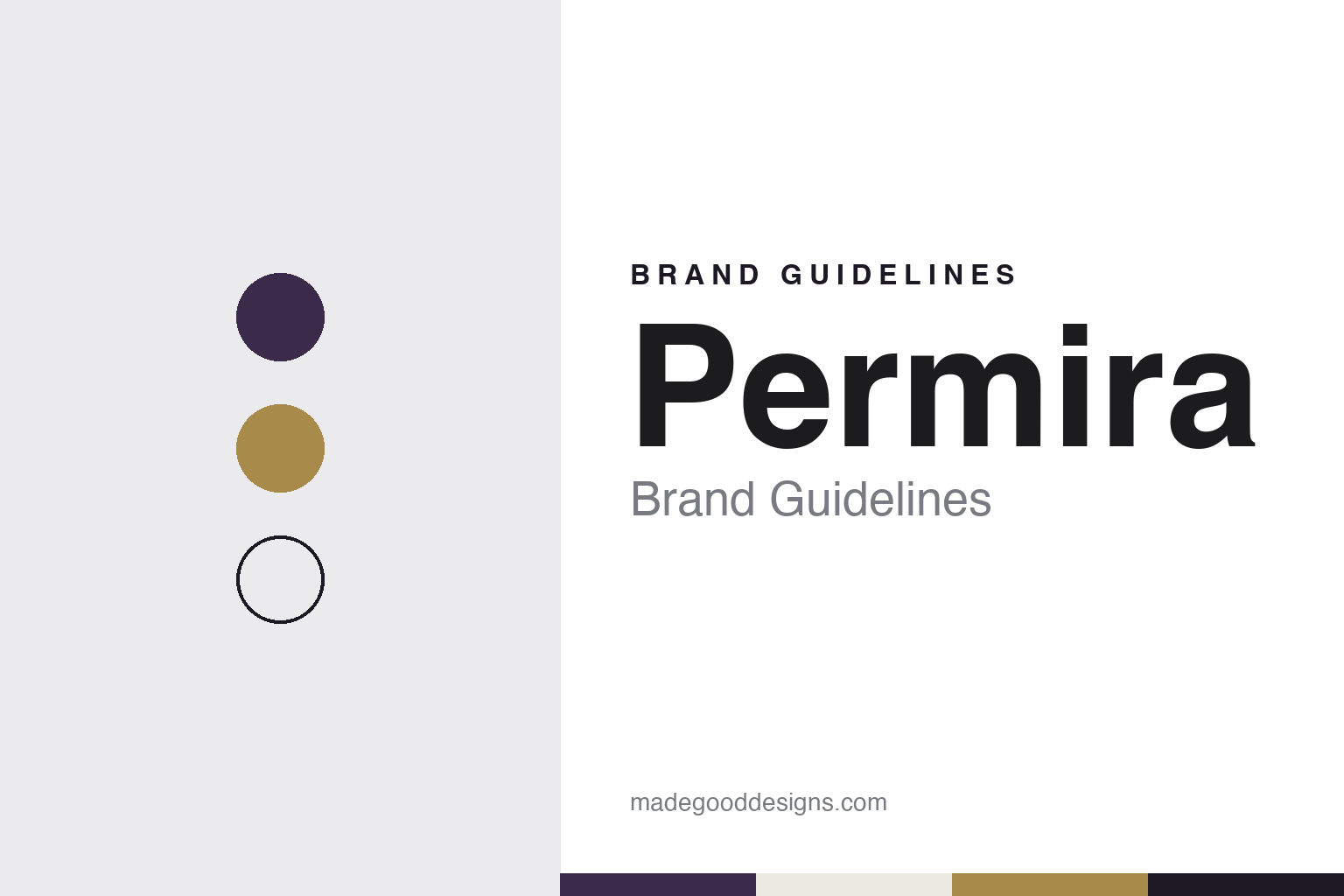
Permira Brand Guidelines
A Schroders venture that chose a Latin name for itself.
Aa
Two constants: an aubergine, stone and brass palette and a Latin serif register. Abstract homage — not a Permira asset or mark; no logo or wordmark is reproduced.
Schroder Ventures
A bank’s venture arm that left home.
Permira began inside the London bank Schroders. The trade journal Unquote reported in November 2001 that Schroders founded Schroder Ventures in 1985, and that it ran as a collection of separate businesses around the world, each with its own management team, joined only by their common parent. Permira itself says it was “founded in Europe in 1985, under the Schroder Ventures name.” English Wikipedia describes the idea as one developed by J. Henry Schroder Wagg in the 1980s: private equity funds that would finance management buyouts.
The link with the parent loosened step by step. According to Unquote, the Schroder Ventures firms became owned by their employees, on a partnership basis, in 1989. In 1996 the four European branches — in London, Paris, Frankfurt and Milan — formed a single partnership, which English and German Wikipedia both name as Schroder Ventures Europe. From then on, Unquote wrote, Schroders became less and less involved. By the time of its renaming, the trade journal noted, the European business had been operating for 16 years out of offices in London, Paris, Frankfurt and Milan.
Under that name the partnership raised two funds: the Schroder Ventures European Fund, which closed in 1997, and a second fund that closed in 2000, Unquote reported. German Wikipedia adds that in Germany the firm’s funds backed the car-parts makers Grammer and Kiekert and the chemicals company Cognis, a former Henkel subsidiary.
Colour
A Latin word chosen by its own people.
In November 2001 Schroder Ventures Europe announced that it had changed its name to Permira. Unquote called the move “the culmination of a long migration” from its founder and former parent, and noted that the two firms would still work together where opportunities arose. The two existing funds were renamed Permira Europe I and Permira Europe II.
The name was chosen inside the company. Unquote reported that it is Latin for “very surprising, very different”, and quoted Charles Sherwood of Permira as saying employees picked it to reflect how they saw the firm: Latin as a language familiar across Europe, suiting a pan-European business, and “very surprising” as a nod to the firm’s stated habit of approaching deals a little differently from the norm.
The renamed firm spread beyond Europe. English Wikipedia records a first US office in New York in 2002, an office in Tokyo from 2005 to 2022 and one in Hong Kong from 2008. In Germany it came to wide public attention with the 2003–2004 takeovers of the pay-television broadcaster Premiere and the eyewear maker Rodenstock, German Wikipedia says; in 2005 the magazine Stern included Permira in a list of investors it criticised during Germany’s “locust” debate over private equity.
In Britain, CVC and Permira bought the motoring association the AA from Centrica in 2004, and in 2007 the AA and Saga were brought together under Acromas Holdings, formed by Charterhouse, CVC and Permira, English Wikipedia says. In 2006 a Labour MP criticised the two firms in the House of Commons over borrowing against the AA’s assets, it records.
The fashion house Hugo Boss shows a longer holding. English Wikipedia says Permira acquired the Valentino Fashion Group in 2007, which gave it significant influence over Hugo Boss; the Boss stake was later held through Permira’s Red & Black holding, and in March 2015 Permira announced plans to sell its remaining shares. German Wikipedia records criticism in 2008 and 2010 of Permira’s calls, as a shareholder of Hugo Boss and ProSiebenSat.1, for special dividends. The same source says Permira’s funds have invested in more than 300 companies since the firm began, and that in July 2022 its German holdings included BestSecret, Engel & Völkers, Flixmobility and TeamViewer.
Typography
Design and documentation.
Private equity firms sell nothing that sits on a shelf, so their identities have to work without a product. The usual answer is restraint: a short wordmark, often initials or a surname set in a plain sans or a quiet serif, with one dark colour and a lot of white space. The name does most of the work, and the mark is meant to sit comfortably beside the logos of pension funds, banks and the companies a firm owns.
The physical setting carries the same message. Headquarters tend to be in glass-walled towers in financial districts, and the photography on firm websites leans on offices, skylines and people in meetings rather than on objects. When a firm wants to show what it does, it usually shows its portfolio companies: a factory floor, a data centre, a hospital corridor or a shop, each credited to the business rather than to the investor.
Much of the visible design lives in documents. Annual letters to investors, responsible-investment and sustainability reports, investor-day presentations and quarterly results decks are where the typography, charts and colour systems are most fully worked out. Listed firms add the formal layer of a public company, from stock-exchange filings to shareholder reports, and the same restrained palette usually runs through all of them.
Beyond the page, these firms present themselves through institutions. Founders and partners appear as donors to museums, concert halls and universities, and firm names turn up on fellowships, research centres and sponsorships. For a design reader, the category is a study in how far a brand can be carried by a name, a typeface and a tone of voice alone.
Aa
A Latin serif — for a name taken from Latin. (Specimen set in Libre Caslon Text, a serif STAND-IN; NOT the Permira logo.)
Permira
A partnership with a holding company in Guernsey.
Permira is organised as a partnership owned by its senior people, English and German Wikipedia say, with the holding company Permira Holdings Limited registered in St Peter Port, Guernsey, and operations run from London. The company names Kurt Björklund as executive chairman.
Its own website describes “a specialist Private Equity and Credit platform with a transatlantic focus,” with buyout, growth equity and credit funds, more than 500 people and 15 offices across Europe, the United States, the Middle East and Asia. It says it works across four core sectors — technology, consumer, healthcare and services — and that its thematic, sector-led approach goes back more than 40 years. Its credit pages list strategies including CLO management and direct lending.
The firm also runs a charity. The Permira Foundation, founded in 2017 according to German Wikipedia, describes itself as “a global foundation funded and incubated by Permira” that works with non-profits on access to education, access to employment and better outcomes in health and wellbeing, through grants and pro-bono help from the firm’s staff.
For a design guide, Permira shows how a firm that makes no products builds a brand from a name: a word chosen by its own staff, in a language meant to travel across Europe, carried by fund names and a short corporate story. Compare CVC, its partner in the AA, and Cinven, another London firm with roots in a parent institution. For this guide we use aubergine, stone and an old brass with a serif, an unofficial interpretation; no product or logo is reproduced.
Explore & save
Keep Permira’s identity on hand — save it to a board in the Made Good inspiration library.
Permira identity set
Pin the Permira aubergine, stone and brass palette and the Latin serif register to your own board.