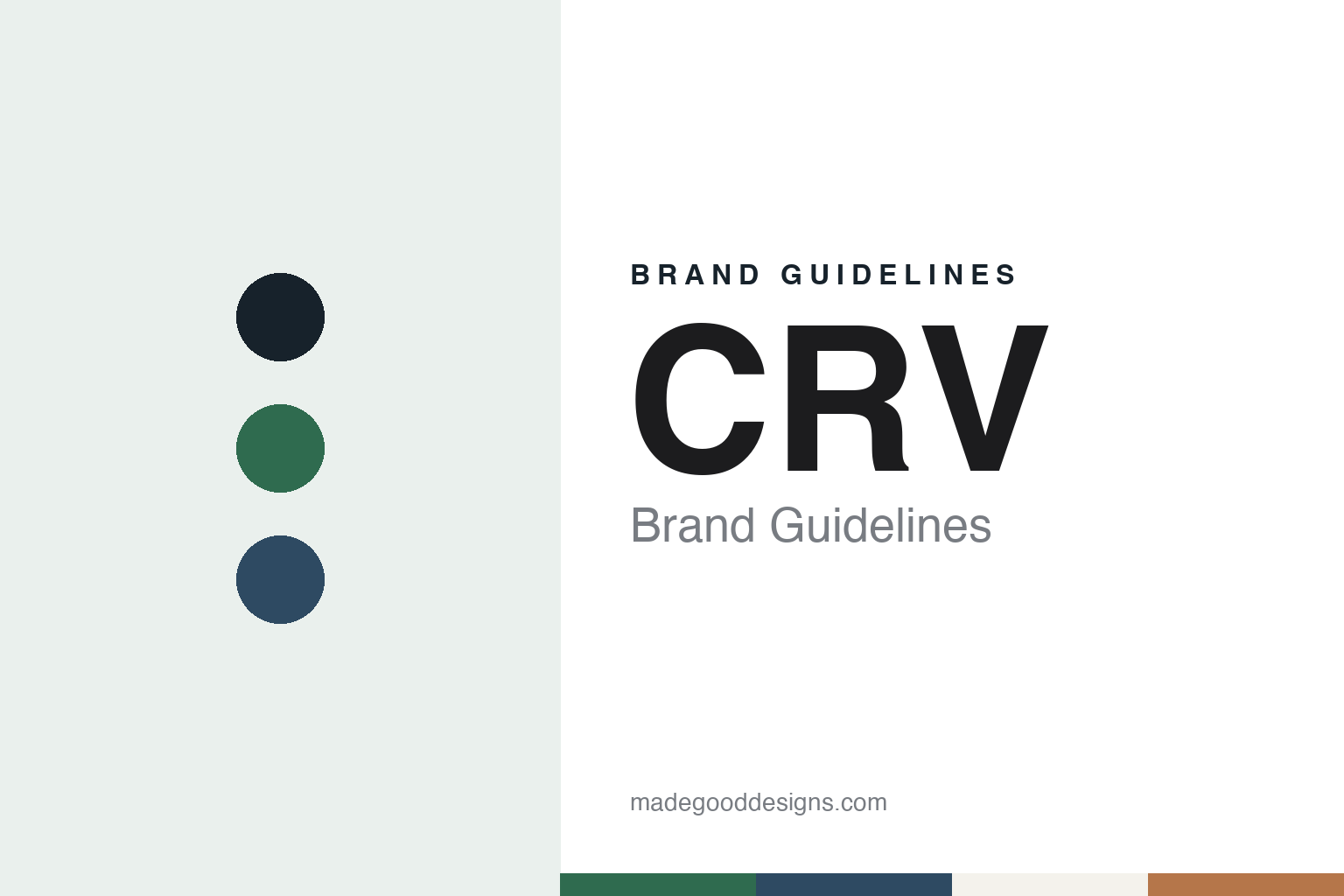
CRV Brand Guidelines
An 1874 Dutch herd-book, Flemish partners and a farmer cooperative.
Aa
Two constants: a pasture green, slate blue and milk white palette and a herd-book sans register. Abstract homage — not a CRV product or mark; no animal, logo or straw is reproduced.
The herd-book
Pedigree registers for Dutch cattle.
CRV traces its roots to 1874. That year, Dutch Wikipedia records, the association Het Nederlandsche Rundvee-Stamboek (NRS), the Netherlands cattle herd-book, was founded to compile, keep and publish pedigree registers for the cattle its members kept in the Netherlands; a Friesian herd-book, the FRS, followed in 1879. The sources read for this guide do not describe the herd-books under the German occupation of 1940–45. Trade was the reason. Dutch dairy cows were being exported to neighbouring countries and, from the late nineteenth century, to North America, and buyers wanted proof of breeding. CRV’s own history tells it the same way: farmers jointly founded the first herd-book to register the pedigrees of their bulls and cows, which also let them share the cost of better bulls.
The herd-books chose their breeds. Dutch Wikipedia says the NRS and FRS recognised three Dutch cattle types — the black-and-white Fries Hollands, the red-and-white MRIJ and the white-faced blaarkop — and that early in the twentieth century bulls of other colourings could no longer be kept. After about 1970 those breeds gave way on Dutch farms to the American Holstein, and they are now rare. In 1984 the NRS and FRS merged with the central milk-recording service and four other cattle-improvement bodies into the Nederlands Rundvee Syndicaat, which later joined Holland Genetics under the name CR Delta.
Flanders brought a second line. CRV names the Provinciaal Verbond der Veekweeksyndicaten van Oost-Vlaanderen, a federation of cattle-breeding syndicates in East Flanders founded in 1897, as part of the same tradition, which reached CRV through the Flemish association VRV, the Vlaamse Rundveeteelt Vereniging.
Colour
A cooperative of Dutch and Flemish farmers.
The modern company formed in stages. According to CRV, the Dutch cooperative CR Delta and the Flemish VRV began working together in 2002 and set up a joint holding company; since 2008 that holding has been known internationally as CRV. On 17 January 2017 the two member organisations merged into one cooperative, Coöperatie Koninklijke CRV, which owns CRV Holding B.V.; Dutch Wikipedia also dates the merger to early 2017. The letters stand for Coöperatie Rundveeverbetering, “cattle-improvement cooperative.” The head office is in Arnhem, with further offices at Deventer and, in Belgium, at Sint-Denijs-Westrem.
It is owned by farmers. CRV says about 23,000 dairy farmers in the Netherlands and Flanders are members, organised in regions and districts whose boards together form a members’ council, the highest body in the cooperative. A cooperative board oversees an executive board led by the chief executive, Angus Haslett, and three regional youth committees give members aged 18 to 30 a voice.
The work covers what Dutch Wikipedia calls the classic triangle of cattle improvement: artificial insemination, milk recording and conformation scoring, in which inspectors judge the build of individual cows. CRV is also, Wikipedia says, the largest cattle herd-book organisation in the Netherlands, and it sells an online farm-management package called VeeManager. CRV lists among its milestones the herd-book itself, milk testing, the measuring of fat and protein in milk and the NVI index, the Dutch merit index for ranking bulls, along with breeding values for traits such as fertility, longevity, hoof health and feed efficiency.
Typography
How livestock-genetics companies present themselves.
Livestock-genetics companies sell something a customer cannot see: the breeding value carried in an animal, a fertile egg or a frozen straw of semen. Their marketing therefore leans on the animals themselves. A prize bull or a breeding sow is photographed side-on, square to the camera, against a barn wall or an open sky, so that frame, legs and topline read clearly; the pose echoes the show ring and the sire catalogue.
Poultry breeders work at a different scale. Their pictures tend to show a day-old chick held in gloved hands, rows of laying hens in clean housing, or a single bird against a plain backdrop, with the brand name and line number set beside it. The gloves signal hygiene, and with breeding farms closed to casual visitors, staged photography often stands in for a site visit.
The laboratory is the third setting. Cattle and pig genetics companies show technicians filling or sorting semen straws, opening liquid-nitrogen tanks wrapped in vapour, or reading genomic data on a screen, to show that selection now runs on DNA testing as well as on pedigree and performance records. Alongside them come farmer portraits: a dairy farmer in the parlour, a pig producer in the barn, a family on the farm, used to make a technical product feel local.
Much of this imagery is made for trade shows. World Dairy Expo in Madison, Wisconsin, EuroTier in Hanover and the International Production & Processing Expo (IPPE) in Atlanta are where breeders put up stands, hand out sire catalogues and parade cattle in the ring. The companies in this guide are set out by what can be checked: who founded them, who owns them and what they breed.
Aa
A clear, practical sans for a farmers’ cooperative. (Specimen set in Archivo, a sans STAND-IN; NOT the CRV logo.)
CRV
Bulls, straws and “Better Cows > Better Life.”
Bulls are the visible product. CRV’s main breeds, according to Dutch Wikipedia, are black-and-white and red-and-white Holsteins, MRIJ and Belgian Blue, while subsidiaries abroad also breed others such as Nelore, Jersey and Fleckvieh; CRV is a partner in the Belgian Blue Group. Wikipedia counts Sunny Boy among the most famous bulls in CRV’s stable, with nearly two million doses of semen sold in the 1990s, and records that Kian became the first red-and-white bull in the world to pass a million straws. In 2007, it says, CRV became the first Dutch breeding organisation to sell sexed semen from Dutch bulls, under the name SiryX, and in June 2008 it launched marker-selected products under the name InSire.
The company now presents its breeding under the line “Better Cows > Better Life” and the theme of health and efficiency. It says it runs twelve breeding programmes for dairy and beef breeds and supplies genetics to more than 60 countries. CRV names production sites for semen and embryos in the Netherlands, New Zealand, Brazil, Germany and the Czech Republic, with bulls also kept in the USA, Canada and elsewhere, and offices in a dozen countries from Belgium and Brazil to South Africa and the United Kingdom. At home it helps organise the national cattle show, the Nationale Rundvee Manifestatie, held every two years, Dutch Wikipedia says, and it runs other cow shows of its own.
CRV describes the cooperative model in plain terms: farmers are joint owners of the company, and, it says, “they are in charge” of the path and strategy it takes.
For a design guide, CRV shows how a farmer-owned cooperative can present a century and a half of herd-books as a modern genetics brand. Compare Semex, the Canadian cattle-genetics company, and Topigs Norsvin, a pig-genetics company headquartered in the Netherlands. For this guide we use a pasture green, a slate blue and a milk white with a sans, an unofficial interpretation; no product or logo is reproduced.
Explore & save
Keep CRV’s identity on hand — save it to a board in the Made Good inspiration library.
CRV identity set
Pin the CRV pasture green, slate blue and milk white palette and the herd-book sans register to your own board.