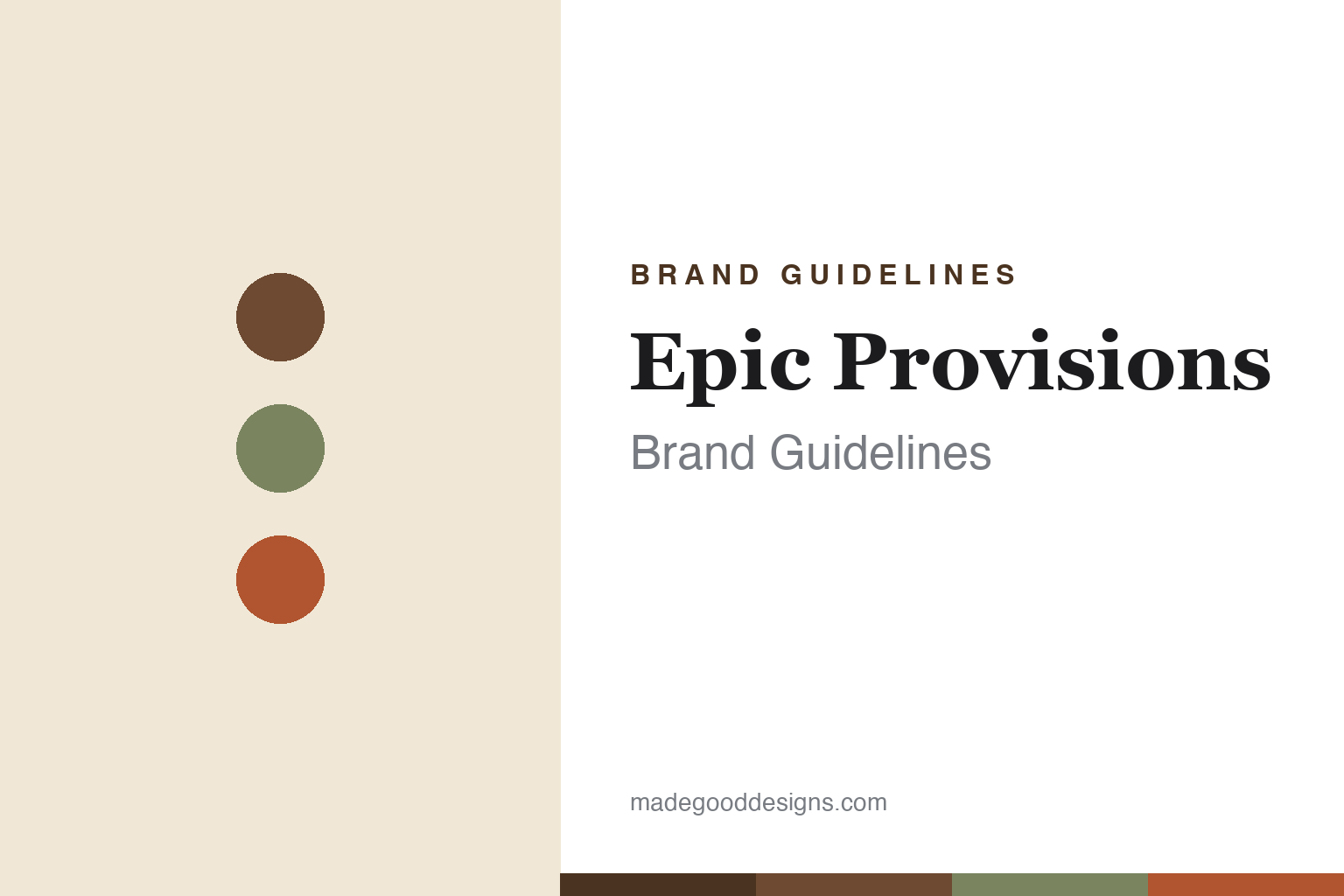
Epic Provisions Brand Guidelines
Animal-based, on purpose.
Aa
Two constants: a natural kraft palette and a natural serif wordmark. Abstract homage — not the Epic wordmark, animal illustrations or packaging.
The paleo meat bar
Epic put grass-fed meat in a protein bar.
Epic Provisions is a lesson in a clear dietary point of view. Founded in 2013 in Austin, Texas by endurance athletes Taylor Collins and Katie Forrest, it made one of the first 100% grass-fed meat, fruit and nut bars — animal-based protein for paleo, keto and Whole30 eaters. In 2016 it was acquired by General Mills.
Its identity is natural and rugged: kraft and earth tones, a per-flavour animal illustration (the bison is iconic), and a bold “EPIC” wordmark. The flagship — a Bison Bacon Cranberry bar — plus jerky strips, pork rinds and cooking fats (duck fat, tallow) all sit under an animal-based, regenerative-agriculture ethos.
(Honest notes: Epic is owned by General Mills (since 2016), not independent; the founders’ later regenerative ventures, Roam Ranch and Force of Nature, are separate companies; and the “whole-animal / nose-to-tail” story is the brand’s stated ethos, which reporting has questioned — so we attribute it rather than assert it as literal fact. No official brand hex is published.)
Colour
Epic lives in natural kraft and earth. Click a swatch to copy the hex.
Epic’s identity is natural, earthy and rugged — a bison brown, a sage, a rust, a kraft, and an ink. The palette is drawn from nature: browns, sages and rusts on kraft, matching an outdoors, grass-fed, animal-based story. It signals premium natural and paleo rather than mass or processed. The honest caveat: with no published brand hex, these tones are an original, unofficial interpretation, not first-party values.
The lesson is earth tones signal natural and premium. Epic’s world is the ranch and the trail. For designers, it is a reminder that a restrained, natural palette plus a hand-drawn animal motif can communicate “real food from real animals” at a glance — matching a paleo, grass-fed positioning. The takeaways: draw the palette from nature; use a per-flavour illustration to signal the source; and treat any single hex as unofficial — using a deep brown for small text so the naturals stay warm.
Typography
The wordmark spirit is a natural serif — grounded and premium.
Epic’s identity carries a natural, grounded, premium spirit — a bold “EPIC” wordmark over kraft packaging and animal illustrations. A sturdy natural serif captures the mood: it is earthy and credible, the register of a brand built on grass-fed meat and regenerative land. Set against kraft and earth tones, the serif feels premium and authentic — exactly the paleo, animal-based personality Epic carries. It is natural rather than clinical, mirroring food that leans into its origins. (Epic’s real wordmark, the animal illustrations and packaging are trademarks and trade dress we describe but do not reproduce, and the exact typeface is not published, so we don’t assert it.) Because the specific mark is not ours to use, the honest description is “a natural serif spirit,” not the Epic logo. The type behaves like the brand: earthy, grounded and premium.
Aa
A natural serif spirit — grounded and premium. (Specimen set in Vollkorn, a natural serif; NOT the Epic logo, which is a trademark.)
Selling a diet, not just a snack
Epic stands for animal-based.
Epic Provisions is a lesson in owning a dietary identity. Rather than a generic protein bar, Epic made itself the animal-based, paleo, grass-fed option — and dressed it in natural kraft, earth tones and animal illustrations so the values were visible before a word was read. The design sold the diet. The differentiator is a clear, values-led point of view, expressed visually.
For designers and brand-builders, Epic offers a clear takeaway: values can be designed into the pack. The lessons: pick a clear point of view (animal-based, grass-fed) and make the palette and imagery embody it; use natural materials and hand-drawn motifs to signal authenticity; and be honest about claims. It is also a reminder to stay accurate: Epic is owned by General Mills, and its whole-animal ethos is a brand claim reporting has questioned — with the palette here an unofficial interpretation. Epic sold a diet — proof that a point of view can be the difference.
Explore & save
Keep Epic Provisions’s identity on hand — save it to a board in the Made Good inspiration library.
Epic Provisions identity set
Pin the natural kraft palette and the natural-serif spirit to your own board.