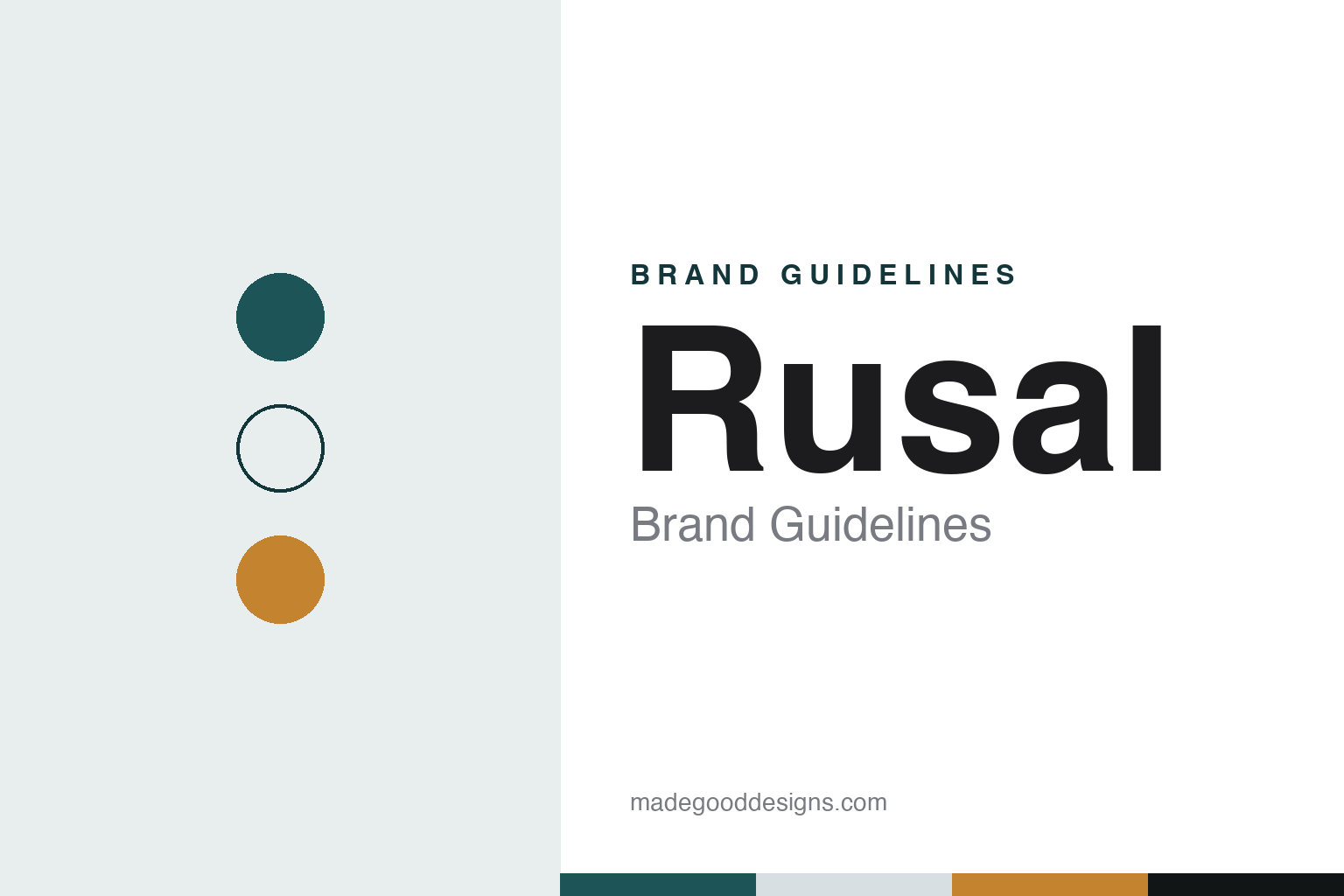
Rusal Brand Guidelines
A 2000 Siberian merger, a 2010 Hong Kong listing and ALLOW.
Aa
Two constants: a teal, ice grey and amber palette and a geometric sans register. Abstract homage — not a Rusal product or mark; no logo, ingot or product is reproduced.
Siberian Aluminium
Soviet-era smelters, merged in 2000.
Rusal is a young company built on old plants. Its own history page traces Russian aluminium back to the first Soviet smelter at Volkhov, launched in 1932, and to the great Siberian works that followed: the Bratsk smelter produced its first metal on 25 July 1966, after a cascade of hydropower dams was built on the Angara and Yenisei rivers, and the Sayanogorsk smelter in Khakassia started in 1985. In the war years, the company says, the newly built Novokuznetsk smelter and the Urals smelter supplied metal to the Soviet aviation and shipbuilding industries. These plants belonged to the Soviet state; Rusal itself was formed decades later.
Its direct predecessor was Siberian Aluminium (Sibirsky Aluminium). English Wikipedia says companies set up by the businessman Oleg Deripaska began buying shares in the Sayanogorsk smelter in the early 1990s and that he became its general director in 1994. In 1997 these holdings were restructured into Siberian Aluminium, which, Rusal says, included the Sayanogorsk smelter, the Sayanal foil mill and a can-sheet plant at Dmitrov near Moscow.
Rusal was founded in 2000, when Siberian Aluminium and Millhouse Capital, owned by Roman Abramovich, agreed to merge their aluminium and alumina assets, Wikipedia and the company both say. Rusal says the combined business added the Krasnoyarsk and Bratsk smelters. In 2003 Millhouse sold its half to Basic Element, Deripaska’s holding company, according to Wikipedia. The group then reached abroad: it took over the Friguia bauxite and alumina complex in Guinea from 2002, bought a 20% stake in Queensland Alumina in Australia in 2005, and commissioned the new Khakas smelter in December 2006, the company says.
Colour
United Company Rusal and a Hong Kong listing.
The present company took shape in 2007. Rusal, SUAL and the alumina assets of Glencore were merged into United Company Rusal, a deal completed in March 2007, Wikipedia says. Rusal had already narrowed its focus to the upstream business: Wikipedia records that it sold its fabricating division to Alcoa in January 2005. In the years that followed it bought a stake of more than a quarter in Norilsk Nickel in 2008 and restructured its debts with Russian and foreign banks in late 2009, the company says.
In January 2010 United Company Rusal floated on the Hong Kong Stock Exchange. Interfax reported on 25 January 2010, quoting the company’s statement to the exchange, that 229 investors had bought shares in the offering, which placed 10.64% of the enlarged share capital. Global depositary receipts also traded on NYSE Euronext in Paris until they were voluntarily delisted on 7 May 2018, and the Moscow Exchange admitted the shares on 23 March 2015, Wikipedia says. Rusal lists its tickers as 486 in Hong Kong and RUAL in Moscow.
United Company Rusal was long incorporated in Jersey, where Treasury still placed it in 2018. Since 25 September 2020 its place of registration has been Kaliningrad, Russia, Wikipedia says, and its head office is in Moscow. As of the end of 2020 it owned nine aluminium smelters, nine alumina refineries and seven bauxite mines around the world, according to Wikipedia.
Typography
Metal, light and labels.
Aluminium companies sell a grey metal that most people never see in its raw form, so their imagery leans on the moments when it glows. The potline, a long hall of electrolytic cells, and the casthouse, where molten metal is poured into ingots, slabs and billets, are the scenes that recur in annual reports and recruitment pages: orange light, heat-resistant suits and stacked bars of silver metal.
Further down the chain, the pictures change to finished forms. Rolling mills show coils of sheet and foil; marketing pages turn to beverage cans, window frames, aircraft panels and car bodies, the places where buyers meet the metal. Producers also photograph the smelter itself from a distance, sometimes beside the dam, hydro station or power plant that feeds it, since smelting is done by electrolysis and runs on a steady supply of electricity.
Over the past decade, low-carbon metal has become a brand category of its own. Producers give named labels to aluminium made with hydropower or other low-emission electricity and publish carbon figures alongside them; Rusal markets metal under the ALLOW name and Alcoa uses its Sustana family, the companies say. Recycling programmes, scrap collection and remelting are presented in the same frame, and sustainability reports, with their landscapes, maps and charts, have become one of the main design documents these companies publish.
For a designer, the category is a study in contrast: heavy industry, huge sites and molten metal on one side, and on the other a clean, technical language of labels, figures and finished products used to present it to buyers and the public.
Aa
A geometric sans for a Moscow-based metal group. (Specimen set in Manrope, a sans STAND-IN; NOT the Rusal logo.)
Rusal
Sanctions, shareholders and ALLOW.
On 6 April 2018 the US Treasury’s Office of Foreign Assets Control added United Company RUSAL PLC to its sanctions list, describing it as owned or controlled by En+ Group, Treasury’s press release says. Rusal’s history page says it had to cut back shipments in the first months that followed. On 27 January 2019 OFAC lifted the sanctions on En+, Rusal and EuroSibEnergo, following a notification to Congress on 19 December 2018, after changes to the companies’ shareholdings and boards, Treasury said that day.
Ownership remains concentrated. As of 31 December 2025, Rusal says, En+ Group held 56.88% of its shares and SUAL Partners 22.25%, with the remaining 20.87% held by other shareholders, including the public. The company reports that it produced 3.918 million tonnes of aluminium and 6.858 million tonnes of alumina in 2025. Its main product brand is ALLOW, which Rusal describes as low-carbon aluminium and which it introduced in November 2017, Wikipedia says; the company also names its own reduction-cell designs, RA-300, RA-400 and RA-550, on its website.
The group has kept building in Siberia and abroad. Shipments from its Dian-Dian bauxite operation in Guinea began on 19 June 2018, Wikipedia says, and the first stage of the Boguchansky smelter, part of an energy-and-metals complex built with a hydropower station on the Angara, went into commercial operation in 2019, the company says. It has also moved further into finished goods: Rusal says it added the SKAD aluminium-wheel plant in Krasnoyarsk in 2017. In April 2022 its US sales arm, Rusal America, was sold to two former executives and renamed PerenniAL, and in October 2023 Rusal bought a 30% stake in the Chinese company Hebei Wenfeng New Materials, according to Wikipedia.
For a design guide, Rusal shows how a group assembled from Soviet-era plants, mergers and stock-market listings presents itself through technology names and a product label rather than through its history of ownership. Compare Glencore, whose alumina assets went into the 2007 merger, and Alcoa, which bought Rusal’s fabricating division in 2005. For this guide we use a deep teal, an ice grey and a warm amber with a sans, an unofficial interpretation; no product or logo is reproduced.
Explore & save
Keep Rusal’s identity on hand — save it to a board in the Made Good inspiration library.
Rusal identity set
Pin the Rusal teal, ice grey and amber palette and the geometric sans register to your own board.