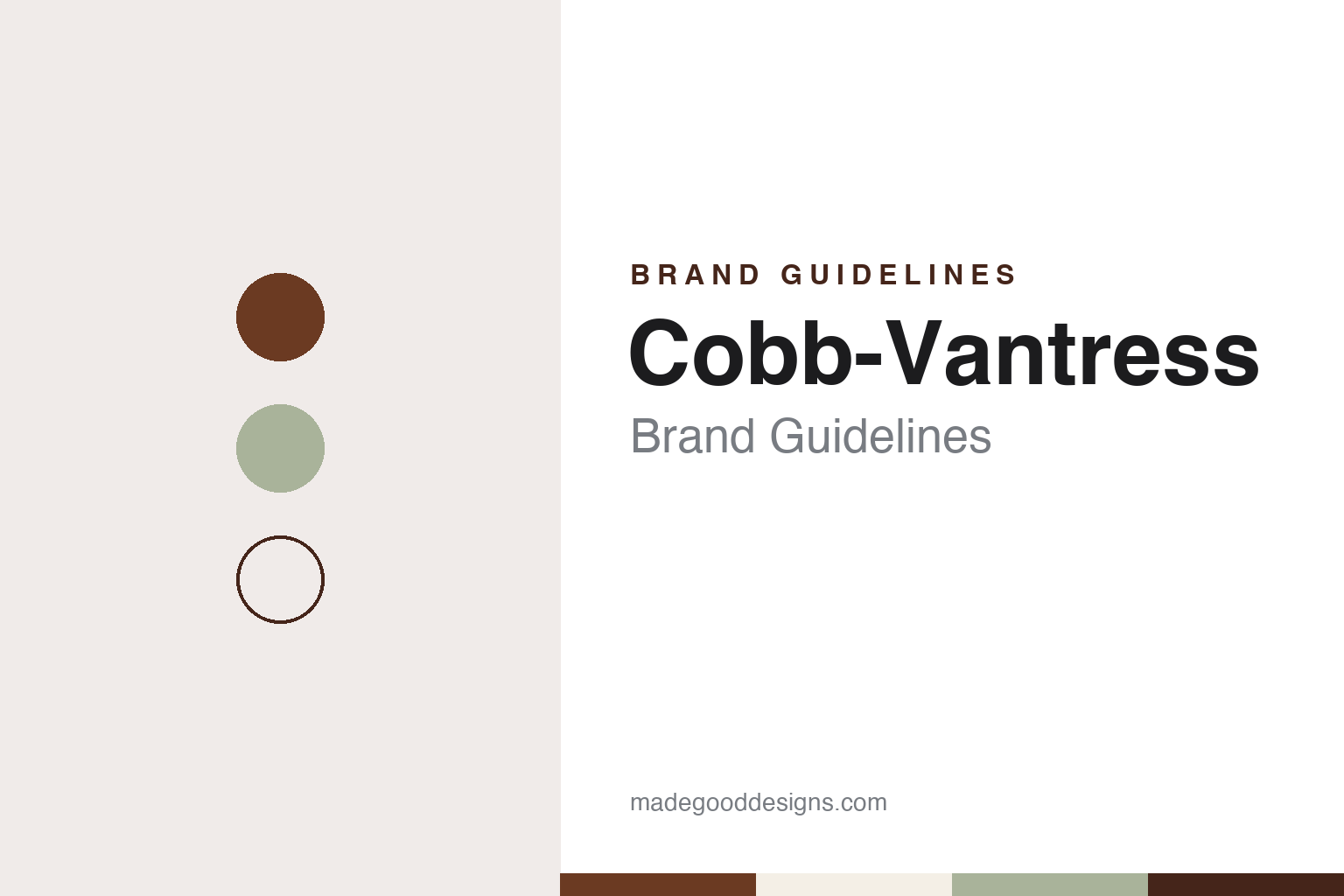
Cobb-Vantress Brand Guidelines
The 1916 Littleton farm that became Tyson’s breeding company.
Aa
Two constants: a Cobb-Vantress russet, sage and feather-white palette and a farm-ledger serif register. Abstract homage — not a Cobb-Vantress product or mark; no bird, logo or label is reproduced.
Cobb’s Pedigreed Chicks
An old farm in Littleton, Massachusetts.
Cobb-Vantress dates itself to 20 November 1916, when, according to the timeline on its website, Robert C. Cobb Sr. bought the Old Pickard Farm in Littleton, Massachusetts, and formed Cobb’s Pedigreed Chicks. The company describes itself today as the world’s oldest poultry-breeding company; that is its own claim.
The early history in that timeline is a New England hatchery story. Incubator capacity reached 1,400 eggs in 1920; by 1925, the company says, Cobb was the largest breeder of Barred Plymouth Rocks in New England; and in 1947 it began a line of all-white birds, its White Rocks, which it introduced to the American broiler-breeder market in 1955. It first exhibited at the poultry show in Atlanta in 1956, a fixture it marked fifty years later.
Cobb went abroad early. The company lists its first European franchise in 1959 and a first shipment of grandparent stock to the Cobb Breeding Company in the United Kingdom in 1960. In 1961 it opened a hatchery in Siloam Springs, Arkansas, the town that became its home. Its timeline then records distribution in Africa from 1964, the Cobb100 broiler-breeder in 1966, a Spanish company, Cobb-Española, in 1969, and in 1970 the start of the British breeding programme that produced the Cobb500. English Wikipedia, in its article on the bird, also places the Cobb line’s development in England in the 1970s and says the Cobb500 was introduced to the United States in 1985.
Colour
Vantress, Upjohn and Tyson.
The other half of the name comes from Vantress. English Wikipedia says the Red Cornish crosses of the Vantress Hatchery won the overall prize in the Chicken of Tomorrow contest, the broiler-breeding competition run by the grocery chain A&P with the US Department of Agriculture between 1946 and 1948, and that the Cobb lineage descends from the Vantress bird bred for it.
The two names met through ownership changes in the 1970s and 1980s. Cobb’s timeline says the company was bought by The Upjohn Company, the American pharmaceutical maker, in 1974, the same year Tyson Foods acquired the Vantress breeding lines; a Tyson Foods company history published by Reference for Business also dates Tyson’s purchase of Vantress Pedigree, Inc. to 1974. The two then worked together. Cobb dates its first venture with Tyson, Arkansas Breeders, to 1983; the Tyson history gives 1984 and says it was set up to breed and develop the Cobb500.
In 1986, Cobb’s timeline says, Cobb-Vantress was formed as a joint venture between Tyson Foods and Upjohn. English Wikipedia, citing a 1992 study of the chicken-breeding industry in Business History Review, describes Tyson’s share as a 50 per cent stake acquired that year. In 1994, the company says, Tyson acquired all of Cobb’s stock from Upjohn, and Cobb-Vantress has been a wholly owned part of the Tyson business since. Its website is published by Cobb-Vantress, LLC, and its chief executive’s biography notes nearly two and a half decades at Tyson before he joined Cobb.
Typography
How breeding companies present themselves.
Livestock-genetics companies sell something a customer cannot see: the breeding value carried in an animal, a fertile egg or a frozen straw of semen. Their marketing therefore leans on the animals themselves. A prize bull or a breeding sow is photographed side-on, square to the camera, against a barn wall or an open sky, so that frame, legs and topline read clearly; the pose echoes the show ring and the sire catalogue.
Poultry breeders work at a different scale. Their pictures tend to show a day-old chick held in gloved hands, rows of laying hens in clean housing, or a single bird against a plain backdrop, with the brand name and line number set beside it. The gloves signal hygiene, and with breeding farms closed to casual visitors, staged photography often stands in for a site visit.
The laboratory is the third setting. Cattle and pig genetics companies show technicians filling or sorting semen straws, opening liquid-nitrogen tanks wrapped in vapour, or reading genomic data on a screen, to show that selection now runs on DNA testing as well as on pedigree and performance records. Alongside them come farmer portraits: a dairy farmer in the parlour, a pig producer in the barn, a family on the farm, used to make a technical product feel local.
Much of this imagery is made for trade shows. World Dairy Expo in Madison, Wisconsin, EuroTier in Hanover and the International Production & Processing Expo (IPPE) in Atlanta are where breeders put up stands, hand out sire catalogues and parade cattle in the ring. The companies in this guide are set out by what can be checked: who founded them, who owns them and what they breed.
Aa
A ledger serif for a century-old pedigree farm. (Specimen set in Libre Caslon Text, a serif STAND-IN; NOT the Cobb-Vantress logo.)
Cobb-Vantress
The Cobb500 and its successors.
Under Tyson, Cobb-Vantress grew by acquisition and partnership, its timeline shows. In 2000 it bought the assets of Avian Farms, including facilities in Kentucky and Texas and the Avian genetic lines. In 2007 it announced an alliance with Hendrix Genetics that brought it the Hybro broiler business, and in 2008 a partnership with the French breeder Sasso for slower-growing markets, launching the Cobb Sasso 150. Its timeline also records a doubled quality-testing laboratory at Siloam Springs in 2010, a hatchery at Lafayette, Tennessee, in 2011, a fifth American research complex at Deer Lodge, Tennessee, and a research agreement with CP Foods of Thailand in 2012, and a production complex in China in 2015. It celebrated its centenary in 2016, opened a feed mill at Joanna, South Carolina, in 2017 and an office in downtown Siloam Springs in 2018, and added a pure-line production site in New Zealand in 2019.
The company’s range today is led by the Cobb500, which its website calls its flagship broiler, with the MXMale for breeder flocks and the newer Cobb800, which it says was developed for markets where yield and scale drive economics. Its leadership page says it supplies broiler breeding stock to more than 100 countries; that is the company’s figure.
The Cobb500, like other fast-growing broilers, is part of a public welfare debate. English Wikipedia’s article on the bird records criticism from animal-welfare groups, including calls from Open Cages for the industry to stop using it,.
The identity reflects that mix of farm and laboratory. Its website mostly uses the short name Cobb, while the legal company keeps the double-barrelled Cobb-Vantress name, and its birds carry plain numbers: the Cobb100 of 1966, the Cobb500, the Cobb700 launched in 2007 and the Cobb800.
For a design guide, Cobb-Vantress shows how a hundred-year-old farm name can survive inside a large food group by staying attached to one product number. Compare Aviagen, whose Arbor Acres brand also came out of the 1948 contest, and Hendrix Genetics, its research partner. For this guide we use a russet, sage and feather white with a serif, an unofficial interpretation; no product or logo is reproduced.
Explore & save
Keep Cobb-Vantress’s identity on hand — save it to a board in the Made Good inspiration library.
Cobb-Vantress identity set
Pin the Cobb-Vantress russet, sage and feather-white palette and the farm-ledger serif register to your own board.