Cohu Brand Guidelines
The 1947 voltage-standard laboratory that became a chip-test group.
Aa
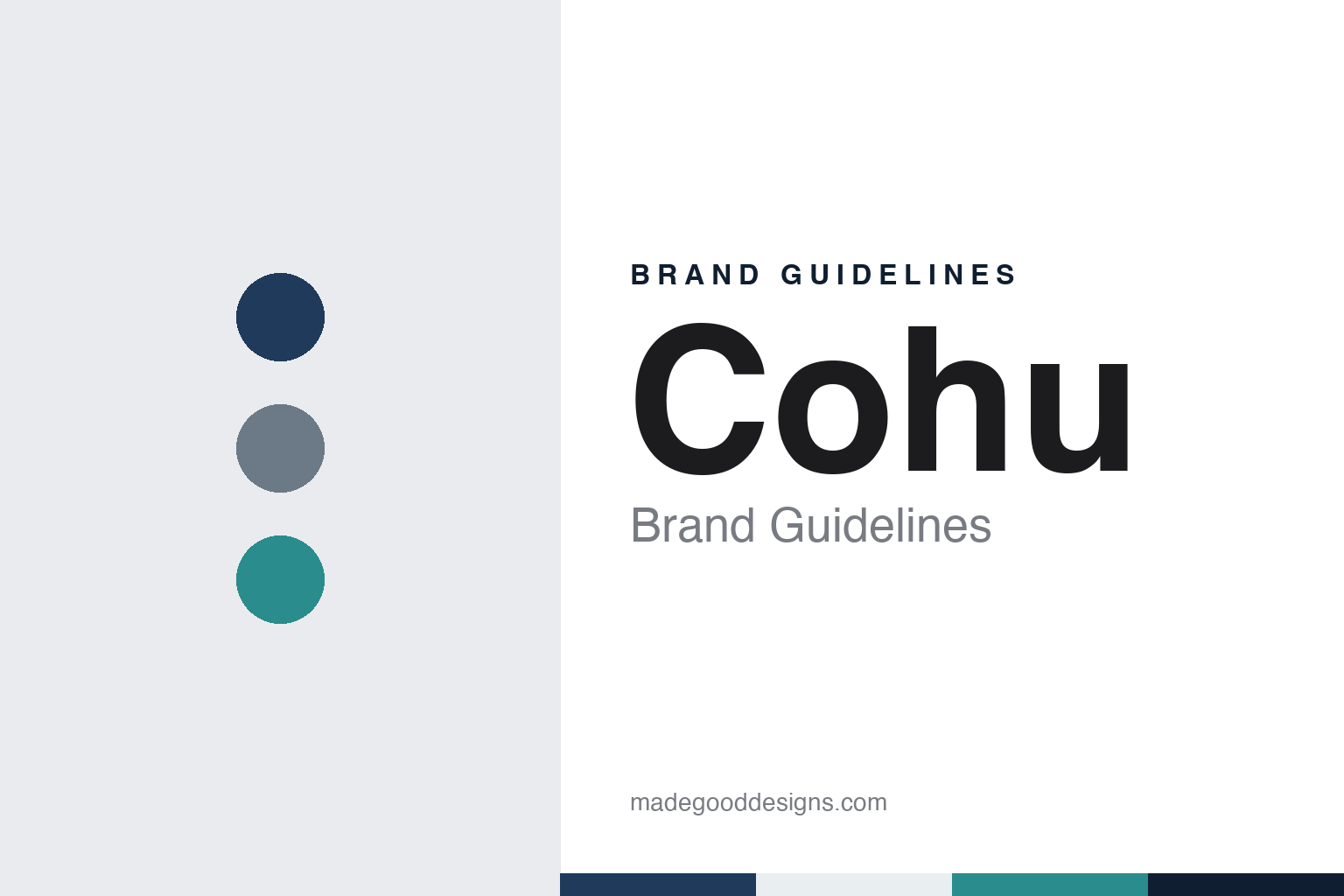
Two constants: a navy, steel and teal palette and an engineering sans register. Abstract homage — not a Cohu product or mark; no machine, logo or nameplate is reproduced.
Kalbfell Laboratories
A voltage-standard laboratory with a changing name.
Cohu’s story starts under a different name. The International Directory of Company Histories, in an entry published around 2000, traces the company to a small laboratory partnership formed in 1945 by partners including Dr. David Kalbfell. Called Kalbfell Laboratories, it was set up to build precision voltage standards and later made test equipment such as voltmeters and ohmmeters. It was incorporated in California in 1947 and began active operations that year — the year Cohu itself gives as its founding.
The names kept changing. The same history records that the company became Kay Lab in September 1954 and adopted the name Kintel Electronics in June 1956, when it made its first public share issue. In 1957 the company’s assets were acquired by Lamott T. Cohu and other investors, and the business was reincorporated in Delaware as Cohu Electronics Inc.; the present name, Cohu, Inc., followed in 1972. The core of Kalbfell’s original company carried on as the Cohu Electronics Division, which, the directory says, designed and made television and closed-circuit television cameras, camera controls, lenses and monitors.
For decades Cohu was a mixed electronics group. According to the directory, it bought Fisher Research Laboratory, the metal-detector maker founded in Palo Alto in 1931, in 1967, and Broadcast Microwave Services, a maker of microwave radios for television video and audio links, in 1984. Its future, though, lay in another purchase: Delta Design, founded in 1957 to make high-speed component test handlers for semiconductor devices, environmental test chambers and burn-in chambers, which Cohu acquired in 1983.
Colour
Handlers, contactors and testers.
A test handler moves packaged semiconductor devices, controls their temperature during test and presents them to the tester; Cohu’s own website describes its handlers as equipment that automates the movement of devices, controls temperature and provides vision inspection. Delta Design built pick-and-place handlers. In June 1994 Cohu added Daymarc, founded in 1959 and among the early makers of gravity-feed, fully automatic test handlers, the directory says, and in May 1998 it formed a Semiconductor Equipment Group to bring Delta Design, Daymarc and their Asian operations together.
Cohu’s own timeline lists the next steps: Rasco, with its gravity-feed handlers, in 2008; Ismeca, with its turret handlers, in 2013; and in 2015 the folding of the Delta, Ismeca and Rasco names into the single Cohu brand. In 2017 it added Kita, a maker of spring probe contacts used in final-test contactors, probe cards, circuit-board test boards and connectors.
The largest step was Xcerra. Xcerra had begun as LTX, an automatic test equipment maker founded in Massachusetts in 1976 by engineers who had all left Teradyne, English Wikipedia says. LTX merged with Credence Systems in August 2008 to form LTX-Credence, bought Everett Charles Technologies and Multitest from Dover Corporation in December 2013, and took the Xcerra name in 2014. A planned sale to Unic Capital Management, an affiliate of the Chinese fund Sino IC Capital, was announced in April 2017; in February 2018 Xcerra terminated it, citing difficulties in securing approval from the Committee on Foreign Investment in the United States. Cohu completed its purchase of Xcerra in October 2018. According to Cohu’s timeline, the deal brought LTX-Credence testers, Multitest test handlers and contactors, and Everett Charles Technologies pogo spring probes.
Today Cohu groups its products into test handlers, semiconductor testers, interface solutions, inspection and metrology, and software analytics. Its website names ranges such as the Eclipse pick-and-place handler, the Diamondx test system, the Neon inspection system and the HYDRA and MAXOR contactor series.
Typography
Design and documentation.
Test and measurement companies sell instruments that most people never see, and their marketing is built around the screen. Product pages and brochures tend to lead with an oscilloscope display: a dark background, a fine grid of divisions and bright traces in yellow, cyan, magenta and green, each colour standing for a separate channel. The trace is the product’s face, so photographs are often cropped tight on the display rather than on the case around it.
The second familiar image is the laboratory. Signal and spectrum analysers, generators and power supplies appear stacked in racks or lined up on a bench, cables looping between front panels of knobs, soft keys and connectors. Engineers are shown probing a circuit board with a fine tip, reading a waveform while the device under test sits under a lamp or a magnifier. The tone is calm and technical, with product names and model numbers set in plain sans type.
Further along the chain, the pictures move into the factory. Semiconductor test makers show automated chip testers and handlers in clean production areas, staff in protective suits, and wafer probe cards photographed under magnification, where rows of needle-like contacts meet the pads of a chip. Network and wireless test companies favour antennas, fibre spools, base stations and phones in shielded boxes.
The category also meets its customers in person. Trade shows such as electronica in Munich, DesignCon in Santa Clara and Mobile World Congress in Barcelona are where new instruments are launched and demonstrated live, so stand design, demo screens and printed data sheets carry much of each brand’s visual identity. This guide sets out what can be checked about each company — who founded it, who owns it and where its products are made — and marks clearly what rests on the company’s own word.
Aa
An engineering sans for a chip-test company. (Specimen set in Archivo, a sans STAND-IN; NOT the Cohu logo.)
Cohu
An investor’s surname on a chip-test business.
Acquisitions have continued. Evertiq reported on 2 October 2023 that Cohu had acquired Equiptest Engineering, a provider of semiconductor test contactors and other consumables, which became part of its Interface Solutions Group; Cohu’s timeline also lists MCT Worldwide, which added film-frame test handlers and laser-mark handlers, in 2023. On 8 January 2025 Evertiq reported that Cohu had completed its purchase of Tignis, a Seattle software company founded in 2017 whose PAICe products apply artificial intelligence to process control, following an agreement signed on 16 December 2024.
The company still carries the surname of Lamott T. Cohu, whose investor group bought it in 1957, and it trades on Nasdaq under the ticker COHU. It describes itself as a supplier of test, automation, inspection and metrology products, software analytics and services to the semiconductor industry. Its website lists its headquarters as Poway, California, in the San Diego area, with product development in La Chaux-de-Fonds in Switzerland, Kolbermoor in Germany, Norwood in Massachusetts, St. Paul in Minnesota and Seattle, and manufacturing operations in Melaka and Penang in Malaysia, Laguna in the Philippines, Osaka and Singapore.
The older business lines that filled the directory’s entry around 2000 — television cameras, metal detectors and microwave radios — are absent from the five product groups on Cohu’s website today, which are all aimed at semiconductor manufacturing. Its timeline begins with the 1947 founding and runs through the handler, contactor, tester and software purchases described above.
For a design guide, Cohu shows how a company can keep one plain name while older brands such as Delta Design, Rasco, Ismeca and Multitest are folded beneath it. Compare Teradyne, the company LTX’s founders left in 1976, and Advantest, another maker of automatic test equipment. For this guide we use a deep navy, a steel grey and a signal teal with a sans, an unofficial interpretation; no product or logo is reproduced.
Explore & save
Keep Cohu’s identity on hand — save it to a board in the Made Good inspiration library.
Cohu identity set
Pin the Cohu navy, steel and teal palette and the engineering sans register to your own board.