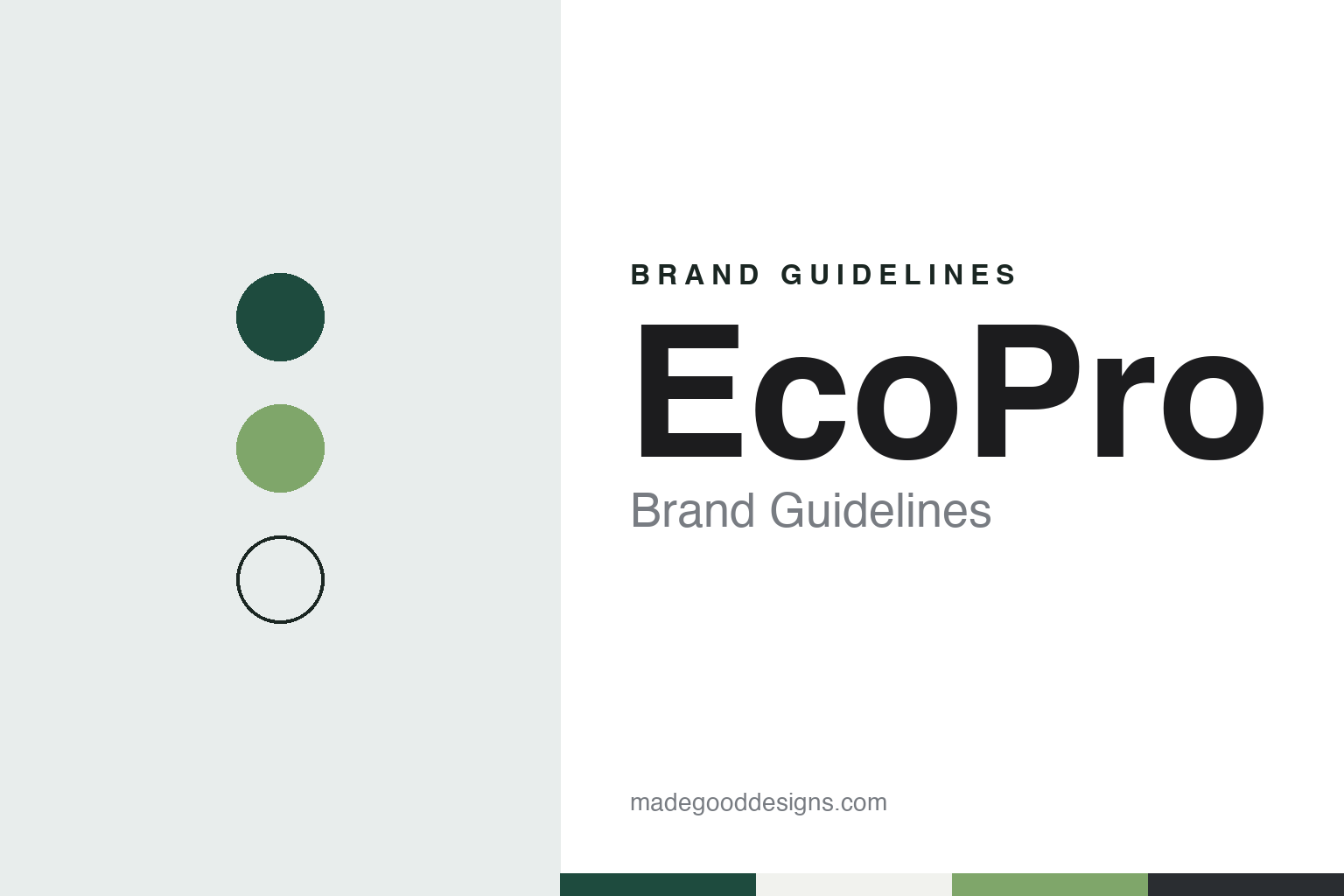
EcoPro Brand Guidelines
The air-pollution firm that became a cathode materials group.
Aa
Two constants: a pine green, leaf and nickel grey palette and a grotesque sans register. Abstract homage — not an EcoPro asset or mark; no logo, plant photograph or product is reproduced.
Environment and energy
From air-pollution filters to battery materials.
EcoPro was established in October 1998 and is headquartered in Cheongju, in South Korea’s North Chungcheong province, according to English and Korean Wikipedia and the company’s own site; its head office, and EcoPro BM’s Plants 1 to 4N, are in the Ochang area of the city. The Korea Times, reporting in August 2023, named Lee Dong-chae as its founder and former chairman.
The company did not begin in batteries. EcoPro says that from its founding in 1998 it worked on eco-friendly core materials and components for air pollution control, and that in 2003 it succeeded in localising key materials for rechargeable batteries in Korea, after which it grew on what it calls the twin pillars of “Environment and Energy.” EcoPro BM’s site still lists, among the group’s companies, one that develops technologies to remove and prevent air pollutants, including harmful gases and greenhouse gases.
Battery materials became the larger part of the business, and the group was reorganised around them. EcoPro says the spin-off of EcoPro BM in 2016 and of EcoPro HN in 2021 turned it into a holding company, focused on strategy for the group and on new businesses. EcoPro BM, for its part, says it was split from its parent in May 2016 by physical division so that it could specialise in cathode materials.
English Wikipedia records an early international customer: in 2015 Sony signed a supply contract for EcoPro’s cathode materials, and Murata Manufacturing continued the relationship after buying Sony’s battery business in 2017.
Colour
EcoPro BM and the Pohang campus.
The group’s main operating company is EcoPro BM, which makes cathode active materials and their precursors for lithium-ion batteries. The cathode is the part of a cell that largely sets its charging capacity and lifespan, the company explains. EcoPro BM says it was the first in Korea to develop and mass-produce high-nickel cathode materials, and it sells them in two families: an NCA series, using nickel, cobalt and aluminium, and an NCM series, using nickel, cobalt and manganese, including a high-end NCM it calls CSG. It says it is widening the range to mid-nickel materials, lithium iron phosphate and materials for sodium batteries, for electric vehicles, power tools and energy storage systems.
The group arranges its companies as a chain, which it calls a closed-loop eco system. EcoPro says it launched EcoPro Materials in the Yeongilman Industrial Complex at Pohang in 2018, followed by EcoPro Innovation and EcoPro AP, and that the site, which it calls the EcoBattery Pohang Campus, covers about 150,000 square metres. Its own descriptions of the units are: EcoPro Innovation makes lithium hydroxide from salt-lake brine, ore and recycled material; EcoPro AP makes high-purity oxygen, nitrogen and argon; EcoPro CnG recycles scrap and used batteries into black powder and then into lithium sulfate solution and refined metals; and EcoPro EM, set up in 2020, makes high-nickel NCA cathode materials.
EcoPro EM is a joint venture between Samsung SDI and EcoPro BM, and completed a cathode factory in Pohang in October 2022, according to English Wikipedia. EcoPro BM lists its plants as Plants 1 to 4N at Ochang in Cheongju and Plants 5 to 5N in Pohang.
The group has also built abroad. In August 2023 Ford, SK On and EcoPro BM announced a cathode plant at Bécancour, Quebec, Electric Autonomy reported at the time, with production then planned for 2026; English Wikipedia says its construction has since been halted repeatedly. In Hungary, EcoPro completed a production site at Debrecen at the end of November 2025, Battery-News reported on 2 December 2025, citing the Korea JoongAng Daily. It houses EcoPro BM’s cathode plant, said to have an annual capacity of 54,000 tons, alongside EcoPro Innovation’s lithium processing and EcoPro AP’s industrial gases, with mass production to start in stages from 2026, beginning with NCA and NCM materials.
Typography
Salt flats, pits and cathode kilns.
Lithium and battery-materials companies sell to other companies, not to shoppers, and their imagery is built for investors, carmakers and governments as much as for the public. Most of it starts at the source. Brine producers show their evaporation ponds from the air: long rectangles of turquoise, green and pale yellow laid out across a white salt flat, with mountains on the horizon. Hard-rock miners show open pits cut in terraces into red or ochre earth, haul trucks on the benches and stockpiles of pale spodumene ore.
The next layer is chemistry. Company photographs move indoors to white lithium carbonate and lithium hydroxide powders held in gloved hands or poured from a scoop, bulk bags stacked in a warehouse, and the long kilns and furnaces of refineries and cathode-material plants. These images carry the industry’s main argument: that a mineral dug or pumped in one country becomes a battery-grade chemical in another.
The end use usually appears last, and it is almost always the same: battery cells, electric cars, charging cables and grid-scale storage containers. The pictures show where the material is meant to go.
Much of the visual language is corporate rather than consumer. Investor-day slides and annual reports lean on world maps dotted with mines, plants and offices, flow charts of the supply chain from resource to cathode, and the logos of listing exchanges. Industry gatherings such as Fastmarkets’ Lithium Supply and Battery Raw Materials conference bring producers, refiners and buyers into the same rooms, and the same maps and pond photographs reappear on stage. In a sector where few people see the product, the identity rests on landscapes, laboratories and the cars at the end of the chain.
Aa
A grotesque sans for a group that presents itself through chemistry and plants. (Specimen set in Archivo, a sans STAND-IN; NOT the EcoPro logo.)
Listing and governance
A Kosdaq group and a court ruling.
EcoPro and EcoPro BM are both listed on Korea’s tech-heavy Kosdaq market, The Korea Times reported in August 2023, when it described EcoPro as a blue chip of that market and noted that it had been added to the MSCI Korea index on 11 August 2023.
The same month brought a court ruling on the founder. On 18 August 2023 the Supreme Court of Korea upheld a two-year prison sentence, a fine and the confiscation of gains for the group’s founder and former chairman, The Asia Business Daily and The Korea Times reported. The courts found that between January 2020 and September 2021 he had bought shares before EcoPro BM’s long-term supply contracts were publicly disclosed, and then sold them, in breach of the Capital Markets Act. The Asia Business Daily reported that he had admitted the offence from the start of the investigation and returned the gains to EcoPro BM; the first-instance court had given a suspended sentence, and the prison term upheld in 2023 was set on appeal. The Korea Times said he had stepped down as chairman in 2022 while appealing.
The group’s own account looks outward. EcoPro says it is taking its closed-loop system from Korea into global markets, building a raw-material supply chain that starts in Indonesia and production bases in Europe. Battery-News, reporting the Debrecen opening, said EcoPro plans to use nickel from its smelting plant in Indonesia for the Hungarian materials, and that capacity there is expected to double in future.
For a design guide, EcoPro shows how a materials group with no consumer product builds a public face from chemistry, campuses and a family of company names. Compare POSCO Future M, another Korean cathode materials maker, and Umicore, the Belgian materials group. For this guide we use a pine green, a leaf green and a nickel grey with a sans, an unofficial interpretation; no product or logo is reproduced.
Explore & save
Keep EcoPro’s identity on hand — save it to a board in the Made Good inspiration library.
EcoPro identity set
Pin the EcoPro pine green, leaf and nickel grey palette and the grotesque sans register to your own board.