mAbxience Brand Guidelines
A biosimilar maker from Argentina and Spain, now wholly part of Fresenius.
Aa
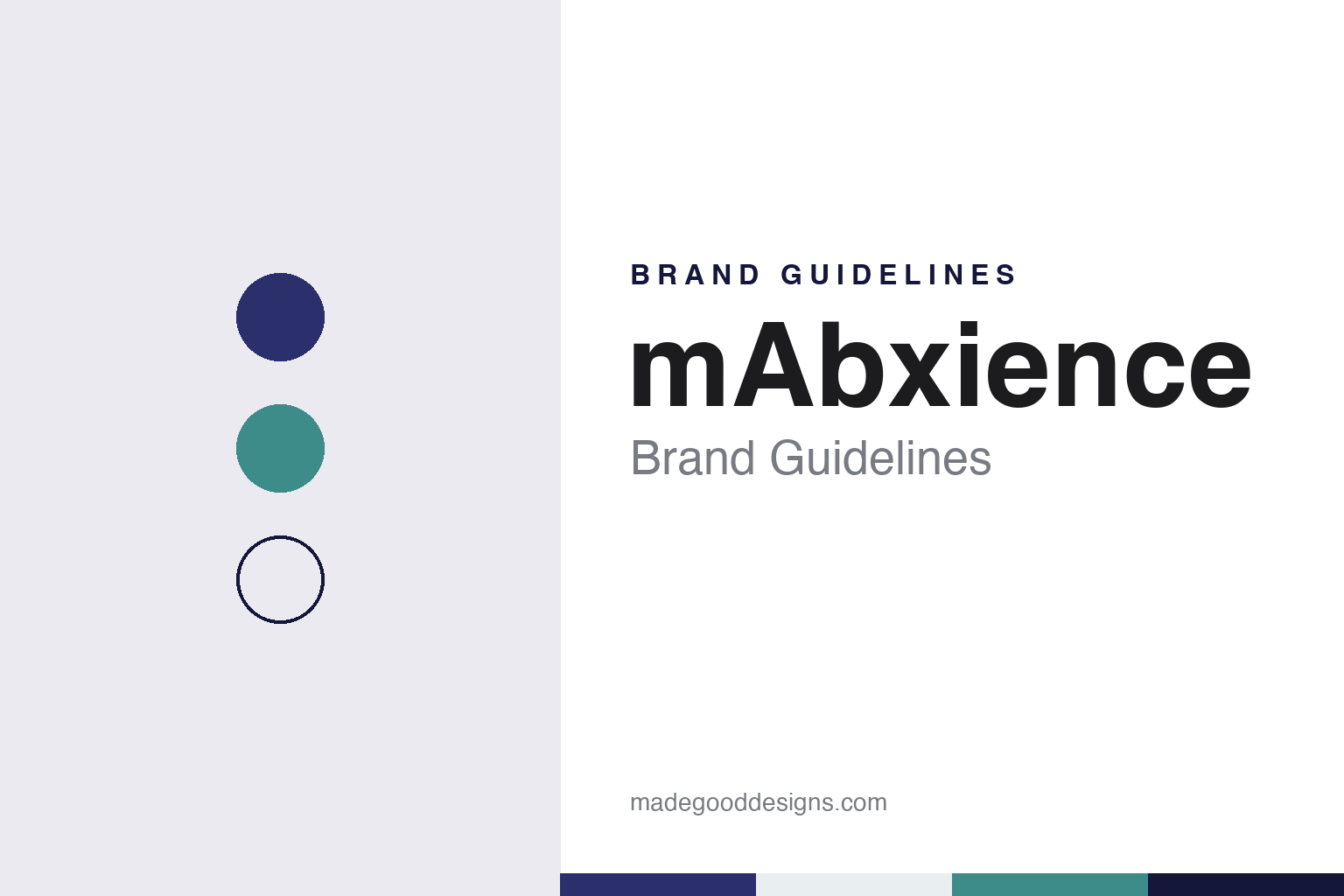
Two constants: a lab indigo, culture teal and steel grey palette and a clean technical sans register. Abstract homage — not a mAbxience product or mark; no pack, logo or device is reproduced.
From Insud
A biosimilar business born in an Argentine group.
mAbxience is a biotechnology company that develops and manufactures biosimilar antibodies, and it began inside the pharmaceutical group built by the Argentine physician and entrepreneur Hugo Sigman. Spanish Wikipedia says Sigman founded the chemicals and pharmaceuticals business Chemo in 1978, which grew into Grupo Insud, a group with interests in pharmaceuticals, forestry and film. Insud’s pharmaceutical arm, Insud Pharma, held mAbxience for its first decade. Sources give two starting points: Spanish Wikipedia says mAbxience was created in 2008, while the company’s own timeline places its founding by Sigman between 2010 and 2012.
The company describes its beginnings as those of “biosimilar specialists in Argentina.” Its first base was PharmADN in Munro, in Buenos Aires province, a business the company says was co-founded in 2007 and became mAbxience Argentina’s research and biomanufacturing arm. In 2014–2015, its timeline says, it added Genhelix in León, Spain, as its Spanish research and manufacturing centre. The group now has a Spanish address: its press releases carry a Madrid dateline, and it calls itself “a Spanish-based company.”
The first products were launched at home. The company says its rituximab biosimilar, coded MB01, was first launched in Argentina under the name Novex, followed in 2016–2017 by its bevacizumab biosimilar, MB02, as Bevax. It also lists two prizes from the Global Generics & Biosimilar Awards: “Biosimilar Initiative of the Year” in 2016 and “Business Development of the Year” in 2018. Wider approvals followed, the company says: the European Medicines Agency approved MB02 in 2020–2021, and the US FDA and Japan’s PMDA followed from 2022. The Spanish site at León, it adds, has cell-culture capacity of up to 24,000 litres on two lines, and holds manufacturing approvals from regulators including the FDA, the EMA and Japan’s PMDA.
Colour
Three plants and a partner model.
Manufacturing sits at the centre of the mAbxience story. The company says it runs three biologic drug-substance plants on two continents — Genhelix in León, and Garín and Munro in Argentina — using single-use bioreactors with a combined capacity of 50,000 litres. Pharma Manufacturing, reporting in October 2026, likewise described three multi-product drug-substance facilities in Spain and Latin America, supporting biosimilar monoclonal antibodies and contract manufacturing.
Garín brought the company wider attention in 2020. Spanish Wikipedia says that in August 2020 AstraZeneca chose mAbxience to make the active ingredient of the COVID-19 vaccine developed with the University of Oxford at Garín, for supply to Latin America outside Brazil, with formulation and packaging by the Mexican laboratory Liomont. Delays in 2021 drew wide public debate in Argentina and elsewhere in the region, and Sigman said the active-ingredient stage had been delivered on schedule. The company says the Garín plant made more than 200 million doses of an adenoviral COVID-19 vaccine.
Since then mAbxience has worked mostly through partners. It launched contract development and manufacturing services in 2020–2021 and later extended that platform to all its partners, it says. In December 2025 it and Amneal announced US FDA approval of two denosumab biosimilars, Boncresa and Oziltus, referencing Prolia and XGEVA, with mAbxience responsible for development and manufacture and Amneal holding US rights. In September 2026 it signed an agreement with Sandoz covering a proposed emicizumab biosimilar candidate, which mAbxience is to develop and make in Spain and Argentina while Sandoz holds commercial rights in most markets. Pharma Manufacturing reported that mAbxience had four products on the market, eight in development and more than 1,300 employees. The same report noted that in December 2025 mAbxience and HP announced a collaboration on an AI-based “digital twin” for antibody and biosimilar manufacturing, using production data to model cell-culture processes.
Typography
How biosimilar makers present themselves.
Biosimilar makers sell medicines that most people only ever meet as a pack in a pharmacy or a hospital ward, so their public image is built from the places where those medicines are made. Their websites and reports favour gleaming steel bioreactors, vials moving along blue-lit filling lines, scientists in gowns and hoods, and close-ups of prefilled syringes and autoinjector pens. The pictures signal scale and control rather than any single product.
The category is young. The European Medicines Agency’s record shows that the marketing authorisation for Celltrion’s Remsima, a biosimilar of the antibody infliximab, was issued on 10 September 2013, and English Wikipedia describes it as the first biosimilar monoclonal antibody approved by the EMA. Since then a group of companies in Asia, Europe and North America has built ranges of biosimilars, each sold under a brand name of its own, alongside the corporate names covered in this guide.
Their messaging leans on access. Celltrion states a mission of “a healthier tomorrow where no patients are left untreated”; Samsung Bioepis says it makes “quality-assured biologic medicines more accessible, more quickly.” Celltrion’s brand page ties its green to trust. Trade meetings such as the GRx+Biosims conference and the BIO International Convention are where the sector’s companies present their pipelines and meet partners.
This guide sets out what can be checked about each maker — who founded it, who owns it, and which approvals and deals dated sources record — and marks clearly what rests only on the company’s own word.
Aa
A clean technical sans for a science-led name. (Specimen set in Manrope, a sans STAND-IN; NOT the mAbxience logo.)
mAbxience
Two steps into Fresenius.
Ownership changed in two steps. In March 2022 Fresenius Kabi, the medicines business of Germany’s Fresenius group, agreed to buy a 55% stake in mAbxience Holding, and Fresenius announced on 1 August 2022 that the deal had closed, with a put and call option over the remaining 45% held by the sellers. Insud Pharma stayed on as a minority shareholder for four more years. On 1 October 2026 mAbxience announced that Fresenius had bought that remaining 45% from Insud Pharma; Pharma Manufacturing reported that the transaction closed on 30 September 2026 without needing regulatory approval. mAbxience is now wholly owned by Fresenius and sits within Fresenius Kabi’s biopharma business. Its chief executive, Jurgen Van Broeck, continues to lead it, reporting to Fresenius’s president of biopharma.
The company writes its name with a lower-case m followed by capital A and B, and its website carries the line “From lab to life.” It presents itself as a business-to-business company, offering its own biosimilar programmes to commercial partners alongside contract development and manufacturing for other firms, and it says it employs more than a thousand people across its sites.
For a design guide, mAbxience shows a business-to-business biotech whose identity rests on its plants, its partners and a distinctive lower-case-first name. Compare Sandoz, its partner on emicizumab, and Polpharma Biologics, another European biosimilar developer that works through partners. For this guide we use a lab indigo, a culture teal and steel grey with a sans, an unofficial interpretation; no product or logo is reproduced.
Explore & save
Keep mAbxience’s identity on hand — save it to a board in the Made Good inspiration library.
mAbxience identity set
Pin the mAbxience lab indigo, culture teal and steel grey palette and the clean technical sans register to your own board.