Wicksteed Brand Guidelines
The Kettering engineer whose park became a playground maker.
Aa
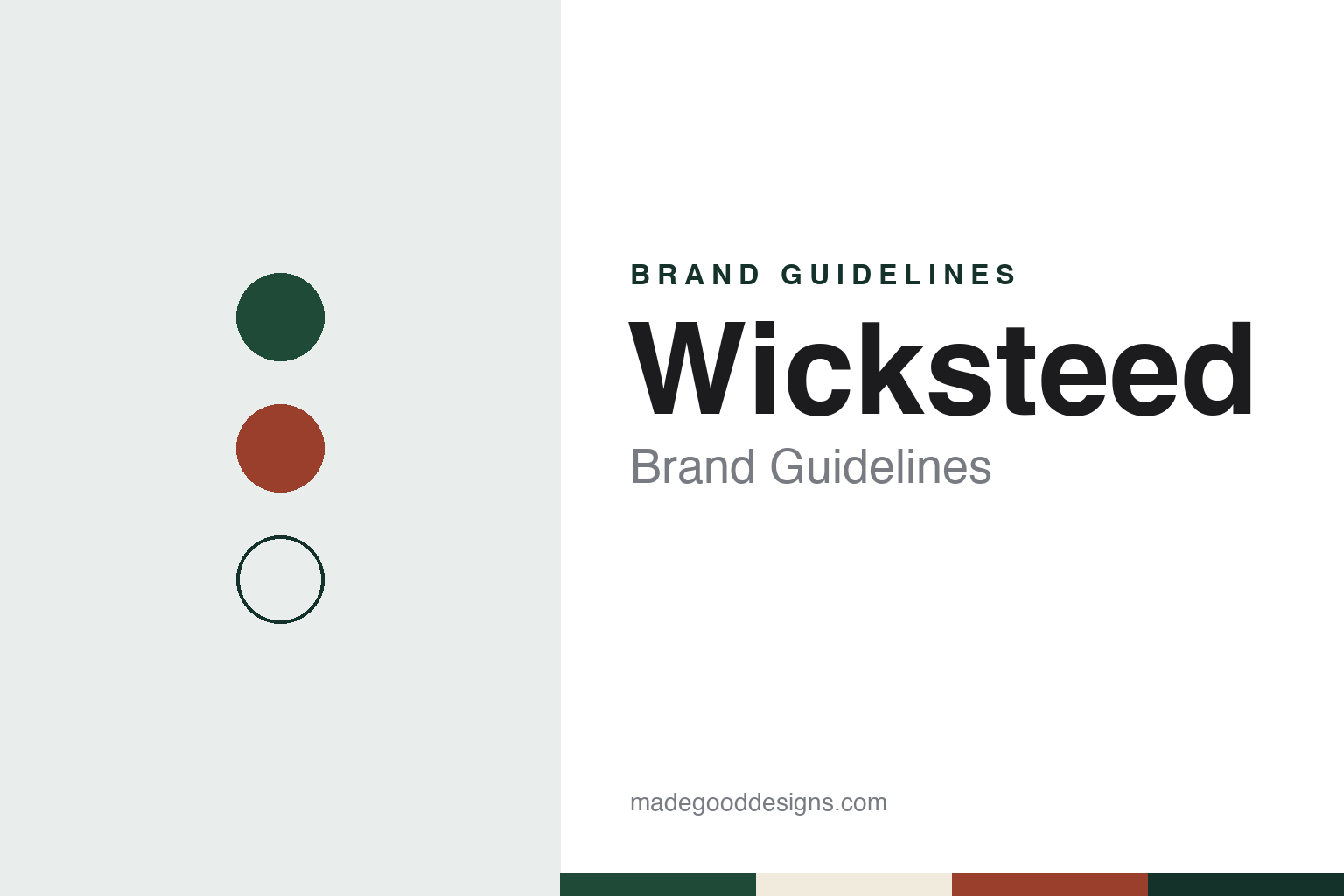
Two constants: a Wicksteed green and oxide red palette and a Heritage serif register. Abstract homage — not a Wicksteed product or mark; no equipment, logo or nameplate is reproduced.
Steam Ploughs to Swings
An engineering works came first.
Wicksteed is the playground maker of Kettering, in Northamptonshire, and it dates itself to 1876, the year its founder opened a works in the town. Charles Wicksteed was born in Leeds in 1847, the son of a Unitarian minister, and served an apprenticeship at the locomotive builder Kitson & Hewitson, English Wikipedia says. He began in steam ploughing. The historian Jon Winder, writing in Urban History in 2021, describes a ploughing business in East Anglia, sold before Wicksteed built up a machine-tool company in Kettering.
Sources differ on the move. English Wikipedia, citing The Engineer of 1931, gives 1872 for the move to Kettering and 1876 for the Stamford Road works. The company says he arrived from Norfolk at 29 in 1876. Northamptonshire’s Historic Environment Record also gives 1876 for the Stamford Road business.
Playgrounds came late. The early firm was an engineering works: machine tools, then a motor-car transmission of about 1907, which English Wikipedia calls noteworthy but a commercial failure, then hacksaw and circular-saw machines. The company says Charles Wicksteed & Co became a limited company in 1907 and credits its founder with the first hydraulic hacksaw, along with tube expanders, bicycle stands and power drills.
War interrupted the business twice. Between 1914 and 1918, the company says, it halted normal production to make munitions; the county record and English Wikipedia also describe munitions work, and Wikipedia adds gauges and gears. The company says normal production stopped again in 1941 for Second World War munitions, by which time the business had passed to Wicksteed’s sons. In that second war, English Wikipedia says, the park stayed partly open, with American troops billeted in its pavilion.
Colour
A park as a testing ground.
The park explains the product. Winder dates to 1914 Wicksteed’s purchase of farmland at Kettering for a model village and links it to Ebenezer Howard’s Garden City ideas. After the First World War public housing became a matter for local authorities, and Wicksteed turned to the open space at the centre of the plan.
The company dates the start to 1918: it says Wicksteed organised a “school treat” to mark the end of the war, reportedly taking central heating pipes from the factory to make swing frames. It treats that as the beginning of its playground business.
Winder argues that the idea mattered as much as the hardware. Other parks of the period separated girls from boys and set rules on hours and use. Wicksteed’s playground opened on Sundays, was not divided, had no signs telling visitors to keep off the grass, and welcomed adults on the equipment. In a 2022 essay for History Workshop, Winder notes that the equipment took its thrills and its names from amusement rides, among them the Jazz Swing and Joy Wheel.
It was also a business. Winder calls the Wicksteed playground “a distinctly commercial product”: the founder travelled the country selling it, secured patents, wrote for the sales brochures and said products had been tested in the park before going on sale. In 1933 the company claimed to have supplied more than 1,600 playgrounds, and by 1937 more than 4,000. From 1937 until 1959 its advertisement dominated the front page of the Journal of Park Administration, and it supplied playgrounds across six continents, as far as St Helena.
The company says BS 3178, which it describes as the first UK playground safety standard, was published in 1959 based on its products. Winder’s 2022 conclusion is that the ideal playground is still dominated by the products Wicksteed developed a century earlier.
One early object survives with its colours. In July 2013 the BBC reported that an appeal by the park had turned up a 12ft swing outside a house in Barton Seagrave once owned by Wicksteed’s relatives. Its green frame, ornate red mountings and missing name plate pointed to a pre-production model, and it was believed to be the UK’s oldest working swing.
Typography
Design and documentation.
Playground equipment is sold to people who will never climb on it: parks departments, school boards, housing associations and landscape architects. The makers’ brochures speak to those buyers. Their catalogues tend to lead with an installed site rather than a single object, often a town square, a schoolyard or a housing estate with the equipment in use and the setting in view.
The visual language comes largely from the materials. Steel frames and posts arrive powder-coated in strong primary colours, set against panels in black, sand or a muted green. Timber ranges, in species such as robinia and larch, read differently: greyer and more irregular, closer to the trees around them. Rope nets add a third texture, and rubber surfacing, poured or laid beneath the equipment, adds a field of colour that can run across a whole site.
Geography is part of the presentation too. Several makers come from small towns rather than capitals, and a Nordic catalogue image can be a park in a modest town under low light, with the equipment as the brightest thing in view. Others present a works, a family name or a date on a timeline.
Installers are part of the product too: this equipment reaches its users only after a crew has dug footings, fixed posts and laid the surface. This guide sets out what can be checked about each brand: who founded it, who owns it now, where it says its products are made, and which of those statements rest on the company’s word alone.
Aa
A heritage serif — for a firm dated to 1876. (Specimen set in Fraunces, a serif STAND-IN; NOT the Wicksteed logo.)
Wicksteed
Two organisations, one name.
Two organisations share the name, and they should not be confused. Wicksteed Park is owned by a charitable trust and has its own website, wicksteedpark.org. Its trading company went into administration in June 2020, and the BBC reported that July that a new company, Wicksteed Trading Limited, had bought most of the park’s assets. The playground maker, at wicksteed.co.uk, is a separate company with a separate owner.
Companies House shows the present company, Wicksteed Leisure Limited, incorporated in 1958 under the Charles Wicksteed name, renamed Dorada Wicksteed at the end of 1980 and given its current name in June 1983. The county record describes the firm, at an undated point, as part of a group with lines from playground equipment to machine tools and aircraft parts. The company says it was bought in 1983 by its current owner, Lord Howard of Rising, the Conservative peer Greville Howard, who was given a life peerage in 2004. His entry in the House of Lords register of interests lists a shareholding in Wicksteed Leisure, held in a trust of which he is a beneficiary, and Companies House names Jardentome Ltd as the person with significant control. The company also lists its own purchases: Mclays of Glasgow in 1997, Playtime by Fawns in 2009 and Russell Play in 2023.
The identity has changed with the trading names. The company says a “total re-branding” in 2007 brought a new logo, product book and website and the trading name Wicksteed Playscapes; the BBC called it Wicksteed Playgrounds in 2019, a name the website still uses. The site carries two dates, “UK Manufacturer since 1876” and “since 1918” for playground products, and calls the firm “the world’s oldest playground manufacturer”, which is its own claim.
Its manufacturing case is also its own: it says it designs and makes equipment at its original Kettering site, and it joined the Made in Britain membership scheme in January 2025. It says it adopted a zinc thermal spray pre-treatment in 1998, and that it introduced a fine-textured matt paint in January 2023. Current ranges include Multiplay units, Nursery Rhymes, Mystical World and the Agility System. It reports winning a playground design and manufacturer title at the SME Midlands Enterprise Awards in 2026.
Heritage has returned as a product. The BBC reported in 2019 that the Witch’s Hat, a conical swing Wicksteed invented for the park, had been phased out on safety grounds, with what was believed to be Britain’s last 12ft example removed in the mid-1980s, and that Wicksteed Playgrounds had made a redesigned version for the park’s heritage playground.
For a design guide, Wicksteed shows how a public park can serve as a maker’s testing ground and its strongest piece of advertising. Compare KOMPAN and Lappset, two Nordic playground makers. For this guide we use a swing-frame green and an oxide red with a serif, an unofficial interpretation; no product or logo is reproduced.
Explore & save
Keep Wicksteed’s identity on hand — save it to a board in the Made Good inspiration library.
Wicksteed identity set
Pin the Wicksteed green and oxide red palette and the Heritage serif register to your own board.