BPL Brand Guidelines
Elstree’s NHS plasma laboratory, through Bain, Creat and Kedrion.
Aa
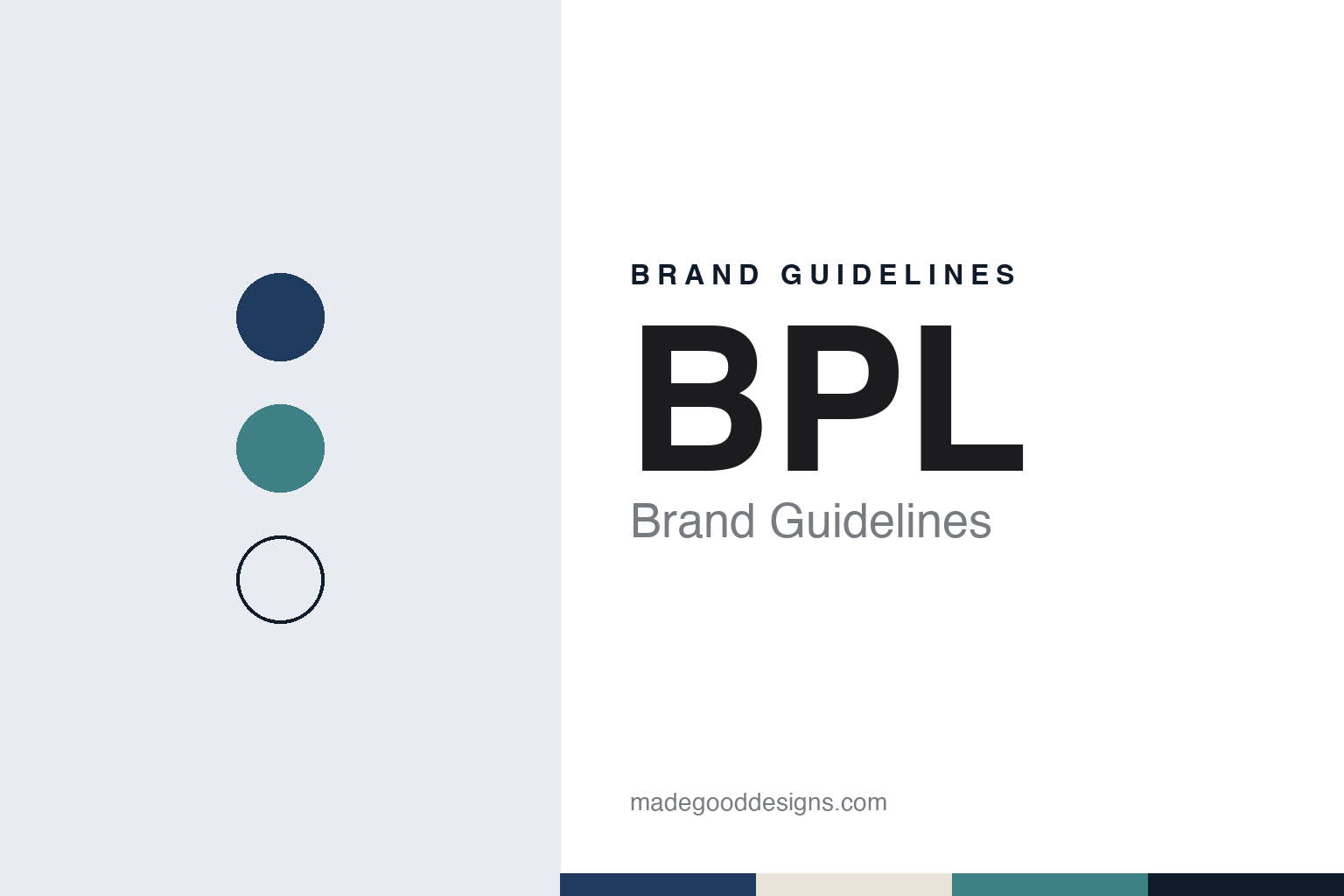
Two constants: a navy, teal and stone palette and a public-service serif register. Abstract homage — not a BPL product or mark; no pack, logo or label is reproduced.
Blood Products Laboratory
A Lister Institute unit that became an NHS plant.
BPL is the name under which plasma medicines made at Elstree, in Hertfordshire, are sold. English Wikipedia dates the Blood Products Laboratory to 1954, when the Government, the Medical Research Council and the Lister Institute of Preventive Medicine agreed to set up a site for larger-scale production of blood products, funded by the Ministry of Health. A 2016 company announcement, published by Bain Capital, gave a different start, saying BPL had been “established as part of the Lister Institute in 1950,” so both dates are given here.
The work began earlier. Wikipedia says the Lister Institute bought the Elstree site in 1902, and that in 1943 the scientist R. A. Kekwick set up the Institute’s Blood Filtration Unit, which worked on freeze-drying plasma and then on separating out its proteins, supplying the armed services and civilian hospitals. In 1948 the unit came under the joint management of the Medical Research Council and the Lister Institute as the Blood Products Research Unit, in newly built laboratories. The final report of the UK Infected Blood Inquiry records that from around 1968 Factor 8 concentrate was produced under the Lister Institute at Elstree and Oxford, and that the Lister ran the Blood Products Laboratory until 1978; Wikipedia says it then passed to the National Health Service.
Its names followed the shape of the health service. Wikipedia says the laboratory was renamed Bio Products Laboratory in 1991, to reflect the NHS internal market, joined the National Blood Authority in 1993 and became an operating division of NHS Blood and Transplant in 2005. In 1998 it began sourcing plasma from the United States because of concerns over vCJD in the UK. The Guardian reported in 2013 that all of its plasma had come from US donors since 2002, when the government created the holding company Plasma Resources UK; Wikipedia says the Department of Health formed DCI Biologicals that year to buy the American collector Life Resources. At the start of 2011 the laboratory became a limited company owned by the Department of Health through Plasma Resources UK, the inquiry report and Wikipedia both record.
Colour
Clotting factors, immunoglobulins and an inquiry.
BPL’s range is made from human plasma. In its 2016 announcement the company described itself as marketing “coagulation factors, human immunoglobulins, and albumin,” with global headquarters at Elstree, a US base for its therapeutics business in Durham, North Carolina, and exports to more than 45 countries. Its plasma division, the same announcement said, also supplied specialty and source plasma to other manufacturers.
One product drew particular notice. In October 2015 the US Food and Drug Administration approved Coagadex, a purified Factor X extracted from plasma and made by Bio Products Laboratory, for people aged 12 and over with hereditary Factor X deficiency; The Pharmaceutical Journal reported on 22 October 2015 that it was the first drug approved for that rare inherited bleeding condition. In 2022 Permira said the newly combined business was building a presence in China through a distribution agreement for Albuminex.
BPL’s history also runs through the contaminated-blood years. The UK Infected Blood Inquiry, chaired by Sir Brian Langstaff, published its final report on 20 May 2024; Pharmaceutical Technology reported that day that it examined how NHS patients were infected with HIV and hepatitis C through contaminated blood and blood products in the 1970s and 1980s. English Wikipedia says that during the 1970s and early 1980s it became apparent that Factor VIII made at the Elstree site, as well as products from other companies, may have infected people with haemophilia.
The report’s volume on blood products sets out the laboratory’s part in detail. It records that BPL began screening blood products for hepatitis B in October 1970, that in July 1984 it began intensive development of a heat-treated Factor 8 that became known as 8Y, and that all Factor 8 issued by BPL had been heat-treated by May 1985. It also records that England and Wales had not reached the self-sufficiency in blood products pledged by the government in 1975, and that the redevelopment of the Elstree plant was a long-term project still under way in 1983.
Typography
Plasma, donors and fractionation.
Plasma companies sell medicines that most people never see on a shelf, so their public image is built around the people at either end of the chain. Websites, annual reports and recruitment pages for the sector tend to open on donors: someone relaxing in a reclining chair in a bright, clean collection centre, a nurse at their side, with the equipment kept small in the frame. The tone is calm and grateful rather than clinical.
The middle of the chain is shown through hands and buildings. Close-ups of gloved hands holding vials, labelled blood bags and racks of tubes signal laboratory care without showing a face, while aerial photographs of large fractionation plants, steel tanks and clean-room corridors stand for scale. Collection-device makers add their own register of machines, tubing sets and touchscreens, usually photographed on white.
At the far end are patients. Several of the conditions these medicines are used for are rare, and the companies’ storytelling often leans on named families, children and long-term patients, often filmed at home or outdoors, alongside patient-organisation partnerships and awareness days. Scientific credibility is carried by medical congresses such as those of the International Society on Thrombosis and Haemostasis (ISTH) and the American Society of Hematology (ASH), and by industry meetings such as the Plasma Protein Forum.
The visual identities themselves are mostly quiet: corporate sans-serif wordmarks, generous white space and restrained palettes, with brand colour used sparingly against photography. This guide sets out what can be checked about each brand — who founded it, who owns it and where it says its products are made — and marks clearly what rests only on the company’s own word.
Aa
A calm, public-service serif. (Specimen set in Source Serif 4, a serif STAND-IN; NOT the BPL logo.)
BPL
From the Department of Health to private owners.
Privatisation came in 2013. On 18 July that year, The Guardian reported, the private equity firm Bain Capital bought 80% of Plasma Resources UK, which held both BPL and its US plasma business, with the Department of Health keeping the other 20%; Bain pledged to keep the headquarters in the UK. Wikipedia says the group was then renamed BPL Holdings, with the Elstree operation called BPL Therapeutics and the American collector BPL Plasma.
In May 2016 BPL announced that a group controlled by Creat Group Corporation, a Beijing investment group founded in 1992, had signed a definitive agreement to buy the company, which would remain headquartered in the UK with its existing management. On 1 September 2022, Permira announced that its funds and the Marcucci family, supported by a subsidiary of the Abu Dhabi Investment Authority and Ampersand Capital Partners, had completed the joint acquisition and combination of BPL and the Italian plasma company Kedrion, with the combined business headquartered in Italy. Permira’s announcement described BPL “in its present form” as created in 2010, with a heritage of nearly 70 years.
Wikipedia says that in 2023 the Elstree site became known as Kedrion Elstree, while its product portfolio continued to be marketed as BPL. The former bplgroup.com address now forwards to Kedrion’s UK website.
For a design guide, BPL shows how a public-sector laboratory name can live on as a product brand through several changes of owner. Compare Kedrion, its owner since 2022, and LFB, the French plasma-medicines company. For this guide we use a deep navy, a muted teal and a warm stone with a serif, an unofficial interpretation; no product or logo is reproduced.
Explore & save
Keep BPL’s identity on hand — save it to a board in the Made Good inspiration library.
BPL identity set
Pin the BPL navy, teal and stone palette and the public-service serif register to your own board.