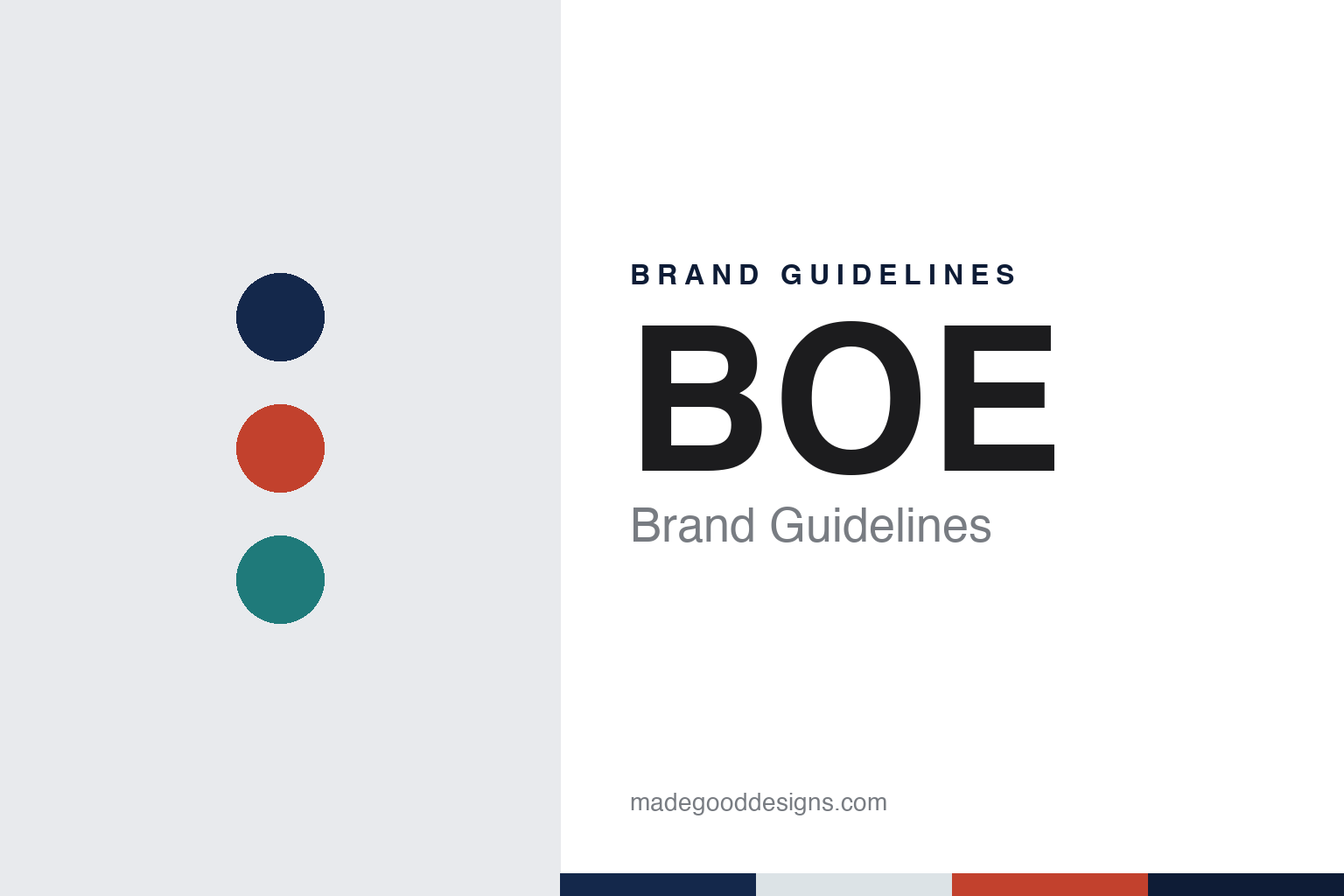
BOE Brand Guidelines
A Beijing tube factory’s heir that turned to display panels.
Aa
Two constants: a fab navy, substrate glass and sub-pixel red palette and an engineered sans register. Abstract homage — not a BOE product or mark; no panel, logo or wordmark is reproduced.
From tubes to panels
A 1950s vacuum-tube works and a 1993 company.
BOE traces its roots to the Beijing Electron Tube Factory, a state-owned works of the 1950s. Chinese Wikipedia says the factory was one of the 156 key projects built with Soviet aid under China’s first Five-Year Plan; it went up between 1954 and 1956 in the Jiuxianqiao area of Beijing’s Chaoyang district, alongside other radio and electronics plants that together formed an electronics district, and held its opening ceremony on 15 October 1956.
The present company dates from April 1993. English Wikipedia says Beijing Oriental Electronics Group was founded that month by Wang Dongsheng, with the tube factory as its predecessor; Chinese Wikipedia gives the date as 9 April 1993, when Beijing’s economic-reform office approved the new joint-stock company. BOE’s own history calls 1993 the start of a “journey of marketization, specialization and internationalization.”
Listings followed. BOE issued B shares on the Shenzhen Stock Exchange in 1997 and A shares in 2001, the year it took the name BOE Technology Group, according to English Wikipedia. In Chinese the company is Jingdongfang. The company says it set up a pre-research group for thin-film-transistor LCDs in 1994, a 52%-owned monitor joint venture with Taiwan’s TPV Technology in 1997 and an AMOLED laboratory in 2001.
Colour
Fab lines in Beijing, Hefei, Chengdu and Ordos.
BOE’s move into flat panels came through Korea. In February 2003 it bought the TFT-LCD business of Hydis, the Korean display maker, Chinese Wikipedia says; English Wikipedia describes the seller as the Hynix group. The same year BOE began building a fifth-generation TFT-LCD line in Beijing, which the company calls the first display line in mainland China built with its own technology; it reached mass production in 2005.
Larger lines followed, by the company’s account: a sixth-generation line in Hefei, begun in 2009 and in mass production in 2010; an 8.5-generation line in Beijing in mass production in 2011; a 5.5-generation LTPS and AMOLED line at Ordos in Inner Mongolia, which it calls China’s first AMOLED line; and, in 2015, a sixth-generation flexible AMOLED line in Chengdu and what BOE says was the world’s first 10.5-generation line. The company lists manufacturing bases in Beijing, Hefei, Chengdu, Chongqing, Fuzhou, Mianyang, Wuhan, Kunming, Suzhou and Ordos.
Showpieces mark the timeline. BOE says a 110-inch 4K LCD television it launched in 2012 was certified by Guinness World Records as the world’s largest LCD TV, that it launched a digital painting screen in 2016 that became the iGallery range, and that it received a gold award for innovative display technology at the 2019 IFA product awards. It now organises itself around display plus four business groups — IoT Innovation, Sensors and Solutions, MLED, and Smart Engineering Medicine — and says it runs five digital hospitals in cities including Beijing, Hefei, Chengdu and Suzhou.
The company also cites outside rankings: it says research firm Omdia placed it first worldwide in 2025 for LCD panel shipments for phones, tablets, laptops, monitors and televisions, and that it had filed more than 100,000 patent applications by 2025. These are BOE’s own summaries of those rankings.
Typography
How display makers present themselves.
Display-panel makers sell to other companies, so most people meet their work under someone else’s name: the screen in a phone, a television, a laptop or a car dashboard. Their own identities are built for customers, investors and engineers, and they come into view most clearly at trade shows such as the Society for Information Display’s Display Week in the United States and CES in Las Vegas, where makers book large stands to show what their panels can do.
The visual language of those stands is the product itself. Huge curved screens, rollable televisions that rise out of a base and transparent panels set in shop windows or furniture sit beside foldable phones photographed mid-fold and car cockpits wrapped in a single sweep of glass. Close-up photography does the rest: macro shots of red, green and blue sub-pixels, flexible films bent between two fingers and wafer-thin edges seen side-on.
Behind the show floor sits the factory. Company films and reports often show clean fab halls, workers in full-body suits and large sheets of glass substrate carried by robot arms, with plants described by “generation,” a measure of the glass size each line handles. Industry awards add another layer of presentation: Display Week’s Display of the Year awards and CES Innovation Awards appear in the makers’ own timelines.
Their histories run through joint ventures, factory sales and regulatory cases as much as through product launches. This guide sets out what can be checked about each one — who founded it, who owns it and where its panels are made — and marks clearly what rests only on the company’s own word.
Aa
An engineered sans for an engineering company. (Specimen set in IBM Plex Sans, a sans STAND-IN; NOT the BOE logo.)
BOE
State-linked investors and a Beijing head office.
BOE is listed in Shenzhen and has its head office in the Beijing Economic-Technological Development Area, Chinese Wikipedia says. Its ownership is spread, but local government money has been central: English Wikipedia says that in the third quarter of 2020 its six largest investors were state-owned companies from Beijing, Chongqing and Hefei, holding 23.8% between them. The company names Chen Yanshun as chairman. In December 2021, Chinese Wikipedia says, BOE released what it described as the first technology brand in China’s semiconductor-display field.
Two legal and regulatory matters stand out. Samsung Display filed complaints against BOE with the US International Trade Commission over OLED patents in December 2022 and over trade secrets in October 2023. In July 2025 a preliminary ITC ruling found that BOE had misappropriated Samsung Display’s OLED trade secrets and recommended an import exclusion of 14 years and 8 months, The Korea Times reported in August 2025. In November 2025 the two companies settled and agreed to withdraw all pending lawsuits, TechCrunch reported on 20 November 2025. Separately, on 8 June 2026 the US Department of Defense added BOE Technology Group to its Section 1260H list of Chinese military companies, the law firm WilmerHale noted on 12 June 2026.
In its own company profile, BOE describes itself as an “IoT innovation company” whose “1+4+N+eco-chain” business architecture is centred on display, and says it has subsidiaries in more than 20 countries and territories, including the United States, Germany, Japan, South Korea, India and Brazil. By its account, it opened a Japanese subsidiary and research centre in Tokyo in 2011, a US subsidiary and research centre in Santa Clara, California, in 2012, and a European subsidiary in Frankfurt in 2014.
For a design guide, BOE shows how a component maker with state-industry roots can build a corporate identity around the screen itself. Compare Tianma, another Chinese panel maker, and LG Display. For this guide we use a fab navy, a pale substrate-glass grey and a sub-pixel red with a sans, an unofficial interpretation; no product or logo is reproduced.
Explore & save
Keep BOE’s identity on hand — save it to a board in the Made Good inspiration library.
BOE identity set
Pin the BOE fab navy, substrate glass and sub-pixel red palette and the engineered sans register to your own board.