Creditinfo Brand Guidelines
An Icelandic credit bureau that became a group of bureaus on four continents.
Aa
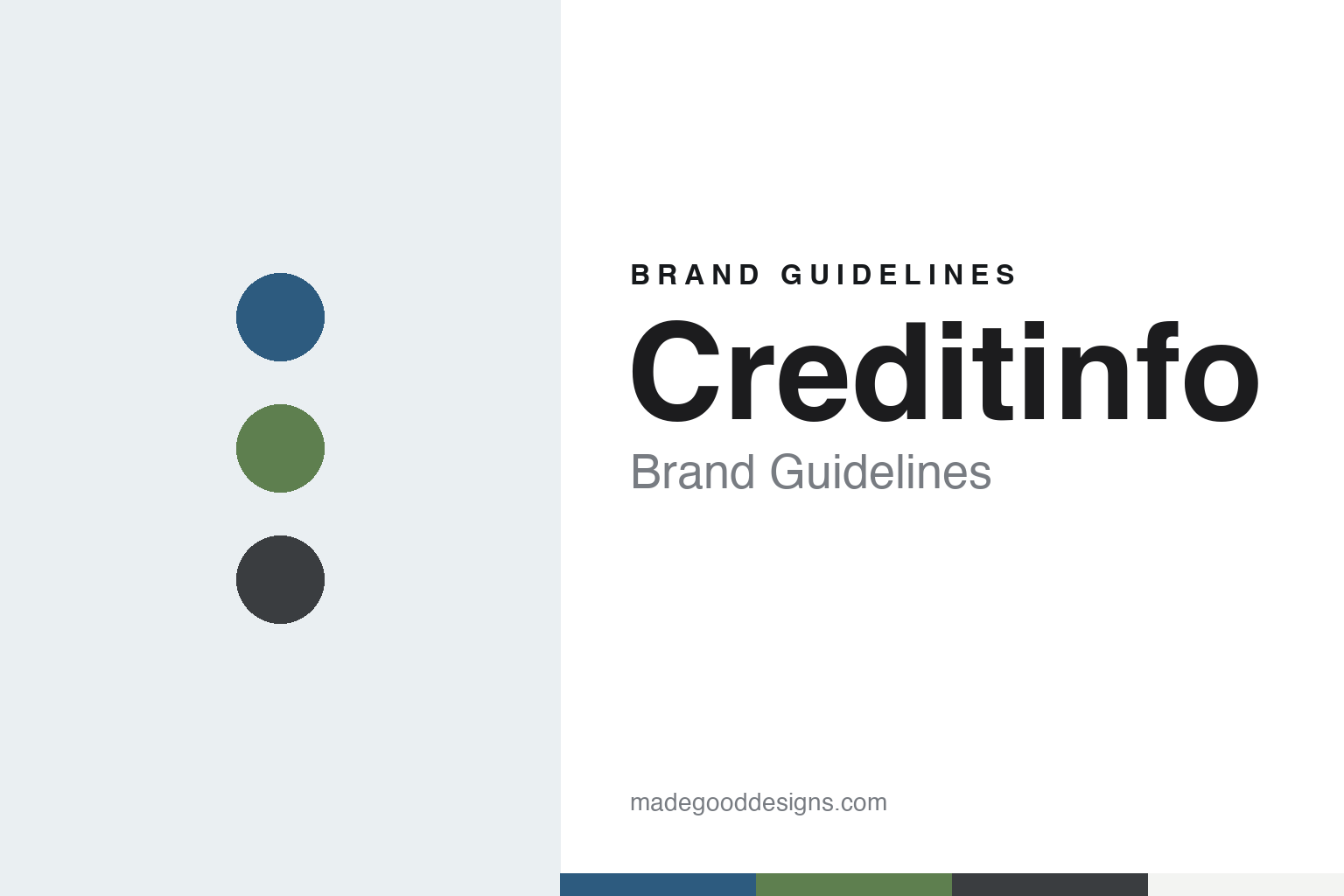
Two constants: a fjord blue, moss green and basalt palette and a clean modern sans register. Abstract homage — not a Creditinfo asset; no logo, report or product screen is reproduced.
Lánstraust
An Icelandic credit bureau, 1997.
Creditinfo began in Iceland in 1997 as Lánstraust ehf. English Wikipedia names Reynir Grétarsson as its sole founder, with two co-founders bringing in share capital later the same year; the company’s own history says Lánstraust was founded by Reynir Grétarsson and co-founders “with the vision to build a modern credit bureau.” The Icelandic operating company is still named Creditinfo Lánstraust hf., as the news site Vísir reported in 2023.
The business grew at home first. English Wikipedia says that in 1998 the company bought two Icelandic information businesses, ICECREDITINFO and Upplýsingaþjónustan, and that in 2004 it added a media-monitoring service, Fjölmiðlavaktin. Expansion abroad started early: the company says it opened its first international subsidiary in Malta in 2002, began operations in Lithuania in 2004 and started IBCH in Ukraine in 2005.
The parent company changed its name from Lánstraust International to Creditinfo Group — in 2004 by the company’s timeline, in 2003 according to English Wikipedia — and the company says the new name reflected its plans to grow abroad. In 2005, English Wikipedia says, three former Experian executives became shareholders with a combined 17 per cent, a holding the company bought back in 2013. The same article records a joint venture with Germany’s SCHUFA, Creditinfo SCHUFA GmbH, set up in 2009 and ended in 2011.
Colour
Bureaus built country by country.
Much of Creditinfo’s work has been setting up credit bureaus and registries where none existed. The company says it created the CIASA credit registry in Sudan, under the control of the Central Bank of Sudan, in 2011. In March 2012, English Wikipedia says, it set up the first licensed credit bureau in Jamaica, a step the company also lists in its history. In February 2013 it agreed to supply credit-bureau software to Da Afghanistan Bank, the Afghan central bank, and in June 2013 it received a full operating licence from the Bank of Tanzania, according to the same article.
It also grew by buying bureaus from a larger group. In 2015 Creditinfo acquired Experian’s credit bureau in Morocco, and in August 2015 it bought Krediidiinfo in Estonia from Experian, as both English Wikipedia and the company’s timeline record. In August 2016, according to English Wikipedia, it acquired the credit and risk business of VisualDNA. In 2019 it signed a long-term strategic partnership with PT PEFINDO Biro Kredit in Indonesia, the company says.
The company describes its range today as credit data and credit risk analytics, business information, and decisioning software, with fraud, identity and consumer services alongside, for financial institutions, businesses, governments and consumers. In July 2021 Creditinfo announced an SME blended scorecard for assessing small and medium-sized businesses, launched first through Creditinfo CRB Kenya ahead of a wider rollout, according to the release published by Mondo Visione. The company names trust, integrity and innovation as its values, and says its aim is to make credit information accessible and useful to lenders and regulators.
The March 2021 LLCP announcement said Creditinfo had provided business information, risk management and credit-bureau services to lenders, governments and central banks, with the stated aim of widening access to credit for small and medium-sized enterprises and for individuals.
Typography
How credit bureaus and business-information firms present themselves.
Credit bureaus and business-information firms sell something nobody can see: records of who borrowed, who repaid and which companies are still trading. Their brands lean on a small set of visual signals to make that work visible. Look for wordmarks in blue, green or purple, and for data shown the way the companies publish it: dashboards, trend charts and the curved score gauge that places a number on a scale.
Most of these firms speak to two audiences at once. One set of pages is for consumers checking their own credit report or score, with sign-up steps and explanations of what moves a number up or down. Another is for lenders and businesses checking a customer or a supplier, with language about risk, onboarding and decisions. The same brand has to read as approachable to an individual and as technical to a bank.
Regulation shapes these identities as much as design does. Credit information companies work under central banks and data-privacy regulators, so their sites carry pages on how personal data is used, how to correct a record and how to raise a dispute. Their histories include licences, regulatory decisions and court rulings, and this guide states those events with their dates and outcomes, as the cited sources give them.
The firms also publish themselves through annual reports, research notes on lending trends and anniversary campaigns. For each company, this guide covers where it began, who owns it now and how it describes its own services, and marks the company’s own claims as such. No score, report or rating is described here as accurate or fair.
Aa
A clean modern sans for a bureau brand that crosses many markets. (Specimen set in Manrope, a sans STAND-IN; NOT the Creditinfo logo.)
Creditinfo Group
Private-equity owned, with two head offices on record.
In March 2021 the private equity firm Levine Leichtman Capital Partners (LLCP) announced that it had acquired Creditinfo Group in partnership with the founder and management team. The announcement, datelined London on 9 March 2021, described a company established in 1997 and headquartered in Reykjavík, with more than 30 credit bureaus running. LLCP’s portfolio page still lists Creditinfo as a current investment, made in March 2021, with its headquarters in Reykjavík.
Other sources place the head office in Britain. Creditinfo’s own website gives its headquarters as London, and English Wikipedia, citing 2020, also names London. Counts of its reach differ as well: LLCP’s page says the group runs credit reporting agencies in 23 countries, while Creditinfo says it operates in more than 40 countries across four continents, and its site refers to 30 credit bureaus.
The home business in Iceland has faced regulatory scrutiny. On 27 June 2023, Vísir reported, Iceland’s data-privacy authority, Persónuvernd, concluded cases about the registration of payday-loan defaults at Creditinfo Lánstraust hf., after a complaint by the Icelandic consumers’ association in 2020. The authority found that Creditinfo had not done enough to check whether the claims sent to it met the conditions for registration, and fined the company. The registrations were in the end deleted, and Creditinfo said it had handled the matter wrongly, tightened its requirements for users of the service and stopped working with the parties involved.
The Creditinfo name is carried by its national companies, as with Creditinfo CRB Kenya and Creditinfo Lánstraust in Iceland, while a partner such as PEFINDO Biro Kredit in Indonesia keeps its own local name.
For a design guide, Creditinfo shows how a bureau brand can travel from one small market to many under a single name. Compare Experian, which sold it bureaus in Morocco and Estonia, and SCHUFA, its former joint-venture partner. For this guide we use a fjord blue, a moss green and a basalt grey with a sans, an unofficial interpretation; no product or logo is reproduced.
Explore & save
Keep Creditinfo’s identity on hand — save it to a board in the Made Good inspiration library.
Creditinfo identity set
Pin the Creditinfo fjord blue, moss green and basalt palette and the clean modern sans register to your own board.