Triangl Brand Guidelines
One material, sharp colour blocks and a single online shop.
Aa
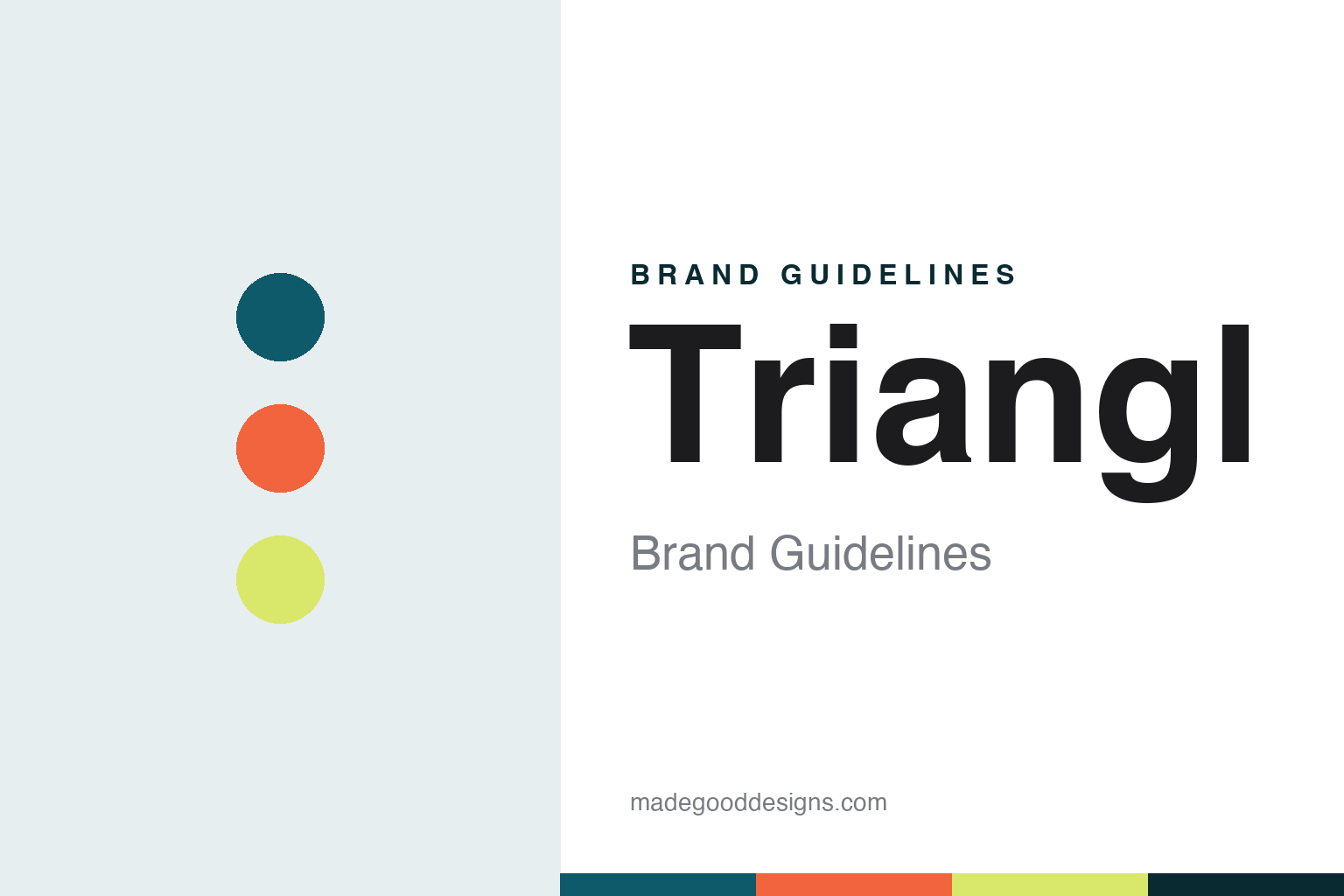
Two constants: a lagoon, coral and lime palette and a blocky sans register. Abstract homage — not a Triangl product or mark; no garment, logo or label is reproduced.
From Half Moon Bay
A Melbourne beach, then a small flat in Hong Kong.
Triangl is usually described as an Australian label, and its founders are from Melbourne, but the business itself began in Hong Kong in 2012. It was started by Erin Deering and Craig Ellis. Ellis had played 122 games of Australian rules football for the Western Bulldogs and Melbourne, SEN reported in April 2026, and Deering’s background was in e-commerce, according to the Sydney Morning Herald.
Both founders trace the idea to a beach conversation about what swimwear was on offer. Ellis told the Herald in December 2014 that it took place at Half Moon Bay in southern Melbourne in November 2011, when Deering wanted a new bikini and saw little outside surf brands and expensive boutique labels. Forbes Australia, interviewing Deering in November 2022, dates the same conversation to October 2011. Either way, they saw an opening for something affordable that was not a surf brand.
Sources differ slightly on the start date. Forbes Australia says the pair had moved to Hong Kong and started Triangl by June 2012, while Deering is quoted on Wikipedia as saying the label launched in December 2012. The Herald says the move was deliberate: the city put them close to manufacturers in China and midway between the northern and southern hemispheres for shipping. It adds that a loan from two friends got the brand going in a tiny flat in central Hong Kong.
The first plan was conventional. Ragtrader and the German marketing site OMR both report that Triangl began by selling through other retailers, and the Herald says the idea was to design, manufacture and wholesale. Ellis told the paper that chasing small accounts from boutiques soon looked like a flawed model. In January 2013 they stopped wholesaling altogether, adopted what he called a vertical business model, and promised never to discount, never to go on sale and never to sell offline.
Colour
Neoprene, and a colour for every name.
Neoprene was not the original plan. Forbes Australia says the business started out in spandex, the usual swimwear material, before Ellis brought Deering a sample of neoprene. A profile reproduced on the strategist Peter Fisk’s website says they tried both fabrics, neoprene and nylon-spandex, in small batches, and that customers chose the neoprene, against the founders’ expectations. Neoprene is the scuba material used for wetsuits, and the same profile notes that it was then appearing across the fashion industry.
What followed was a recognisable look. The Herald wrote in 2014 of “distinctive triangle-based” swimsuits with a geometric design, and SEN says the name is a nod to the geometry of the product. Ragtrader identified the brand in November 2015 by its neoprene bikinis in bold neons. The Fisk profile describes colour-blocked, back-trimmed styles, singles out the balconette Milly and Poppy designs, and gives a sense of how the colours were named: Cola Pop, Blue Crush, Candy Sunset and Pink Lemonade. It also says the styles were easy to copy, and quotes Ellis saying the company could by then set money aside to protect the brand.
Instagram did the rest. Deering told Forbes Australia that Instagram “was really everything to us,” and described researching Kendall Jenner’s circle of friends and gifting them swimwear. Ellis told the Herald that a photo Jenner tweeted to her followers was a huge milestone for awareness in the US. OMR, writing in June 2019, reported both founders as saying they had not paid influencers, and that Beyoncé, Miley Cyrus and Ellie Goulding were among those sent products who went on to wear them.
Reported follower numbers rose quickly and then settled. The Herald gave more than 1.4 million followers in December 2014 and Ragtrader 2.8 million in November 2015; Forbes Australia gave 2.4 million in 2022 and SEN 2.5 million in 2026. The US was the largest market in both the 2014 and 2015 reports. Forbes Australia said in 2022 that the brand sold in over 100 countries, and that the company had reported selling around 45,000 bikinis a month.
Typography
Swimwear and resort labels.
Swimwear and resort labels sell a place as much as a garment, so their visual identity tends to start with the setting. Seafolly’s website speaks of Bondi Beach and the Australian beach lifestyle; Vilebrequin’s speaks of Saint-Tropez in 1971. For a designer, the useful question is how that place is carried through photographs, shop interiors and the small printed items around a sale.
The printed fabric is the first thing to study. In this category a swatch can work like a logo: Vilebrequin’s chief executive told The Week in 2017 that it made a sea-turtle print every year in a different colour, and its website describes lining up a back pocket by hand so the pattern runs across it. A print archive, where a label keeps one, gives it a repeatable source of colour and motif from year to year.
Lookbooks then supply the setting. Beach huts, pool edges, towels and harbour walls appear often in this kind of photography, and they do the job a product shot cannot, by showing the clothes in the place they are meant for. Collection names often work the same way: Ragtrader’s report on Seafolly’s summer 2020 range lists names such as Summer Memoirs and Check In, each tied to a print.
Boutique displays and packaging finish the picture. A stack of folded prints reads as a colour field; a swing tag, box or pouch carries the mark away from the shop. Each brand in this guide sets out who founded it, who owns it now and what it says about where its goods are made, and marks what rests on the company’s own word. The palettes here are our own interpretations, not official colours.
Aa
A blocky sans — our own choice for this guide. (Specimen set in Archivo, a sans STAND-IN; NOT the Triangl logo.)
Triangl
Jersey, one shop and a wider range.
Triangl’s base has since moved. The profile on Peter Fisk’s website describes a supply-chain office in Hong Kong with a staff of ten and a parent company in the Channel Islands, where Ellis said “all the decision-making happens.” The company’s own FAQ now says Triangl is based in Jersey, in the Channel Islands, and “managed and run by Australians.” Broadsheet still called it a Melbourne label in 2016, and the company’s writing style in that FAQ sets the name in capitals, as TRIANGL.
Forbes Australia reports that Erin Deering left the business in 2018, and in 2023 it covered her memoir, Hanging by a Thread, which deals with her years at the company.
Online selling remains central. Ragtrader reported in 2015 that the label would stay online with no suggestion of standalone stores, SEN, looking back in 2026, described its growth as coming without retail stores or traditional advertising, and the company’s FAQ says its website, triangl.com, is the only place in the world to buy authentic Triangl bikinis. The same FAQ says customers contract with a company called Global-e for purchases through the store.
The range is wider than it was. Broadsheet reported the launch of a neoprene one-piece collection in October 2016, in six styles with floral embroidery. The website now sorts swimwear by cut, into triangle, crop, balconette and halter bikinis, and adds cover-ups, shorts, skirts and dresses, while keeping a separate neoprene category. Current neoprene sets carry names such as Este, Maia and Mala, in colours including Choc Mint, Jaded Green and Sherbet Pop, so colour names remain part of the product. Recent campaigns include Club Rose Bay, shot in Sydney by Brydie Macklin and described as drawing on harbour-side swims, and Sa Trinxa, shot by Gigi Hollanders, with animal prints and what the company calls retro styling.
For a design guide, Triangl shows a label identified by one unexpected material, a sharp colour block and playful colour names. Compare Frankies Bikinis, another swimwear label that grew on Instagram from 2012, and Seafolly, the Australian swimwear name Ellis cited when describing the gap in the market. For this guide we use lagoon, coral and lime with a sans, an unofficial interpretation; no product or logo is reproduced.
Explore & save
Keep Triangl’s identity on hand — save it to a board in the Made Good inspiration library.
Triangl identity set
Pin the Triangl lagoon, coral and lime palette and the blocky sans register to your own board.