Motiva Brand Guidelines
The São Paulo concession group that renamed CCR as Motiva.
Aa
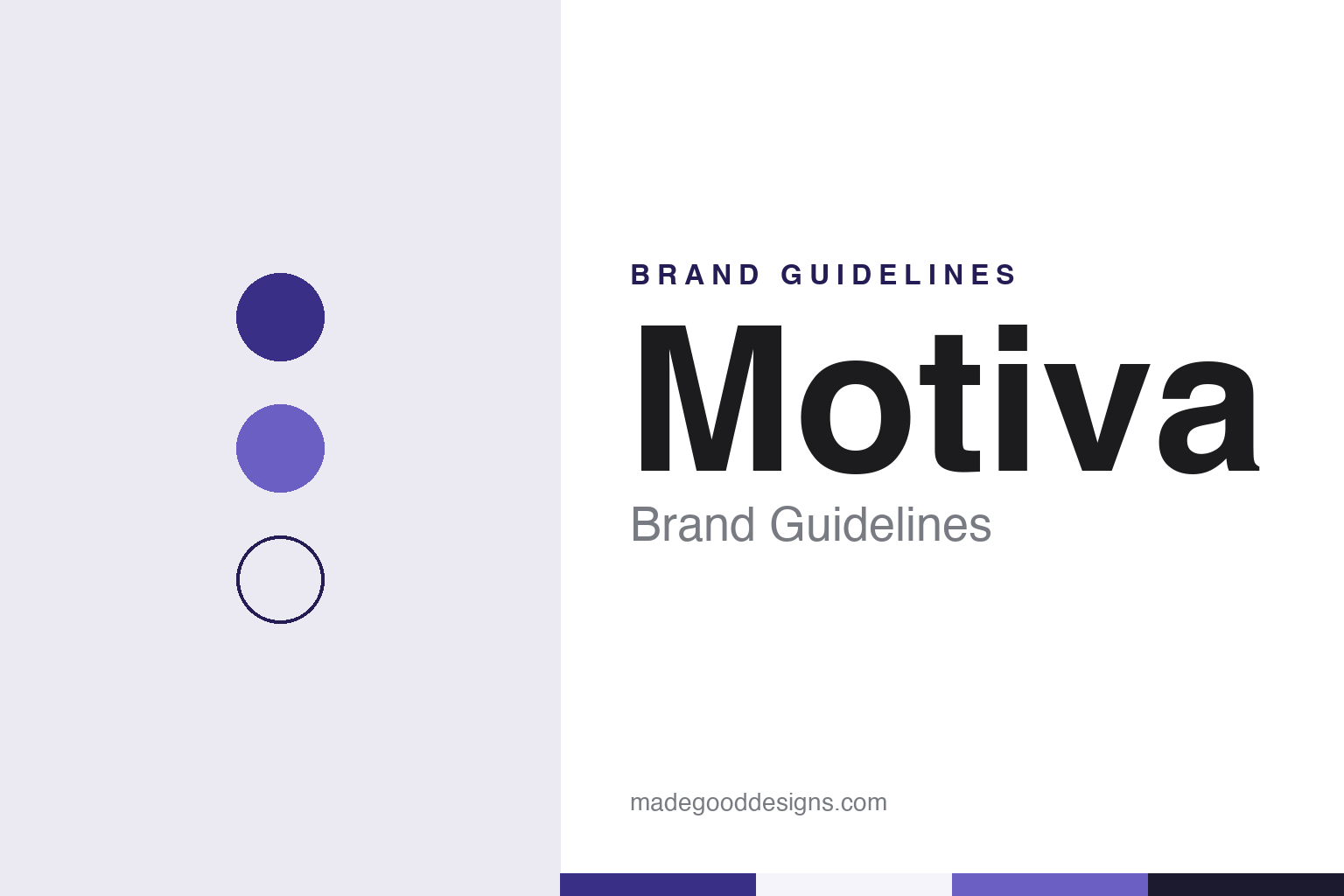
Two constants: a deep indigo, wave violet and sand palette and a Rounded geometric sans register. Abstract homage — not a Motiva asset; no sign, logo or mark is reproduced.
CCR
A holding for road concessions, 1999.
Motiva is the name the Brazilian infrastructure group CCR has used since April 2025. The company was constituted on 23 January 1999 in São Paulo as CCR, initials originally standing for Companhia de Concessões Rodoviárias (roughly, “road concessions company”), Portuguese Wikipedia says. It brought under one management the stakes its founding business groups already held in road concessions, including the operator of the Rio–Niterói bridge and the NovaDutra, AutoBAn and RodoNorte concessions.
CCR registered as a public company with Brazil’s securities regulator in 2000, joined the B3 exchange’s Novo Mercado governance segment in 2001 and held its initial public offering in 2002. ViaOeste joined the group in 2005, and in 2006 it moved into urban transport through ViaQuatro, the concession for São Paulo Metro’s Line 4-Yellow. Later additions included the VLT Carioca light rail in Rio de Janeiro, Metrô Bahia in Salvador and the ViaMobilidade concessions, which run São Paulo Metro Lines 5-Lilac and 17-Gold and the metropolitan train Lines 8-Diamond and 9-Emerald.
Airports came next: stakes in airport concessions in Ecuador, Costa Rica and Curaçao in 2012, BH Airport at Belo Horizonte-Confins in 2014, and in 2021 the South and Central blocks of Brazil’s sixth federal airport round, fifteen airports in all, plus Pampulha in Belo Horizonte. That chapter has closed. In November 2025 the company agreed to sell its airport platform to Aeropuerto de Cancún, a subsidiary of Grupo Aeroportuario del Sureste (ASUR), and the sale was completed in September 2026, Diário do Transporte reported on 2 November 2026. In 2025 it also handed the Rio de Janeiro passenger ferry service it had run as CCR Barcas to the Barcas Rio consortium, Portuguese Wikipedia says.
Motiva is listed on the B3’s Novo Mercado. In March 2026, Portuguese Wikipedia says, citing the company’s investor-relations pages, about half its shares were in free float, with Grupo Mover and the Soares Penido group each holding about 14–15% and Itaúsa and Votorantim about 10% each.
Colour
Highways, a new Pantanal name and two settlements.
The company says that, just before the rename, its road platform ran about 3,615 km of roads in São Paulo, Rio de Janeiro, Rio Grande do Sul, Santa Catarina and Mato Grosso do Sul, with new concessions including the Rota Sorocabana in São Paulo and Lote 3 in Paraná due to start in the first half of 2025. Its roads include stretches of the Anhanguera, Bandeirantes and Presidente Dutra highways, the BR-101, BR-163 and BR-386 and the western section of São Paulo’s Rodoanel ring road, according to Portuguese Wikipedia.
In August 2025 the BR-163 concession in Mato Grosso do Sul, 854.4 km long, signed a new optimised contract and changed its name from CCR Via to Motiva Pantanal, after the wetland biome, Correio do Estado reported on 5 August 2025; the new name was to appear in phases on operating bases, toll plazas, the head office and patrol vehicles.
The group’s record includes two settlements from investigations into its concessions. In November 2018 CCR told the market it would sign a settlement (termo de autocomposição) with the São Paulo State Public Prosecutor’s Office, closing a civil inquiry into facts involving the company and some subsidiaries, with payments to the state and a donation to the University of São Paulo law faculty. In 2019 its subsidiary RodoNorte, which held a road concession in Paraná, signed a leniency agreement with the Federal Public Prosecutor’s Office in Paraná as part of the Lava Jato investigations. According to the prosecutors, RodoNorte acknowledged bribe payments made since 2000 to obtain favourable contract changes, agreed to compensation through lower tolls and road works, and accepted an integrity programme and independent monitoring; CCR told the market that the toll reduction for users began on 27 April 2019.
Typography
How road operators present themselves.
Toll-road and parking operators sell access to something the customer can already see: a stretch of motorway, a tunnel, a multi-storey car park. Their visual identity therefore lives in two places at once. On the road it appears on gantries, toll plazas, barrier arms, ticket machines and the signs at a car-park entrance; online it appears on corporate websites, annual reports and investor presentations, where the same company explains its concessions to shareholders and lenders.
Network maps and road photography carry much of the corporate side. Operators publish maps of the routes or sites they run, usually as simple lines and dots over a pale base, together with photographs of interchanges, viaducts, tunnels and car parks, often taken from above. Concession pages and investor sections list each asset with its length or number of spaces, its concession dates and its ownership structure, and many groups give each road or site its own page or its own website under its own name.
Parking brands meet a shared visual language at the kerb. The blue and white “P” sign is the common shorthand for parking across much of the world, and operators place their own name and colours beside it on entrance signs, pay stations and barrier arms. Customer apps have become a second front door: their screenshots, as the companies publish them, typically show a map of nearby sites, a booking or payment screen and a digital ticket or account page.
Toll operators increasingly present themselves through electronic tolling, with transponder tags, licence-plate accounts and apps that show trips and statements, so their customer materials lean on clear numbers, simple icons and plain instructions. Across the category the tone is practical and reassuring rather than playful: a name that needs to be read at speed, a limited palette and a sans-serif that stays legible on a sign, a phone and a results page alike.
Aa
A rounded geometric sans, set in lowercase in the spirit of the 2025 wordmark. (Specimen set in Outfit, a sans STAND-IN; NOT the Motiva logo.)
Motiva
From a descriptive name to three waves.
The rename was announced in March 2025 and approved at the shareholders’ meeting on 23 April 2025; the shares began trading under the new ticker MOTV3 on 2 May 2025, replacing CCRO3, Estadão E-Investidor reported. The company says the name comes from the Latin motivus, “that which moves,” and describes the change as a move from a descriptive name to an associative one. The rebranding was carried out by the consultancy FutureBrand, the company says.
The company’s own description of the identity is specific. The grey and burgundy red of the Grupo CCR mark gave way to indigo, a colour between blue and violet; the old symbol, a circle with two interlaced curved lines suggesting a road, was replaced by a logo of three waves meant to suggest fluidity and movement. Motiva says the curves follow the Brazilian modernist aesthetic seen in the country’s pavements and buildings, and that the lowercase lettering is meant to bring the brand closer to its public. All its businesses, previously named CCR Rodovias, CCR Mobilidade and so on, now sit under the single Motiva brand. The changeover began at the main offices at the end of April 2025 and was planned to reach the last concession units during 2026.
For a design guide, Motiva shows how a group built from separate concessions can fold many local names into one brand while keeping regional cues, as with Motiva Pantanal. Compare Abertis and Autostrade per l’Italia, two European motorway operators. For this guide we use a deep indigo, a softer wave violet and a warm sand with a sans, an unofficial interpretation; no product or logo is reproduced.
Explore & save
Keep Motiva’s identity on hand — save it to a board in the Made Good inspiration library.
Motiva identity set
Pin the Motiva deep indigo, wave violet and sand palette and the Rounded geometric sans register to your own board.