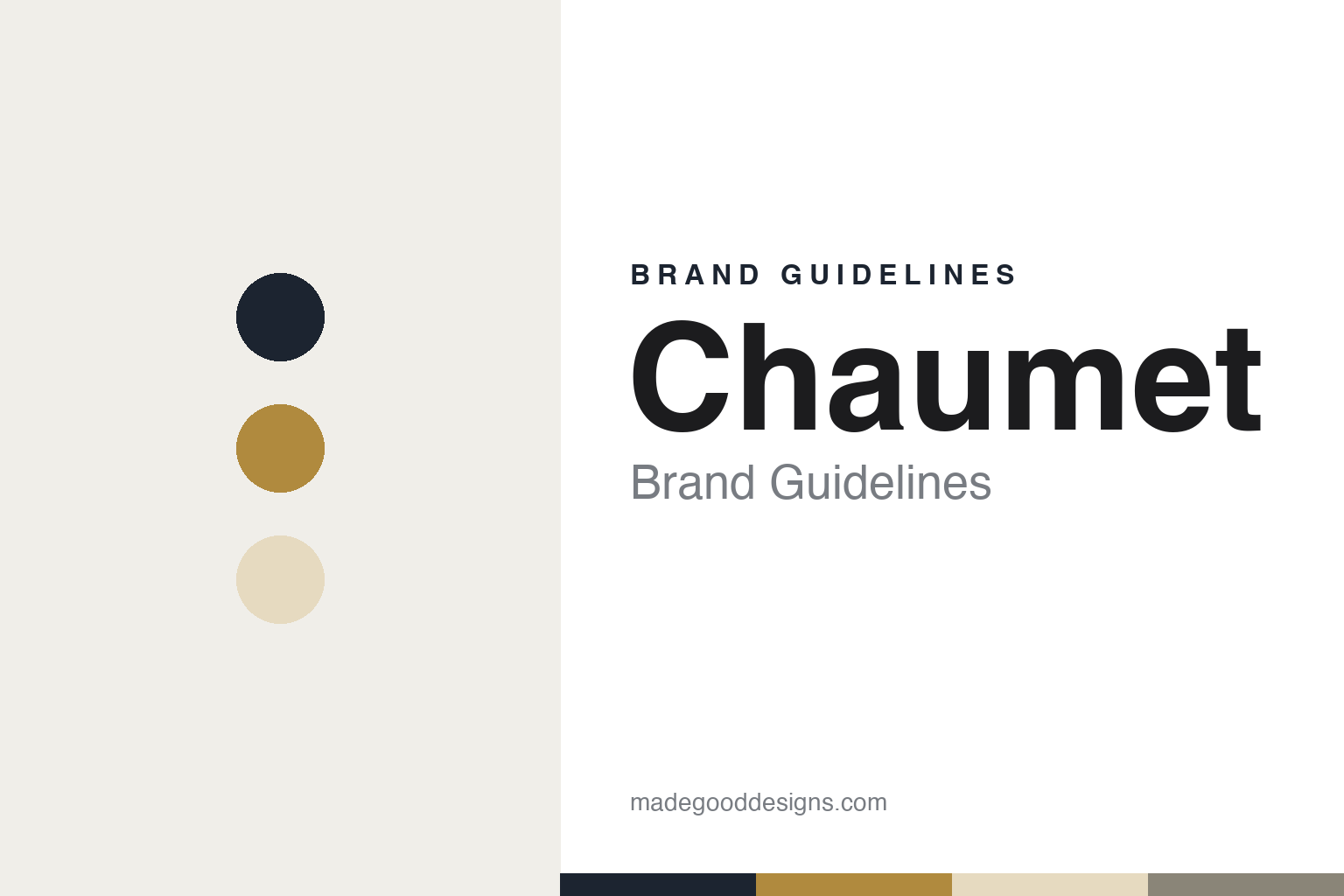
Chaumet Brand Guidelines
The Paris jewellery house of Nitot, the bee and Place Vendôme.
Aa
Two constants: a Chaumet honey gold, ink and wheat palette and a Parisian serif register. Abstract homage — not a Chaumet product or mark; no jewel, logo or emblem is reproduced.
Nitot
A Paris jeweller and an emperor.
Chaumet dates itself to 1780, when Marie-Étienne Nitot set up as a jeweller in Paris after an apprenticeship with Aubert, jeweller to Queen Marie-Antoinette, according to English Wikipedia and the house’s own history. The name Chaumet came much later, in 1885. Until then the business passed through the hands of the Nitot, Fossin and Morel families, and the company counts all of them as its own line.
The Empire made Nitot’s name. English Wikipedia says he became Napoleon’s official jeweller in 1804 and, with his son François-Regnault Nitot, made the jewellery for both of the emperor’s weddings and set the hilt of his coronation sword. Chaumet’s history also credits the firm with a tiara for Pope Pius VII. The company says Nitot chose the ear of wheat as an emblem, a motif it still describes as a signature. A pair of bracelets from about 1811, one fitted with a watch and one with a calendar, is widely described as a forerunner of the wristwatch, the history site Grail Watch noted in 2021.
The house reached Place Vendôme early. Chaumet says it was the first jeweller on the square, arriving at number 15, now the Ritz Paris, in 1812. The end of the Empire closed that chapter: in 1815 François-Regnault Nitot sold the business to his foreman, Jean-Baptiste Fossin, English Wikipedia says. Fossin and his son Jules went on to work for the family of King Louis-Philippe. After the revolution of 1848 trade in Paris slowed, and a London workshop under Jean-Valentin Morel, assisted by his son Prosper, won a royal warrant from Queen Victoria.
Colour
Joseph Chaumet, then the fall of 1987.
Joseph Chaumet, who had worked with Prosper Morel, took charge in 1885 and gave the house his name. In 1907 the boutique and workshops moved across the square to number 12, the Hôtel Baudard de Sainte-James, which is still the headquarters. French Wikipedia says he set up a photographic laboratory to record every piece leaving the workshops, and filed about ten patents between 1904 and 1914. The company calls aigrettes and tiaras the great signatures of his era.
Marcel Chaumet followed his father in 1928, and French Wikipedia describes the house’s work of the time as geometric, with contrasts of black and white. Sources differ on the years that followed. English Wikipedia and Grail Watch say the house closed in 1934 and reopened after the Second World War; French Wikipedia, citing Henri Loyrette’s 2017 history of the house, says its stock was hidden in the countryside during the war and production slowed until the conflict ended.
Marcel’s sons, Jacques and Pierre Chaumet, became co-directors in 1958. The house took over the Breguet watch name in 1970, and from 1961 it drew on the designer Pierre Sterlé, who worked for it exclusively from 1976, French Wikipedia says.
The family’s control ended in a criminal case. On 10 June 1987 the house’s provisional administrator filed for bankruptcy at the Paris commercial court, and on 13 June the brothers were jailed and charged with bankruptcy offences, breach of trust and fraud, Encyclopædia Universalis records. English and French Wikipedia connect the collapse to heavy losses on buying and reselling diamonds after world prices fell, and to accounts promising high interest. In December 1991 the brothers were convicted, including of illegally practising banking. Wikipedia says the Paris Court of Appeal reduced their sentences to six months, already served in custody; Grail Watch gives terms of 18 months and one year.
On 10 July 1987 the court chose Investcorp, the group that then owned Tiffany, to take over the house. LVMH bought Chaumet in October 1999, and the company confirms the sequence on its own history page.
Typography
Velvet, sketches and windows.
Fine jewellery is sold on small things seen closely, so its houses present themselves through a settled set of images. Loose stones appear on grey velvet, a surface that gives the eye nothing to compete with. Pearl strands are laid out and sorted by tone, a way of showing that matching is itself the work.
Drawing comes next. Many houses show gouache design sketches, painted on paper so that a jewel can be judged at full size before any metal is cut. These sheets often go into archives and exhibitions alongside the finished pieces, because they show the design as a decision rather than an object. Chaumet’s nickel-silver mock-ups and Gianmaria Buccellati’s remark that he made a design so that a craftsperson could make it belong to the same habit.
Then the bench. Workshop photographs of hands, burins, wooden workbenches and half-set stones have become part of the category’s standard vocabulary. They show that a person made the piece, and they suit a trade in which skills are passed down at the bench.
Finally, there is the box and the street. Red and navy boxes make a purchase recognisable before the jewel is seen. On Place Vendôme in Paris, small windows and restrained frontages do the same job at the scale of a square: a handful of pieces, carefully lit, under a name in plain lettering. The guides in this set look at how each house uses those habits, and at who has owned each name along the way.
Aa
A Parisian serif for a house on Place Vendôme. (Specimen set in Cormorant Garamond, a serif STAND-IN; NOT the Chaumet logo.)
Chaumet
The bee, the wheat ear and the tiara.
The address recurs across the house’s work. Its high-jewellery workshop still sits at Place Vendôme with the head office and design studio, English Wikipedia says, and a 2012 collection was simply called 12 Vendôme. The watches work differently: English Wikipedia says their movements are made in Switzerland.
One working method stands out. Both Wikipedias describe mock-ups in nickel silver, used to show a client the shape or volume of a piece before it is made. The house also shows its past in public, with exhibitions including a 2017 show at the Forbidden City in Beijing, and in books including a 2020 volume on its tiaras.
Current ranges draw on the archive. The company dates its Liens pieces to 1977, built around the idea of a link; Joséphine, launched in 2010, carries the shape of a tiara over to a ring; and Bee de Chaumet, from 2011, turns the bee and honeycomb cell into a graphic pattern. English Wikipedia calls the bee an emblem of both Napoleon and the house.
In 2024 Chaumet designed the medals for the Paris Olympic and Paralympic Games. CNN reported in February 2024 that each holds a hexagon of iron from the Eiffel Tower, gripped by a “claw” setting of the kind used for gems, and that creative director Clémentine Massonnat-Schaller said the rays around it echo the house’s tiaras. The medals were produced by the Monnaie de Paris, the French mint, which told the Associated Press in January 2025 that it was replacing damaged medals and had changed its varnishing process. Charles Leung, formerly of Fred, became chief executive in January 2024, English Wikipedia says.
For a design guide, Chaumet shows how a house can keep one line of identity through changes of family, owner and fortune, by holding on to an address, an archive and a few emblems. Compare Boucheron, which took its own place on the square in 1893, and Tiffany, once a fellow Investcorp holding. For this guide we use a honey gold, an ink and a wheat tone with a serif, an unofficial interpretation; no product or logo is reproduced.
Explore & save
Keep Chaumet’s identity on hand — save it to a board in the Made Good inspiration library.
Chaumet identity set
Pin the Chaumet honey gold, ink and wheat palette and the Parisian serif register to your own board.