CDL Brand Guidelines
A 1963 Orchard Road start that grew into a Singapore property group.
Aa
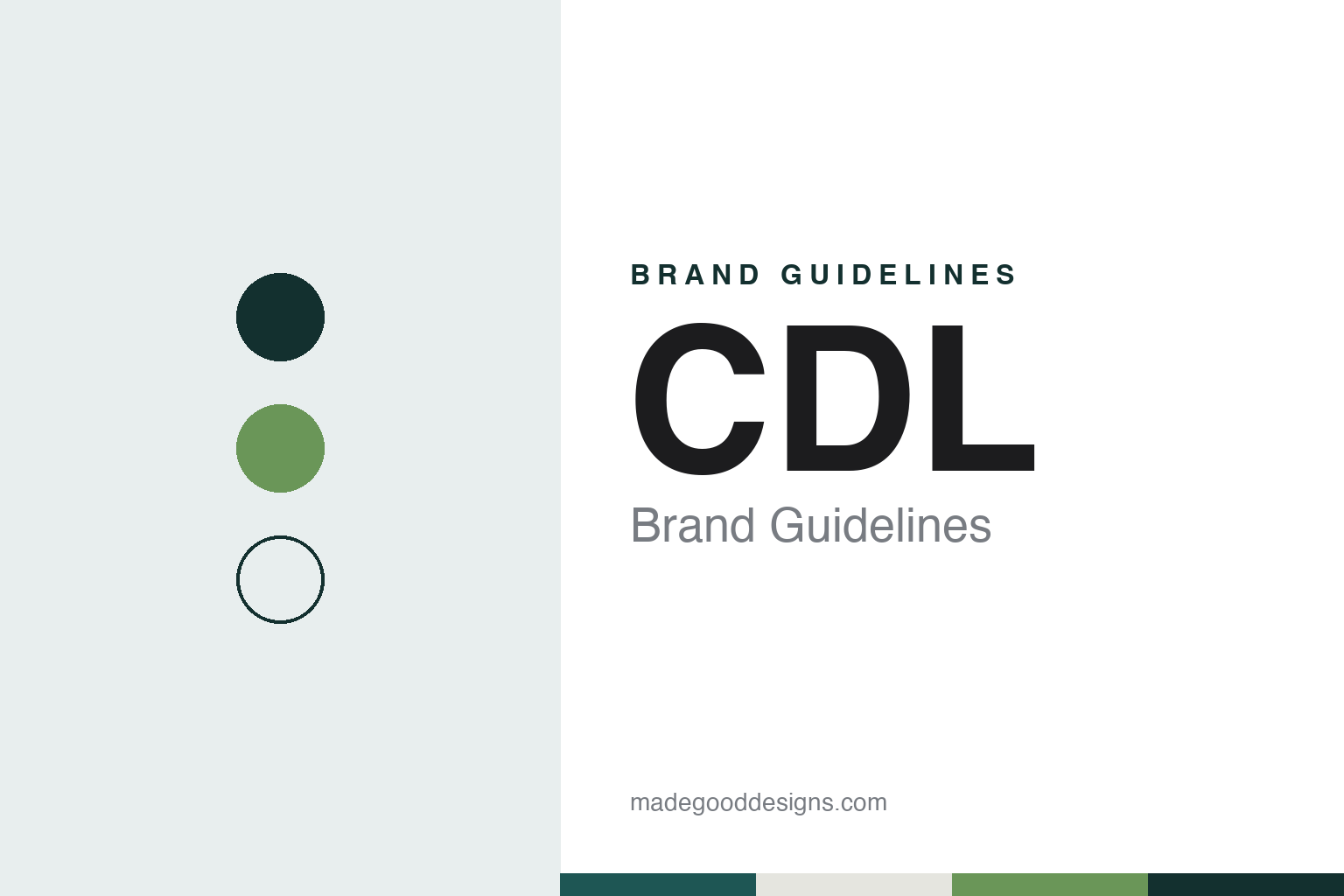
Two constants: a marina teal, leaf green and concrete palette and a geometric sans register. Abstract homage — not a CDL product or mark; no building, logo or nameplate is reproduced.
City Developments
Eight staff in a rented office.
City Developments Limited, known as CDL, began on 7 September 1963 in a small rented office at Amber Mansions on Orchard Road in Singapore, with eight employees, the company says; English Wikipedia gives the same date and staff count. Its shares were listed in November 1963 on what was then the Malayan Stock Exchange, the forerunner of today’s Singapore Exchange.
Its first project was across the causeway. Fresh Breezes, a development of 200 bungalows in Johor Bahru, Malaysia, was completed in 1965, English Wikipedia says. With it CDL used a “show house” so buyers could see a home before buying, a sales technique the article quotes as “believed to be unique in Asia”; the company says it pioneered the show-flat concept. In 1966 came City Towers in Bukit Timah, which CDL calls its first high-rise residential project, and the first phase of Clementi Park, which it calls its first full condominium-concept project.
The early years were hard going. English Wikipedia says CDL was unprofitable for its first seven years and sold its Johor Bahru properties to concentrate on Singapore. The Hong Leong Group began buying into CDL in 1969, placing three directors on the board, and in 1972 took a controlling interest, the company says. Kwek Hong Png, Hong Leong’s founder, became chairman of CDL in 1974, with his son Kwek Leng Beng as managing director; Kwek Leng Beng became executive chairman in 1995, according to the company’s milestones. English Wikipedia describes CDL as the core publicly traded company of the Hong Leong Group.
Colour
From City Plaza to Republic Plaza.
Hong Leong’s control brought a turn towards investment property. Through Guan Realty, acquired in 1972, CDL developed City Plaza, which it calls its first mixed-use development, completed in 1980. City House followed in 1983 and served as the company’s headquarters until 2018. In 1987 CDL bought a site at Raffles Place and combined it with two neighbouring plots; the result was Republic Plaza, designed by the Japanese architect Kisho Kurokawa and officially opened in January 1998, according to the company and English Wikipedia. It is now CDL’s headquarters.
Hotels became a second business. CDL bought King’s Hotel, now Copthorne King’s Hotel Singapore, in 1980, formed CDL Hotels International in 1989, bought the Copthorne chain from Aer Lingus and launched the Millennium Hotels & Resorts brand in 1995, the company says. Millennium & Copthorne Hotels was listed in London in 1996; in October 2019 it was delisted after CDL took it private, and it is now a wholly owned subsidiary. CDL’s website says the group owns, operates or manages more than 160 hotels worldwide, mainly through Millennium Hotels and Resorts.
Homes remain the public face of the name. CDL’s milestones include The Sail @ Marina Bay, launched from 2004 and billed by the company as “Singapore’s Tallest Residences”, and the St. Regis Residences in 2006. In 2007 CDL was part of the consortium awarded the South Beach site, a mixed-use project designed by Foster + Partners. In July 2020 CDL and its joint-venture partner CapitaLand completed the purchase of the Liang Court site, the company says, and in October 2026 it announced the launch of Lucerne Grand.
Sustainability is central to how CDL presents itself. English Wikipedia says the company adopted the ethos “Conserving as we Construct” in 1995. The company says it published its first dedicated sustainability report in 2008, opened City Square Mall in 2009 as what it calls Singapore’s first eco-mall, issued what it describes as the first green bond by a Singapore company in 2017 and introduced a blueprint called CDL Future Value 2030 the same year. In 2014 its Tree House condominium entered Guinness World Records for the largest vertical garden, according to the company.
Typography
Towers, malls and annual reports.
Property developers in Asia and the Gulf sell places more than products, and their identities are built to be read at the scale of a city. The material to compare is public: corporate websites, project microsites, investor pages and the annual and sustainability reports that listed developers publish each year. In those pages, look at how much work the photography does — towers at dusk, harbour and skyline views, architects’ renderings labelled “artist’s impression”, as on Henderson Land’s brand site — and at how the corporate wordmark, in navy, green, gold or black, is placed against it.
Names are part of the design. Hong Kong developers present themselves in English and Chinese, with short forms that differ between the two languages; Henderson Land, for example, is 恒基兆業地產 in full and 恒地 for short, according to Chinese Wikipedia. In the Gulf the pairing to watch is English and Arabic; in the Philippines, English and Filipino. Hotels, malls and residential estates usually carry names of their own, so a group such as CK Asset sits behind a family of hotel names rather than putting its own name on every door.
The structure of a developer’s website is a portrait of the business. Pages are commonly divided by residential, office, retail and hotel portfolios, by city or country, and by projects for sale, for lease, under construction and completed. Landmark malls and mixed-use districts get their own sites and campaigns, and the newest schemes, such as Henderson Land’s Central Yards on the Hong Kong harbourfront, are introduced with long lists of named architects and landscape designers.
Sustainability is now a standard chapter. Developers name their programmes, publish environmental, social and governance reports beside their annual results, and use shorthand such as Henderson Land’s G.I.V.E. to make a strategy memorable. This guide sets out what can be checked about each company — who founded it, who controls it and what it builds — and marks clearly what rests only on the company’s own word.
Aa
A geometric sans for three capital letters. (Specimen set in Manrope, a sans STAND-IN; NOT the CDL logo.)
CDL
A long legal name, three letters.
The company works under two names. Its legal name, City Developments Limited, is the one listed on the Singapore Exchange; the short form CDL is used for the brand, the website cdl.com.sg and units such as CDL China and CDL Australia, and English Wikipedia notes that it is sometimes called CityDev. The website describes a network spanning 167 locations in 28 countries and regions, with residences, offices, hotels, serviced apartments, student accommodation, malls and integrated developments.
The group is reshaping that portfolio. On 28 September 2026 CDL set out a strategy called GET+ for its 2027–29 financial years, Mingtiandi reported, combining asset sales, new investment and plans to hire a dedicated chief executive for a fund-management business built around platforms such as CDL Hospitality Trusts and IREIT Global. Group chief executive Sherman Kwek said property ownership would remain central to the business. The initials CDL are used by many unrelated organisations, so the full name City Developments Limited is the clearest way to identify this company.
For a design guide, CDL shows how a developer can turn a long legal name into three letters and attach them to homes, towers, hotels and a sustainability record. Compare CapitaLand, another Singapore developer and CDL’s partner at the Liang Court site, and Sino Land, the Hong Kong group whose founder also built Singapore’s Far East Organization. For this guide we use a deep teal, a leaf green and a concrete grey with a sans, an unofficial interpretation; no product or logo is reproduced.
Explore & save
Keep CDL’s identity on hand — save it to a board in the Made Good inspiration library.
CDL identity set
Pin the CDL marina teal, leaf green and concrete palette and the geometric sans register to your own board.