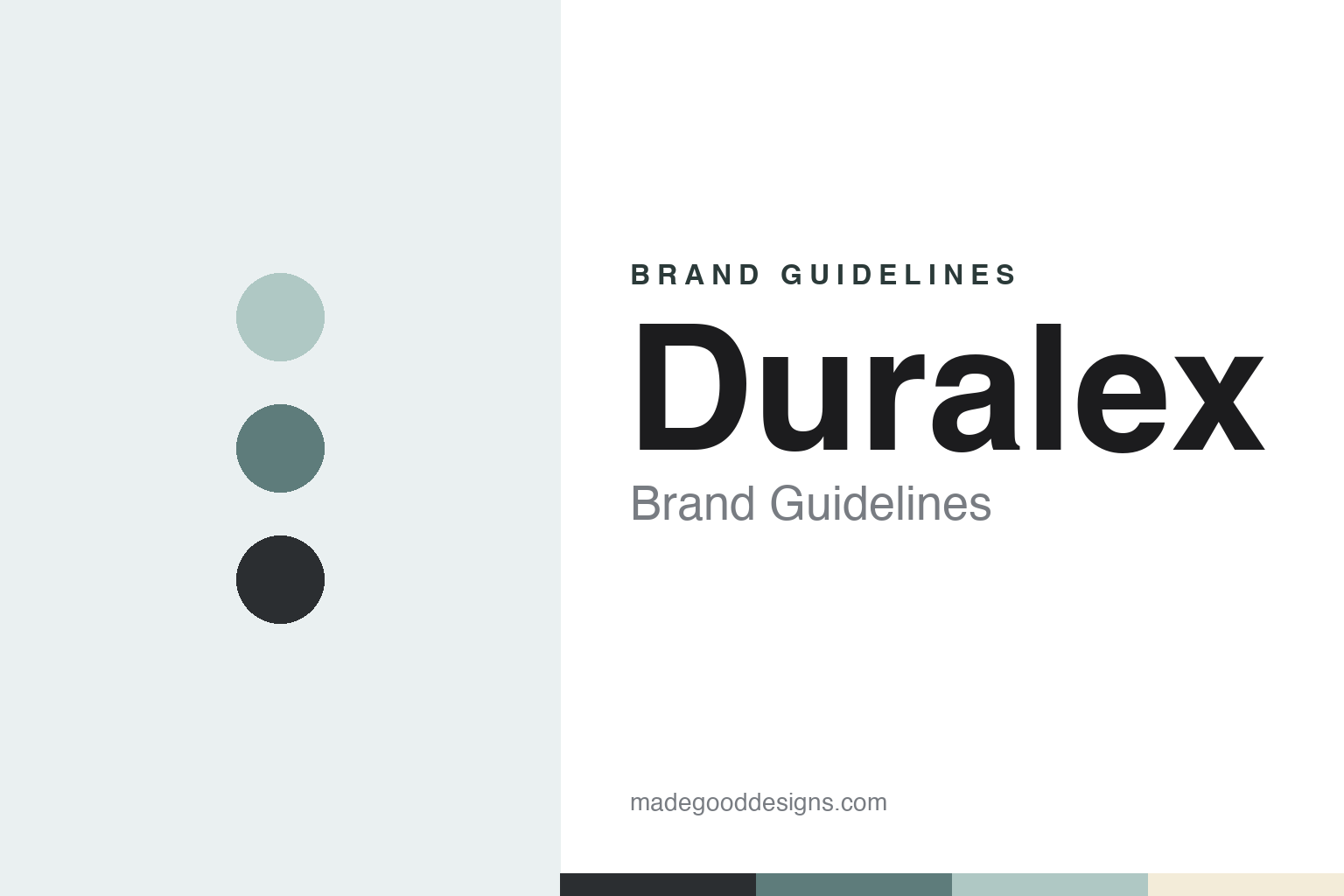
Duralex Brand Guidelines
The French canteen tumbler — tempered glass, made in France since 1945.
Aa
Two constants: a clear-glass palette and a utilitarian sans. Abstract homage — not the Duralex wordmark or logo.
The tumbler of French canteens
Duralex made everyday tempered glass an icon.
Duralex is a lesson in an everyday object becoming a cultural fixture. The Duralex brand launched in 1945 (on a glassworks site whose workshops date to 1927 and which came under Saint-Gobain in 1934) at La Chapelle-Saint-Mesmin, near Orléans, where it is still made — 100% in France. Saint-Gobain had developed glass tempering in the 1930s (originally for windscreens); Duralex was the first to apply it to everyday tableware.
Its icon is the Picardie tumbler (1954) — the faceted, panelled glass ubiquitous in French canteens, cafés, schools and homes, and a genuine pop-culture fixture — alongside the stackable Gigogne tumbler (from an old French word for “nested”), which sits in the collection of the Musée des Arts Décoratifs. Tempered soda-lime glass gives roughly twice the impact resistance of ordinary glass and, when it does fail, breaks into small blunt granules rather than sharp shards.
A famous detail: each glass carries a number moulded into its base — really a mould identifier, but French schoolchildren turned it into a canteen game, treating the number as your “age.” After turbulent ownership and repeated receiverships, Duralex became an employee-owned cooperative (SCOP), validated in July 2024 (saving 228 jobs), followed by an oversubscribed public capital appeal in 2025. (Honest notes: the brand dates to 1945 (the site’s workshops to 1927; ignore an erroneous “1939”); tempered glass is break-resistant, not unbreakable, and is not borosilicate/Pyrex; the base number is a mould ID, the “age” reading is folklore; Saint-Gobain is the historical parent, not the current owner; and no official brand hex is published.)
Colour
Duralex lives in a clear-glass palette. Click a swatch to copy the hex.
Duralex’s identity is clear, sturdy and utilitarian — a pale clear glass, a glass-edge aqua, a deeper tempered teal, a warm bistro cream, and a utilitarian ink. The palette reads exactly like a stack of canteen tumblers: cool clear glass with the faint aqua that pools at a thick rim, warmed by café cream. It signals honest, everyday function rather than decoration. The honest caveat: with no published brand hex, these tones are an original, unofficial interpretation, not first-party values.
The lesson is a clear-glass palette signals honest everyday glassware. Duralex’s world reads as functional and unpretentious. For designers, it is a reminder that clear and faint-aqua glass tones with a plain ink convey durable utility, matching a brand whose tumblers live in schools and cafés. The takeaways: build from clear and edge-aqua tones with a utilitarian accent; let function and durability lead; and treat any single hex as unofficial when there is no published spec.
Typography
The wordmark spirit is a utilitarian sans — plain and sturdy.
Duralex’s identity carries a plain, sturdy, functional spirit — a “DURALEX” wordmark, historically embossed on the glass base beside “Made in France,” whose solid forms match no-frills tempered glass. A utilitarian sans captures the mood: it is grounded and legible, the register of canteens and cafés rather than luxury. Set against a clear-glass palette, the utilitarian sans feels plain and durable — exactly the tempered-tumbler, everyday personality Duralex carries. It is honest rather than decorative, mirroring glass built to be used. (Duralex’s real wordmark is a trademark we describe but do not reproduce, and the exact typeface is not something we assert.) Because the specific mark is not ours to use, the honest description is “a utilitarian sans spirit,” not the Duralex logo. The type behaves like the brand: plain, sturdy and functional.
Aa
A utilitarian sans spirit — plain and sturdy. (Specimen set in Archivo, a grotesque sans; NOT the Duralex logo, which is a trademark.)
Honest utility as the difference
Duralex stands for durable everyday glass.
Duralex is a lesson in the power of a humble, honest product. It never chased luxury; it applied a real technology — tempering — to the most ordinary object, the drinking glass, and made it tougher, safer and affordable. That practical honesty is exactly why the Picardie tumbler became a shared French memory, and why, when the company faltered, its own workers bought it and saved it as a cooperative. The differentiator is authenticity: a glass that does its job so well it became a cultural icon without ever pretending to be precious.
For designers and brand-builders, Duralex offers a clear takeaway: honest utility, done superbly, can outlast luxury. The lessons: solve a real everyday problem with genuine technology (tempered safety glass); let the product’s ubiquity build the story (canteens, cafés, the base-number game); and keep the identity plain and durable to match. It is also a reminder to keep the facts honest: the brand dates to 1945, tempered glass is break-resistant not unbreakable, the base number is a mould ID, and Duralex is now employee-owned — with the palette here an unofficial interpretation. Duralex made the ordinary glass an icon — proof that honest utility can be the difference.
Explore & save
Keep Duralex’s identity on hand — save it to a board in the Made Good inspiration library.
Duralex identity set
Pin the clear-glass palette and the utilitarian-sans spirit to your own board.


