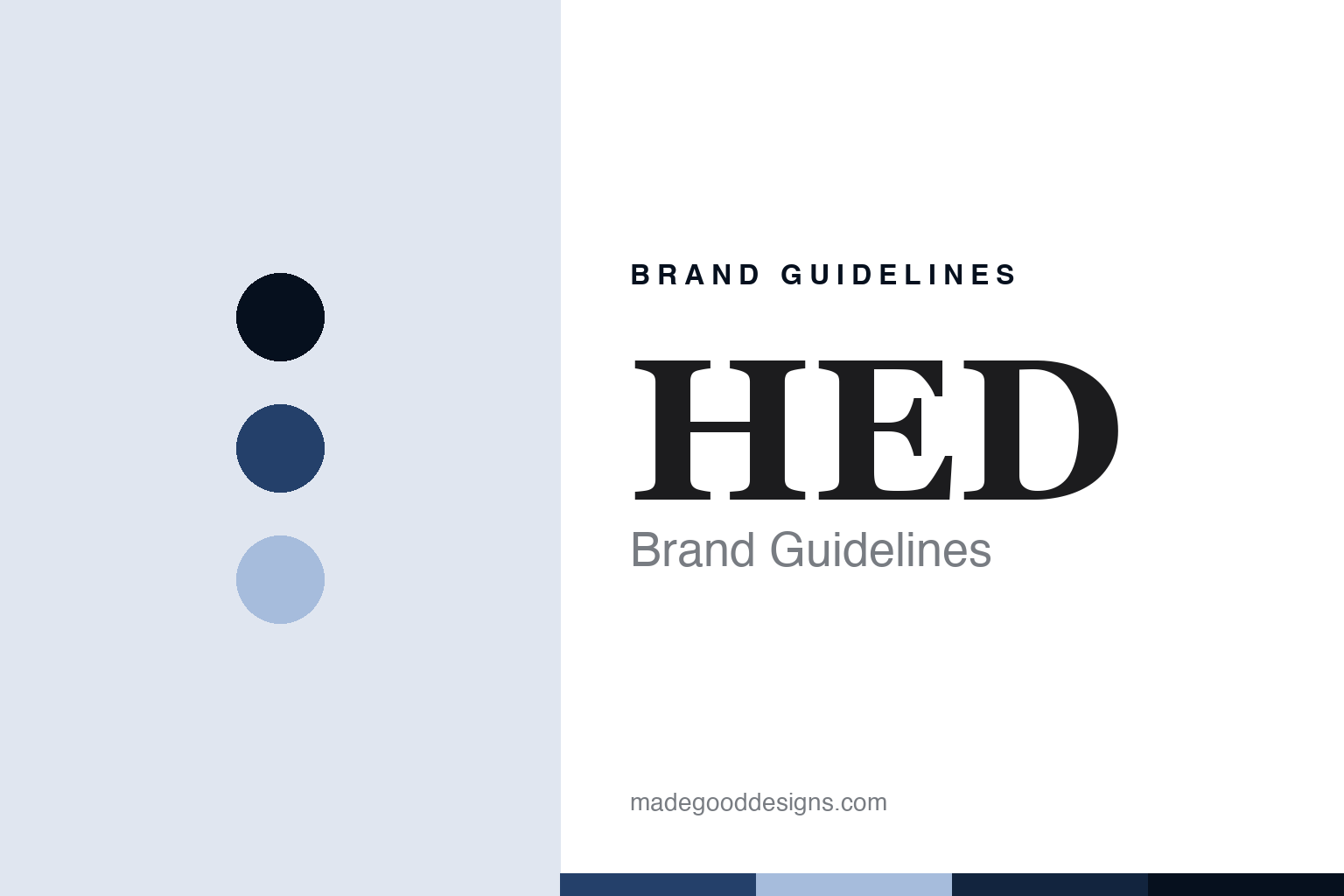
HED Brand Guidelines
Still built by hand in Minnesota.
Aa
Two constants: a HED-navy palette and an aero-serif register. Abstract homage — not a HED product or mark; no wheel, rim or logo is reproduced.
Still built by hand in Minnesota
HED is the family-owned Minnesota aero-wheel pioneer that still builds its wheels and carbon rims by hand rather than outsourcing.
HED closes the wheel round as its heritage-aero node — a family-owned Minnesota company that pioneered aero and wide-rim wheels, and that still builds its wheels and makes its carbon rims by hand at home rather than outsourcing to Asia. Its answer to a round about who owns the wheels and where they are made is the most hand-made in the set: a family-owned pioneer, still built in Minnesota.
Its identity is still built by hand in Minnesota. The aero heritage, the family ownership and the US hand-building are the story here. Made by hand, still. Still built by hand in Minnesota.
(Honest notes, so the founding, the ownership and the making are framed accurately, with one figure kept in bounds. HED sells aero wheels as its heroes — the alloy-and-carbon Jet, the full-carbon Stinger and the alloy Ardennes, on its wide-rim engineering; we report its language as the brand’s own. On origin: HED Cycling Products was founded in 1984 by Steve Hed and his wife Anne Hed, with Anne a professional triathlete and Steve building his first carbon disc wheel in a Minnesota garage, and it is headquartered in Roseville, Minnesota. On a necessary point of respect: Steve Hed died in 2014, so we write him in the past tense, and co-founder Anne Hed became chief executive and leads the company, with son Andrew involved. On ownership: HED is privately held and family-owned, led by Anne Hed, and remains independent. On where it is made: HED builds its wheels by hand in Minnesota and states it has not outsourced its carbon rim production, so we credit genuine US manufacturing while noting that hubs and spokes in a global supply chain are normal. On heritage, carefully: HED and Steve Hed are credited with toroidal aero rim shapes, early carbon and disc-wheel construction and the wide-rim movement, and while professional riders including Lance Armstrong used HED wheels and consulted Steve Hed, we state that as a historical equipment fact without implying endorsement, and we describe its work with frames such as Cervélo as widely-used-on rather than a formal co-development. Its designs and the HED name are IP we describe but do not reproduce; there is no official brand hex; these tones are an unofficial interpretation.)
Colour
HED lives in a HED navy. Click a swatch to copy the hex.
HED’s identity is heritage, family-owned and US-hand-built — a HED navy, an ink, a pale blue, a deep navy, and a paper. The palette leans HED navy and pale blue: a deep, aero register that nods to wind-tunnel work and a Minnesota workshop rather than a loud logo colour. It signals still built by hand in Minnesota — heritage, family-owned and US-hand-built. The honest caveat: with no official brand hex, these values are an aero, unofficial interpretation, not first-party colours.
The lesson is a deep navy signals a heritage, engineered identity. HED’s world is the aero wheel built by hand. For designers, it is a reminder that a deep navy and a soft pale can carry a heritage, aero brand — a considered tone held as an accent, not a product shot. Because a dark hue can read heavy, keep type dark and let the colour live in the accents, palette and band. The takeaways: credit the 1984 founding by Steve and Anne Hed, in the past tense for Steve; note the family ownership under Anne Hed; credit the US hand-building; and keep the Armstrong and Cervélo points factual and bounded.
Typography
The register is an aero serif — heritage, family-owned, US-hand-built.
HED’s identity carries a heritage, family-owned, US-hand-built spirit — an aero pioneer still built by hand. An aero serif captures the mood: warm, classic and engineered, the register of a wind-tunnel workshop. Set in a HED-navy palette, the aero serif feels storied and precise — exactly the personality HED carries. It behaves like a made, hand-built thing rather than a loud logo, mirroring an aero-gradient and a rim-arc. (HED’s real products and the name are things we describe but do not reproduce, and the exact typeface is not ours to use.) Because it is not ours to use, the honest description is “an aero-serif brand,” shown here in a stand-in. The type behaves like the brand: heritage, family-owned and US-hand-built.
Aa
An aero-serif brand — storied and precise. (Specimen set in Playfair Display, an aero-serif STAND-IN; NOT the HED logo or products.)
The wheel node
HED stands for still built by hand in Minnesota.
HED closes the round as its heritage-aero node. A HED-navy palette, an aero serif and a 1984 founding make one thing — still built by hand in Minnesota — the whole identity: heritage, family-owned and US-hand-built. The aero heritage is the pitch, the family ownership is the frame, and the US hand-building is the pride. The point is a family-owned pioneer still built at home, in a round about who owns the wheels and where they are made.
Put to work, the identity is the brand told straight, the founder honoured in the past tense and the making credited. A brand in this spirit would credit the 1984 founding by Steve and Anne Hed, note the family ownership under Anne Hed, credit the US hand-building, and keep the Armstrong and Cervélo points factual. A reader in this spirit would keep the facts right: HED sells the Jet, Stinger and Ardennes aero wheels on wide-rim engineering as its heroes; it was founded in 1984 by Steve and Anne Hed, Steve building his first disc wheel in a Minnesota garage; Steve Hed died in 2014 and Anne Hed became CEO, with the company family-owned and independent; it builds by hand in Minnesota and has not outsourced its carbon rim production; and its aero and wide-rim innovations are credited, with pro use by riders including Armstrong stated as historical fact. HED closes the round, after Hunt. The honest editorial moves are to credit the founding, to honour the founder in the past tense, to credit the making, and to keep the endorsements bounded.
For designers and brand-builders, HED closes the wheel node: honour a late founder in the past tense — and credit genuine hand-building. The lessons: a brand can rest on a genuine pioneer, here aero and wide-rim wheels from 1984; a founder, Steve Hed, is honoured in the past tense after his 2014 death, with co-founder Anne Hed credited as the current CEO; a US manufacturing base is credited as genuine hand-building, including carbon rims not outsourced; and famous associations, like pro riders using HED wheels, are kept as historical equipment facts without implying endorsement. It is also a reminder to stay precise: HED is the family-owned Minnesota aero pioneer, still built by hand — with the palette here an unofficial interpretation. The hook is that persistence: HED is the rare wheel brand that still builds its wheels, and makes its carbon rims, by hand in Minnesota rather than outsourcing to Asia, carrying forward founder Steve Hed’s garage-built, wind-tunnel-tested legacy under his widow and co-founder, CEO Anne Hed. Read that way, HED is less a single wheel than still built by hand in Minnesota: heritage, family-owned, US-hand-built. The lesson for a brand is that honouring the founder and crediting the making reinforce each other, and keeping the endorsements bounded keeps the story earned. HED made still-built-by-hand-in-Minnesota the identity — proof that a hand-built heritage can close a round.
Explore & save
Keep HED’s identity on hand — save it to a board in the Made Good inspiration library.
HED identity set
Pin the HED-navy palette and the aero-serif register to your own board.


