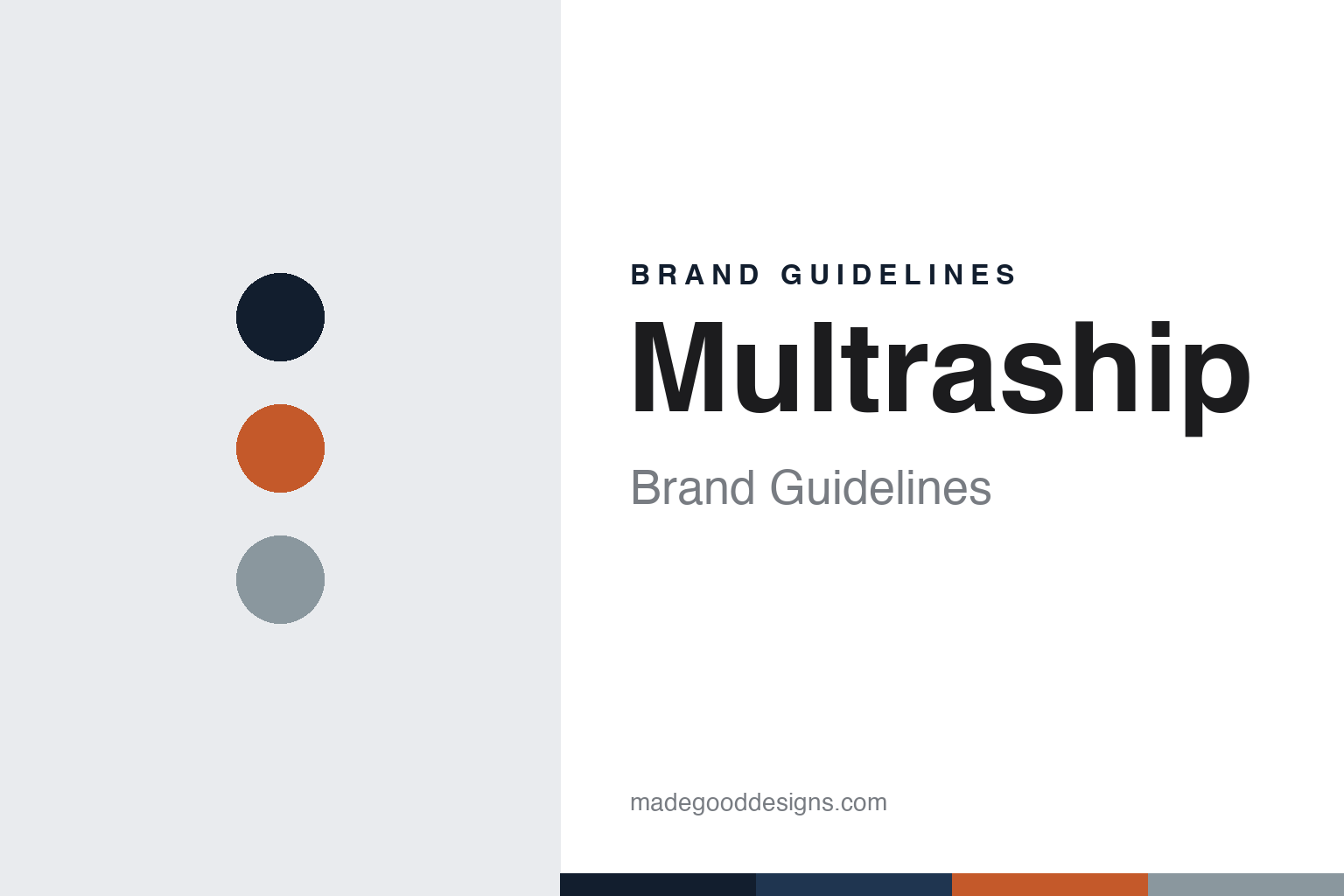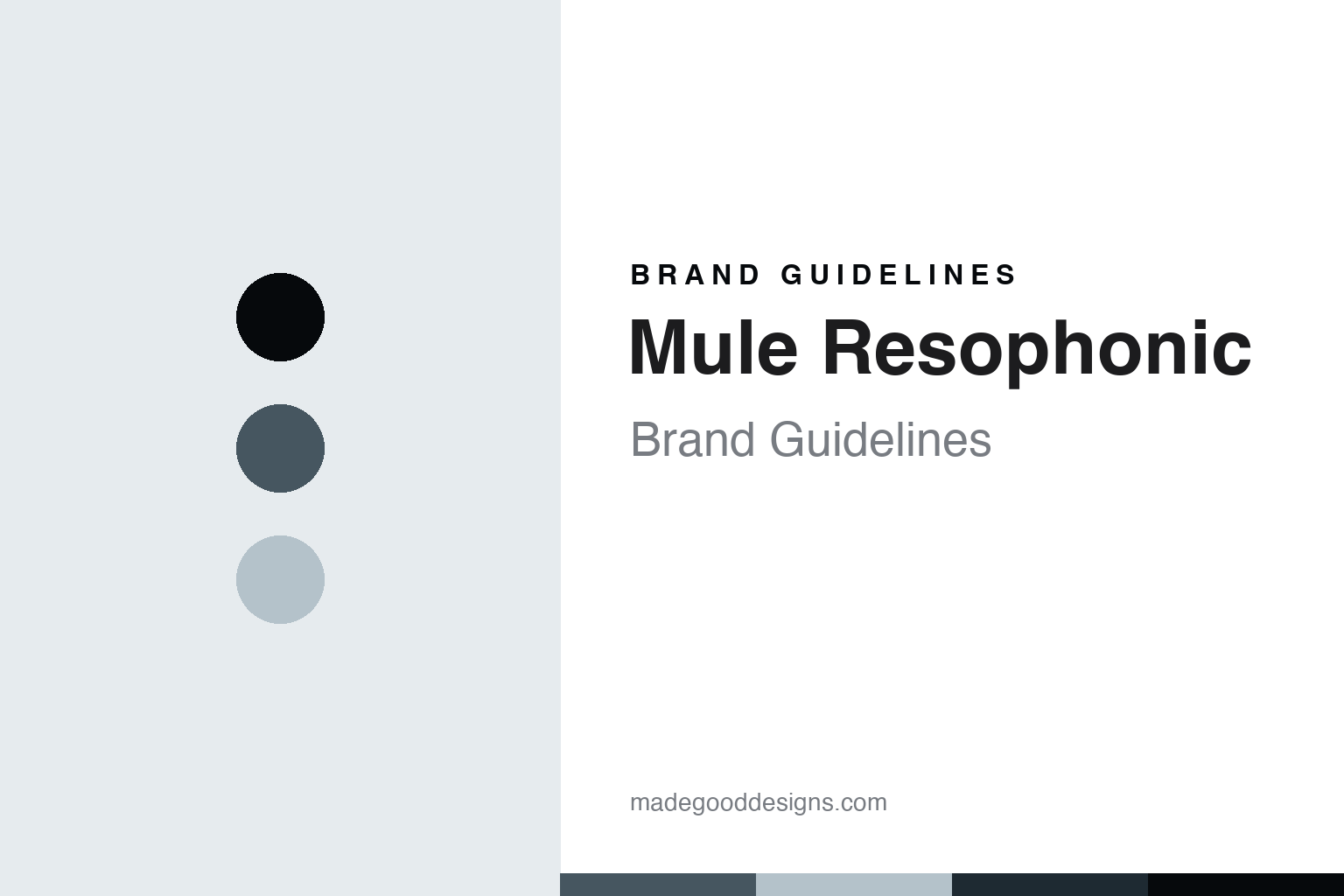
Mule Resophonic Brand Guidelines
The Michigan steel-body resonator shop.
Aa
Two constants: a raw-steel palette and a steel-body-sans register. Abstract homage — not a Mule product or mark; no instrument silhouette, coverplate or logo is reproduced.
The Michigan steel-body resonator shop
Mule Resophonic is the Saginaw, Michigan maker of hand-built steel-body resonator instruments, founded by Matt Eich.
Mule Resophonic closes the round as its steel-bodied maker — the Saginaw, Michigan shop, founded by Matt Eich, that hand-builds steel-body resonator instruments, a modern maker with a devoted following. Mule makes the instrument at the bench, and its answer to a round that asks maker or merchant is plainly maker — steel bodies raised and assembled in one Michigan shop. A brand, steel.
Its identity is the Michigan steel-body resonator shop. The steel-body craft, the US build and the founder’s shop are the story here. A brand, steel. The Michigan steel-body resonator shop.
(Honest notes, so the making stays credited, and a shape stays generic. Mule Resophonic makes steel-body resonator instruments as its heroes — a Mavis among them, and a Charlie Parr signature — and we report its performance language as the brand’s own marketing. It is founded and run by Matt Eich, in Saginaw, Michigan, and is active today. On where it is made, the star question of this round, it is a genuine maker: it hand-builds its steel-body resonators in the USA. A record note: an exact founding year, around the early twenty-tens, we could not verify, so we place it approximately without asserting a date. A trade-dress caution: one of its models has a name that evokes a famous Fender shape, so we describe its instruments generically and reproduce no body silhouette. Its designs are IP we describe but do not reproduce; there is no official brand hex; these tones are an unofficial interpretation.)
Colour
Mule Resophonic lives in a raw steel. Click a swatch to copy the hex.
Mule’s identity is steel, made and Michigan — a raw steel, an ink, a pale chrome, a deep gunmetal, and a paper. The palette leans raw steel and pale chrome: a metal register that nods to a raised steel body rather than a loud logo colour. It signals a steel-body resonator shop. The honest caveat: with no published brand hex, these values are an original, unofficial interpretation, not first-party colours.
The lesson is a raw steel signals a steel, made identity. Mule’s world is a hand-built steel-body resonator. For designers, it is a reminder that a raw steel and a soft pale chrome can carry an instrument brand — the tone of the metal body. Because these tones can fail as small text, keep type dark and let the colour live in the accents, palette and band. The takeaways: build the steel body in the USA; place an unverified year approximately; describe a model without copying a shape; and treat any single hex as unofficial.
Typography
The register is a steel-body sans — steel, plain, made.
Mule’s identity carries a steel, plain, made spirit — a genuine shop, not a graphics label. A steel-body sans captures the mood: clean, metallic and confident, the register of a raised steel body. Set in a raw-steel palette, the steel-body sans feels steel and made — exactly the personality Mule carries. It is a made object rather than a logo, mirroring a steel body. (Mule’s real instruments are things we describe but do not reproduce, and the exact typeface is not ours to use.) Because it is not ours to use, the honest description is “a steel-body-sans maker,” shown here in a stand-in. The type behaves like the brand: steel, plain and made.
Aa
A steel-body-sans maker — steel and made. (Specimen set in Manrope, a steel-body-sans STAND-IN; NOT the Mule logo, a Fender-style shape or any instrument.)
Maker or merchant
Mule Resophonic stands for the Michigan steel-body resonator shop.
Mule Resophonic closes the round as its steel-bodied maker. A raw-steel palette, a steel-body sans and a Saginaw shop make one thing — the Michigan steel-body resonator shop — the whole identity: steel, made and Michigan. The steel-body craft is the pitch, and the US build is the proof. The point is steel bodies raised and assembled in one Michigan shop, the maker answer closing a round that asks maker or merchant.
Put to work, the identity is the steel shop told straight, as making — with the build kept in the USA and a shape kept generic. A maker in this spirit would build the steel body in the USA, place an unverified year approximately, and describe a model without copying a shape. A reader in this spirit would keep the facts right: Mule Resophonic makes steel-body resonator instruments as its heroes — a Mavis and a Charlie Parr signature among them; it is founded and run by Matt Eich, in Saginaw, Michigan, active today; it hand-builds its resonators in the USA; an exact founding year, around the early twenty-tens, is unverified and placed approximately; and one model name evokes a famous Fender shape, so its instruments are described generically and no body silhouette is reproduced. Mule closes the round’s maker end with Dusty Strings, Camps and Pisgah — the genuine shops against the merchants. The honest editorial moves are to credit Matt Eich, to keep the build American, to place the year approximately, to keep a shape generic, and to reproduce no instrument.
For designers and brand-builders, Mule closes maker or merchant: build the steel body yourself — and keep a look-alike name off the shape. The lessons: let a hand-built steel body be the brand; keep the build domestic; place an unverified year approximately rather than assert one; describe an instrument generically when a name evokes another maker’s shape; and never reproduce an instrument. It is also a reminder to stay precise: Mule Resophonic is the Saginaw, Michigan maker of hand-built steel-body resonator instruments, founded by Matt Eich — with the palette here an unofficial interpretation. Read that way, Mule is less a resonator than a steel shop: steel, made, Michigan. The lesson for a brand is that a hand-built body and an honest record reinforce each other, and building it in Saginaw keeps the story earned. Mule Resophonic made the-Michigan-steel-body-resonator-shop the identity — proof that a genuine maker can close a round, its steel shop.
Explore & save
Keep Mule Resophonic’s identity on hand — save it to a board in the Made Good inspiration library.
Mule Resophonic identity set
Pin the raw-steel palette and the steel-body-sans register to your own board.