NCBA Brand Guidelines
A 1959 credit house and a 2019 merger, now part of Nedbank.
Aa
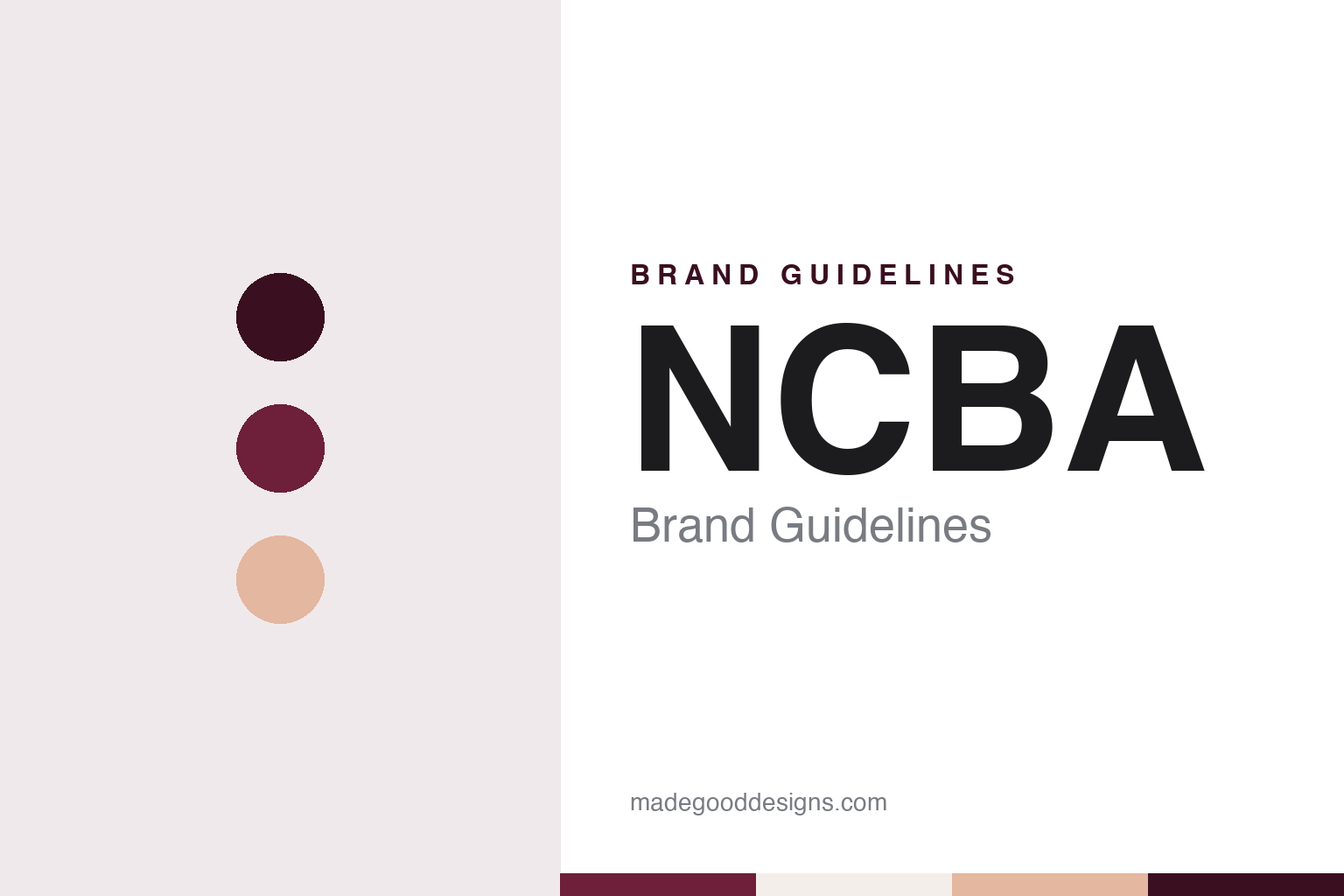
Two constants: a wine, claret and clay palette of our own and a geometric sans register. Abstract homage — not an NCBA asset; no logo, card or app screen is reproduced.
National Industrial Credit
A hire-purchase company from 1959.
NCBA’s older half began as a credit company. English Wikipedia says National Industrial Credit (NIC) was incorporated in Kenya on 29 September 1959, formed jointly by South Africa’s Standard Bank, with 40 per cent, and the British firm Mercantile Credit, with 60 per cent, to offer hire purchase and instalment credit across East Africa.
NIC became a public company and was listed on what was then the Nairobi Stock Exchange in 1971, Wikipedia says. Barclays Bank of Kenya later built a majority holding, through its purchase of Mercantile in the 1970s and of Standard Bank’s shares in the 1980s, then sold out between 1993 and 1996, partly through a public offering in 1994.
The move into full banking came in the 1990s. NIC received a commercial banking licence from the Central Bank of Kenya in September 1995 and, in November 1997, merged with African Mercantile Bank through a share swap, according to Wikipedia. It added an investment bank, NIC Capital, in 2006, an insurance agency in 2009 and its first business outside Kenya the same year, when it bought a majority of Savings and Finance Commercial Bank in Tanzania, renamed NIC Bank Tanzania in December 2010. A greenfield bank in Uganda followed in 2012.
Colour
NIC plus CBA, and a new name in 2019.
The group that trades today was created by a merger. English Wikipedia says NIC Group announced in December 2018 that it would combine with Commercial Bank of Africa (CBA), with CBA’s shareholders transferring all of their shares to NIC in exchange for 53 per cent of the enlarged group, a structure Wikipedia describes as a reverse merger.
NCBA’s own timeline sets out the steps. In January 2019 the boards of NIC and CBA unanimously recommended the merger to shareholders; in April 2019 the shareholders of both banks approved it; in May 2019 the leadership of the new entity was announced; and in September 2019 approvals came from the Central Bank of Kenya and the Cabinet Secretary for the National Treasury. In October 2019, the company says, it unveiled the new brand.
The combined group is a holding company with banks and other businesses in several countries. NCBA says it operates in six markets, Kenya, Uganda, Tanzania, Rwanda, Ivory Coast and Ghana, serving more than 60 million customers through 122 branches, figures repeated by African Law & Business in November 2026. Its website lists an investment bank, a digital business, leasing, bancassurance and insurance units alongside the banks, and highlights corporate banking, asset finance and digital banking as the areas where it says it sets the pace.
Sport is part of the brand’s public face. The company says its NCBA Golf Series reached its fifth edition in 2025, with 159 NCBA-sponsored events planned across Kenya, Uganda, Tanzania and Rwanda that year, and partnerships with the Kenya Golf Union and the Junior Golf Foundation.
Typography
How banks in the region present themselves.
Banks in East and West Africa tend to present themselves through short, bold names. Many trade under abbreviations or compact wordmarks, often set in strong single colours such as orange, green, red or blue, and the same mark has to work on a branch fascia, a cash machine, a mobile banking app and a sponsored event banner. Some groups operate in many countries at once, so one identity has to read clearly in English, in French and in local languages.
Language is part of the voice. Many bank websites in the region are written mainly in English, with French in francophone markets, while taglines, product names and campaign lines can borrow from Swahili, Yoruba, Hausa, Amharic or other local languages; Guaranty Trust, for example, named its online entertainment channel NdaniTV after the Swahili word for “inside,” the company says. Photography on bank websites usually leans on branches, city skylines and customers at work rather than abstract imagery.
Bank websites in the region tend to follow a common structure. Pages on current and savings accounts sit beside pages on loans for small and medium-sized businesses, mobile money, short USSD codes for banking from a basic phone, and agent banking through shops and kiosks. Investor sections carry annual reports and sustainability reports, often designed with as much care as the consumer pages.
Sponsorship and community programmes carry much of the brand work. Banks fund fashion and food festivals, arts programmes, school essay competitions, sports tournaments and foundations, and announce them through the national press. For a designer, the useful lesson is how a short name, one strong colour and a consistent tone hold together across branches, apps, reports and events in many markets.
Aa
A geometric sans for a merged name. (Specimen set in Manrope, a sans STAND-IN; NOT the NCBA logo or lettering.)
Go For It
A payoff line for a go-getter.
NCBA’s brand language is set out on its own “Our Story” page. The company says its payoff line, “Go For It”, is meant to capture the spirit of a “Go-Getter”, someone who keeps pursuing progress and turns ambition into action, and it describes itself as “more than a bank” and as a catalyst for progress. The same page frames its offer around personal and business finance, digital-first services and long-term relationships with customers.
Ownership changed in 2026. NCBA announced on 19 October 2026 that Nedbank Group, the Johannesburg-listed South African bank, had completed its acquisition of a 66 per cent controlling stake after receiving the required regulatory approvals, making NCBA a Nedbank subsidiary. NCBA said shareholders had tendered 79.90 per cent of its shares by the close of the offer on 10 July 2026, and that excess applications were scaled back to reach the target. The shares moved to Nedbank through a block trade on the Nairobi Securities Exchange on 3 November 2026, TechTrends reported the next day, and African Law & Business described the deal as finalised that Tuesday.
NCBA remains listed in Nairobi, with the other 34 per cent of its shares held by the public. The company says it keeps its brand, its local leadership, its Nairobi headquarters and its customer-facing model, with products, branches and digital channels unchanged, and that Nedbank intends to use the investment to expand into East Africa. According to the same announcement, Nedbank is listed in Johannesburg and on the Namibian exchange, with operations in Namibia, Zimbabwe, Mozambique, Lesotho and Eswatini and offshore centres in London, Dubai, the Isle of Man and Jersey. African Law & Business reported that Nedbank was advised by Cliffe Dekker Hofmeyr’s Kenyan and South African offices, and described the deal as a banking link between Southern and East Africa.
For a design guide, NCBA shows how a merged name built from two sets of initials can carry a single payoff line across six markets and a change of owner. Compare Nedbank, its new majority owner, and Equity Bank, another Nairobi-based group. For this guide we use a deep wine, a dark claret and a soft clay with a sans, an unofficial interpretation; no product or logo is reproduced.
Explore & save
Keep NCBA’s identity on hand — save it to a board in the Made Good inspiration library.
NCBA identity set
Keep the wine, claret and clay palette and the geometric sans register for your own reference.