Pomegranate Brand Guidelines
The independent museum-art publisher.
Aa
Two constants: a Pomegranate-violet palette and a publisher-sans register. Abstract homage — not a Pomegranate product or mark; no puzzle, piece or logo is reproduced.
The independent museum-art publisher
Pomegranate is the 1968 Portland art house (Thomas Burke) whose fine-art jigsaw puzzles license museums and artists like Escher and Charley Harper — still independent and shipping from Portland.
Pomegranate closes the jigsaw round as its art-publisher node — the independent house whose puzzles are museum art rather than mass-market imagery, the artiest end of the aisle. Its answer to a round about who owns the puzzle is the outlier that stayed its own: the independent museum-art publisher.
Its identity is the independent museum-art publisher. The 1968 founding, the museum licences and the independence are the story here. The art house. The independent museum-art publisher.
(Honest notes, so the founding, the ownership, the products and hedges are framed accurately. Pomegranate sells fine-art puzzles and art books as its heroes; we report its language as the brand’s own. On founding: Pomegranate Communications was founded in 1968 by Thomas F. Burke, originally as ThoFra Distributors in San Francisco, a psychedelic-art distributor, later moving to Petaluma and then to Portland, Oregon in 2013. On ownership: it is an active, independent, privately held United States art publisher, and it is neither wound down nor confirmed to be employee-owned, so we describe it simply as independent and privately held. On the products: museum-quality fine-art jigsaw puzzles alongside art books, calendars, coloring books and notecards, licensing M.C. Escher, Charley Harper, Edward Gorey and Georgia O’Keeffe, and institutions such as the National Gallery of Art, the Smithsonian, the Library of Congress and the Museum of Fine Arts, Boston, and it packs and ships from its own Portland warehouse. On the making: some paper goods are printed in the USA, but the puzzles’ country of origin is not stated, so we do not claim they are US-made. Its designs and the Pomegranate name are IP we describe but do not reproduce; there is no official brand hex; these tones are an unofficial interpretation.)
Colour
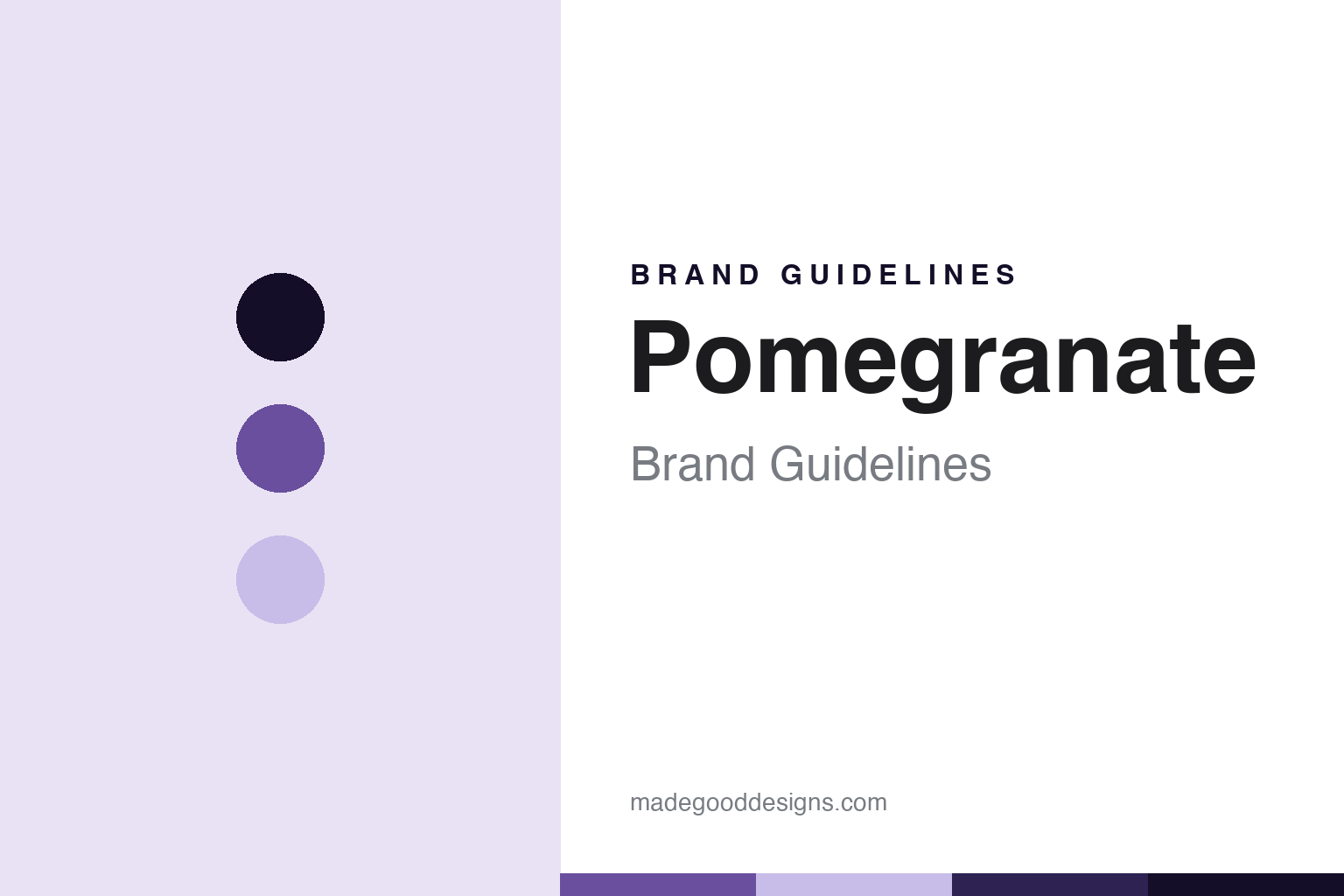
Pomegranate lives in a Pomegranate violet. Click a swatch to copy the hex.
Pomegranate’s identity is independent, museum-art and publishing — a Pomegranate violet, an ink, a pale violet, a deep violet, and a paper. The palette leans Pomegranate violet and deep violet: a distinctive, cultured register that stands in for an art publisher rather than a loud logo colour, though a pomegranate-red would nod to its name. It signals the independent museum-art publisher — independent, museum-art and publishing. The honest caveat: with no official brand hex, these values are a cultured, unofficial interpretation, not first-party colours.
The lesson is a Pomegranate violet signals an independent, museum-art identity. Pomegranate’s world is the museum image and the fine-art puzzle. For designers, it is a reminder that a distinctive violet and a pale violet can carry an independent, museum-art brand — a cultured tone held as an accent, not a product shot. Because a mid hue can fail as small text, keep type dark and let the colour live in the accents, palette and band. The takeaways: date the founding to 1968 and name Thomas Burke; place it in Portland; keep it independent and not assert employee-ownership; and leave the puzzle origin undisclosed.
Typography
The register is a publisher sans — independent, museum-art, publishing.
Pomegranate’s identity carries an independent, museum-art spirit — an art house that publishes. A publisher sans captures the mood: clean, cultured and considered, the register of an art publisher. Set in a Pomegranate-violet palette, the publisher sans feels refined and dependable — exactly the personality Pomegranate carries. It behaves like a printed, curated thing rather than a loud logo, mirroring a corner-dot and a grid-line. (Pomegranate’s real products and the name are things we describe but do not reproduce, and the exact typeface is not ours to use.) Because it is not ours to use, the honest description is “a publisher-sans brand,” shown here in a stand-in. The type behaves like the brand: independent, museum-art and publishing.
Aa
A publisher-sans brand — refined and dependable. (Specimen set in Space Grotesk, a publisher-sans STAND-IN; NOT the Pomegranate logo or products.)
The jigsaw node
Pomegranate stands for the independent museum-art publisher.
Pomegranate closes the round as its art-publisher node. A Pomegranate-violet palette, a publisher sans and a 1968 founding make one thing — the independent museum-art publisher — the whole identity: independent, museum-art and publishing. The 1968 founding is the pitch, the museum licences are the substance, and the independence is the frame. The point is the artiest end of the aisle, still its own, closing a round about who owns the puzzle.
Put to work, the identity is the brand told straight, the independence kept and the origin left undisclosed. A brand in this spirit would date the founding to 1968 and name Thomas Burke, place it in Portland, keep it independent and not assert employee-ownership, and leave the puzzle origin undisclosed. A reader in this spirit would keep the facts right: Pomegranate makes fine-art puzzles; it dates to 1968; it is independent and privately held; and its puzzle origin is undisclosed. Pomegranate closes the round, after Gibsons. The honest editorial moves are to date the founding, to place it in Portland, to keep it independent, and to leave the origin undisclosed.
For designers and brand-builders, Pomegranate closes the jigsaw node: the art publisher is the cultured counterweight to the consolidators. The lessons: a category of consolidators and heritage names can still have an independent art house, here Pomegranate; a founding is dated to 1968 by Thomas F. Burke, originally as ThoFra Distributors in San Francisco, later Petaluma, then Portland, Oregon from 2013; an ownership is kept accurate, an active, independent, privately held art publisher, neither wound down nor confirmed employee-owned; products are named, museum-quality fine-art jigsaw puzzles with art books and calendars, licensing M.C. Escher, Charley Harper, Edward Gorey and Georgia O’Keeffe and institutions like the National Gallery of Art and the Smithsonian, packed and shipped from Portland; and a making is left accurate, some paper goods US-printed but the puzzles’ origin not stated. It is also a reminder to stay honest about the unknown: Pomegranate is the independent, museum-art publisher of the puzzle aisle — with the palette here an unofficial interpretation, and no employee-ownership claimed. The hook is that culture: Pomegranate is the independent museum-art publisher, the 1968 Portland art house from Thomas Burke, whose fine-art jigsaw puzzles license museums and artists like Escher and Charley Harper, still independent and shipping from Portland. Read that way, Pomegranate is less a single puzzle than the independent museum-art publisher: independent, museum-art, publishing. The lesson for a brand is that the art publisher is the cultured counterweight to the consolidators, and dating the founding keeps it earned. Pomegranate made the-independent-museum-art-publisher the identity — proof that an art publisher can close a round.
Explore & save
Keep Pomegranate’s identity on hand — save it to a board in the Made Good inspiration library.
Pomegranate identity set
Pin the Pomegranate-violet palette and the publisher-sans register to your own board.