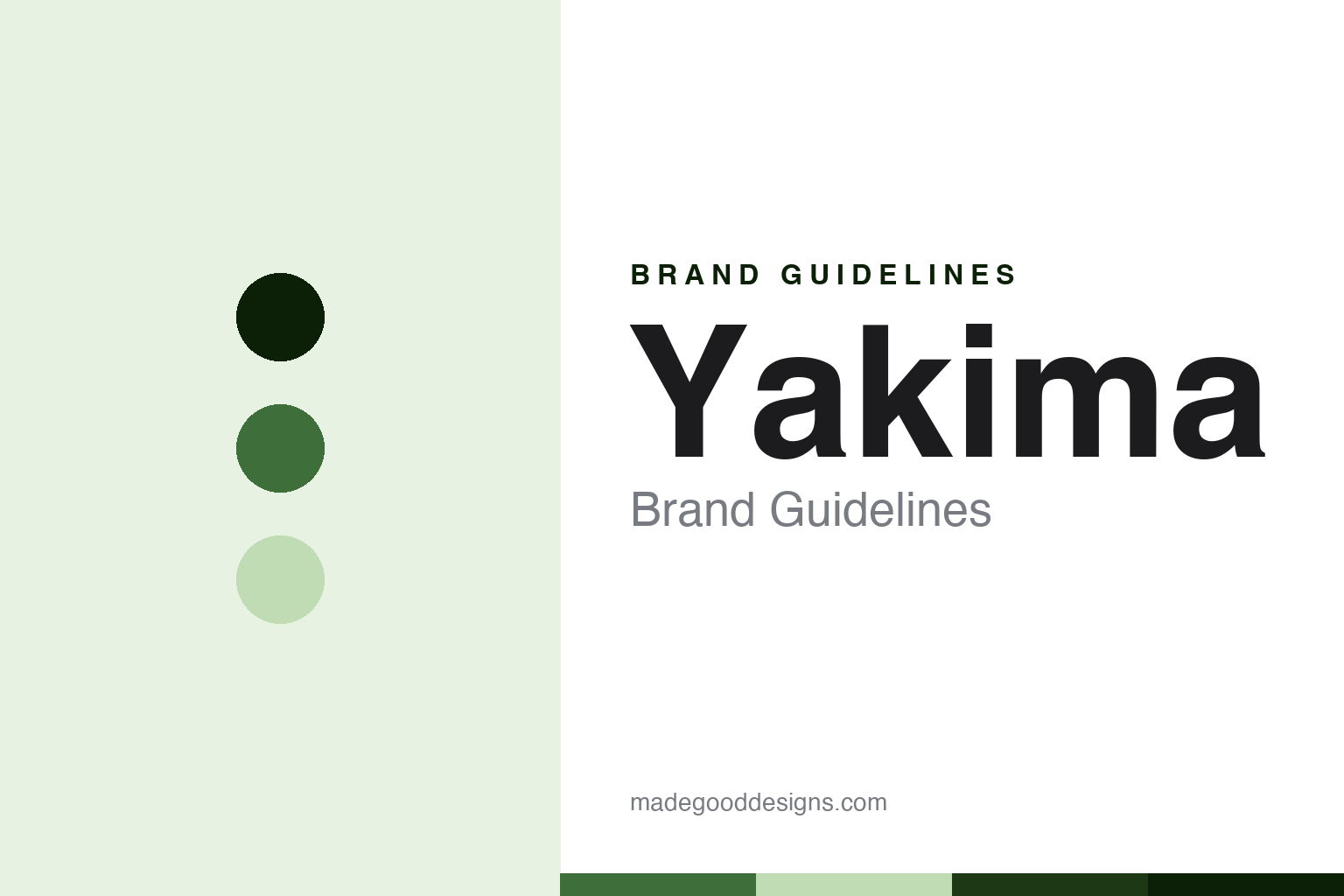
Yakima Brand Guidelines
The round-bar rack from a machine shop.
Aa
Two constants: a Yakima-green palette and a round-bar-sans register. Abstract homage — not a Yakima product or mark; no rack, bar or logo is reproduced.
The round-bar rack from a machine shop
Yakima is the American rack brand born in a 1972 Washington machine shop, keeper of the round-bar heritage — now owned by Taiwan’s Kemflo and made in Asia.
Yakima follows Thule as the round’s Pacific-Northwest node — an American rack brand that started in a one-man machine shop, kept its round-bar signature and its home-town name for decades, and is now owned by a Taiwanese parent and made in Asia. Its answer to a round about who owns the racks and where they are made is a well-travelled one, honestly told: an American-named brand under Taiwanese ownership, built abroad, with a heritage worth crediting and a common myth worth correcting.
Its identity is the round-bar rack from a machine shop. The machine-shop origin, the round-bar heritage and the Taiwanese ownership are the story here. Round bars, PNW roots. The round-bar rack from a machine shop.
(Honest notes, so the origin, the ownership and the making are framed accurately, and one misconception corrected. Yakima sells roof racks, bike and hitch racks, roof platforms and boxes and rooftop tents as its heroes — the HighRoad and HoldUp and Dr.Tray carriers, the SkyRise tents and the SKS locking ecosystem, all with its signature round-bar heritage; we report its language as the brand’s own. On origin: Yakima was founded in 1972 in Yakima, Washington, by Otto and Jeanne Lagervall, literally a small machine shop that first made handmade kayak and canoe foot braces and ladder racks; its headquarters today is in Lake Oswego, Oregon, in the Portland metro. On ownership, corrected: Yakima passed from a California venture-capital firm, Kransco, to Watermark, an investment group backed by Arcapita, a Bahrain-based Islamic investment bank, in 2001, and then in 2009 was acquired by Kemflo International, headquartered in Pingtung, Taiwan — so Yakima is Taiwanese-owned, not Chinese, and we correct the common misconception that it is a Chinese-owned company; Kemflo also holds the Whispbar and Prorack brands and is now listed in Taiwan. On where it is made: production is predominantly in Asia through Kemflo’s network, spanning Taiwan, mainland China and Thailand, so we say made in Asia and frame it as reported. On a sensitive point: foreign, Taiwanese ownership is not a governmental or security matter, and we note it plainly rather than dramatise it. Its designs and the Yakima name are IP we describe but do not reproduce; there is no official brand hex; these tones are an unofficial interpretation.)
Colour
Yakima lives in a Yakima green. Click a swatch to copy the hex.
Yakima’s identity is rugged, American-named and Taiwanese-owned — a Yakima green, an ink, a pale green, a deep green, and a paper. The palette leans Yakima green and pale green: an outdoorsy, Pacific-Northwest register that nods to forests and trailheads rather than a loud logo colour. It signals the round-bar rack from a machine shop — rugged, American-named and Taiwanese-owned. The honest caveat: with no official brand hex, and the wordmark associated with red, these values are an outdoorsy, unofficial interpretation, not first-party colours.
The lesson is a forest green signals a rugged, outdoors identity. Yakima’s world is the rack that hauls gear to the trailhead. For designers, it is a reminder that a forest green and a soft pale can carry a rugged, outdoors brand — a natural tone held as an accent, not a product shot. Because a mid hue can fail as small text, keep type dark and let the colour live in the accents, palette and band. The takeaways: credit the 1972 machine-shop origin and the Lagervalls; credit the round-bar heritage; correct the ownership to Taiwan’s Kemflo, not a Chinese owner; and describe the making as Asian.
Typography
The register is a round-bar sans — rugged, American-named, Taiwanese-owned.
Yakima’s identity carries a rugged, American-named, Taiwanese-owned spirit — a home-town name on a globally built rack. A round-bar sans captures the mood: sturdy, plain and outdoorsy, the register of a machine-shop brand. Set in a Yakima-green palette, the round-bar sans feels rugged and practical — exactly the personality Yakima carries. It behaves like a made, working thing rather than a loud logo, mirroring a load-bar and a tower-dash. (Yakima’s real products and the name are things we describe but do not reproduce, and the exact typeface is not ours to use.) Because it is not ours to use, the honest description is “a round-bar-sans brand,” shown here in a stand-in. The type behaves like the brand: rugged, American-named and Taiwanese-owned.
Aa
A round-bar-sans brand — rugged and practical. (Specimen set in Archivo, a round-bar-sans STAND-IN; NOT the Yakima logo or products.)
The rack node
Yakima stands for the round-bar rack from a machine shop.
Yakima sits second in the round as its Pacific-Northwest node. A Yakima-green palette, a round-bar sans and a machine-shop origin make one thing — the round-bar rack from a machine shop — the whole identity: rugged, American-named and Taiwanese-owned. The machine-shop origin is the pitch, the round-bar heritage is the signature, and the Taiwanese ownership is the honest frame. The point is a home-town name on a globally built rack, in a round about who owns the racks and where they are made.
Put to work, the identity is the brand told straight, the origin credited, the ownership corrected and the making described. A brand in this spirit would credit the 1972 machine-shop origin, credit the round-bar heritage, correct the ownership to Taiwan’s Kemflo, and describe the making as Asian. A reader in this spirit would keep the facts right: Yakima sells the HighRoad, HoldUp and Dr.Tray carriers and SkyRise tents as its heroes; it was founded in 1972 in Yakima, Washington by Otto and Jeanne Lagervall, HQ now Lake Oswego, Oregon; it is owned by Kemflo International of Pingtung, Taiwan, not a Chinese owner, having passed through Kransco and Watermark/Arcapita; and its products are made predominantly in Asia. Yakima sits after Thule and before Kuat. The honest editorial moves are to credit the origin, to credit the round-bar heritage, to correct the ownership, and to describe the making.
For designers and brand-builders, Yakima carries the rack node: correct a nationality myth — and separate an American name from foreign ownership. The lessons: a brand can keep a strong regional identity, here Pacific-Northwest and round-bar; an origin is credited to a 1972 machine shop and the Lagervalls; an ownership myth is corrected, Yakima being Taiwanese-owned via Kemflo rather than Chinese; and a manufacturing base is described honestly as Asian. It is also a reminder to stay precise: Yakima is the American-named, Taiwanese-owned round-bar brand, made in Asia — with the palette here an unofficial interpretation. The hook is that journey: born in 1972 in a one-man machine shop in Yakima, Washington making ladder racks and kayak foot braces, the brand kept its Pacific-Northwest name and round-bar signature even after passing from California venture capital to a Bahraini investment bank to its current Taiwanese parent. Read that way, Yakima is less a single rack than the round-bar rack from a machine shop: rugged, American-named, Taiwanese-owned. The lesson for a brand is that correcting the myth and separating name from ownership reinforce each other, and crediting the heritage keeps the story earned. Yakima made the-round-bar-rack-from-a-machine-shop the identity — proof that an honest ownership account can anchor a node.
Explore & save
Keep Yakima’s identity on hand — save it to a board in the Made Good inspiration library.
Yakima identity set
Pin the Yakima-green palette and the round-bar-sans register to your own board.


