Yi Fang Brand Guidelines
A grandmother’s pineapple recipe, turned into a fruit tea chain.
Aa
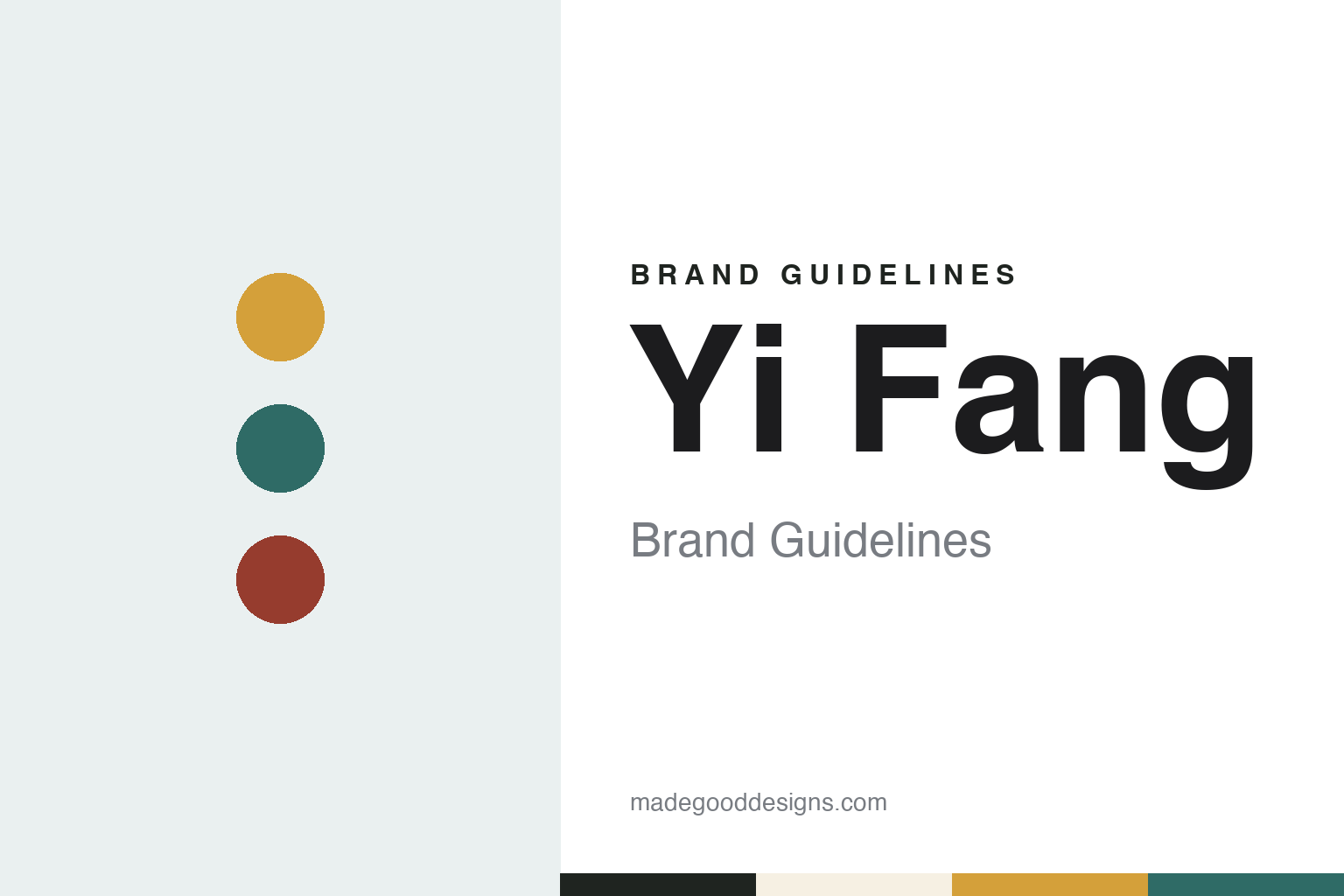
Two constants: a pineapple gold, window teal and tile red palette and a nostalgic serif register. Abstract homage — not a Yi Fang product or mark; no cup, logo or shopfront is reproduced.
Grandmother Yi Fang
A name, a pineapple farm and a recipe.
Yi Fang Taiwan Fruit Tea (一芳水果茶) is a young brand built on an old story. The Taiwanese business monthly Manager Today reported in March 2017 that the chain appeared in March 2016, and that “Yi Fang” is the name of the grandmother of its founder, Ko Tzu-kai (柯梓凱), head of the restaurant group 墨力國際餐飲集團, which English Wikipedia calls Inkism International.
The brand tells the story itself. Its English-language website says Yi Fang married a young farmer, beginning three generations of pineapple growing, and turned overripe pineapples into a homemade jam that could be kept; the chain’s signature drink, Yi Fang Fruit Tea, carries her name and, the company says, her recipe. The weekly Mirror Media wrote that Ko’s grandparents were farmers and that his grandmother often brewed tea with pineapples she had grown, which gave him the idea for a fruit tea shop.
Ko was not new to drinks. Manager Today said he started in 2004 with a drinks stall at the Miaodong night market in Fengyuan, Taichung; Mirror Media gave 2006 for the stall. Both describe how he then built George Park (喬治派克), a chain known for fresh-fruit smoothies, which Manager Today said had more than 100 franchised shops in Taiwan at its height, before adding restaurant brands such as the yakiniku chain Mu Dao. By early 2017 the group had about ten food and drink brands, Manager Today reported, and Yi Fang was the newest.
Mirror Media traced the pattern. George Park opened to franchisees in 2012, the magazine said, and once it reached about 50 shops Ko turned to restaurants, opening Mu Dao in 2013 and, within two years, eight food and drink brands in all. He explained the approach as a way into shopping centres: if a mall already had one kind of restaurant, another of the group’s brands might still fit. He also told the magazine that products easy to copy should open shops quickly, to build recognition first, while harder-to-copy concepts could grow more slowly.
Colour
Taiwanese fruit, tea and an old-fashioned shopfront.
The idea, as Manager Today put it, was a drink made entirely from Taiwanese ingredients whose sources could be traced. Ko chose fruit tea because, he said, the category had no leading brand at the time, and he limited the menu to fewer than 30 drinks, roughly half to a third of a typical drinks shop, even though those drinks drew on about 30 different ingredient sources. The magazine reported contract-grown lemons from Jiuru in Pingtung County and plums supplied through the Xinyi Township farmers’ association.
The drinks today are grouped into series. The company’s menu lists classic teas — Sun Moon Lake black tea, Lugu oolong, pouchong green tea and Songboling mountain tea — alongside traditional fruit teas, tea lattes, sugarcane drinks, frappés and a brown sugar series. The Vancouver news site Daily Hive wrote in March 2023 that the brand was known for fresh fruit teas such as its signature Pineapple Green Tea, and also listed tea lattes, slush drinks, sugarcane drinks and brown sugar pearl boba. The company says it uses organic milk and cane sugar and no concentrated juices, buys fruit through contract farming and makes its own jams; those are its own claims. Its English-language site also lists freshly made pancakes as a side to the drinks.
The shop is the clearest piece of the identity. Manager Today described Yi Fang’s storefronts as deliberately nostalgic: rows of old-style patterned window panes, door curtains and tiles that recall the scenes of Ko’s childhood. The open layout lets staff cook fruit and jams in view of the queue, which the magazine described as marketing to customers’ sense of smell as well as sight.
Typography
Cups, counters and owners.
Bubble tea and tea-drink chains sell a drink that is made in front of the customer, so most of their public image is built around the cup. On their own websites, Taiwanese brands such as Chatime and Gong Cha lead with pictures of individual drinks and group them into named ranges and short lists: Gong Cha calls its top five drinks worldwide the “Famous Five,” and Chatime’s US website sorts its menu into ranges such as Signatures, Milk Tea Classics and Fruity.
Drink and staff names do much of the brand work. Chatime’s US website builds its copy on tea puns, calling its counter staff “T-Ristas,” while Gong Cha names drinks by their tea, fruit and toppings, from milk foam to “QQ” jelly. Store fronts and menu boards appear in the companies’ franchise pages and news posts, where a new store design or a first store in a new country is presented as an event.
Ordering apps and online shops are now part of the picture. In 2020 the Taipei Times reported that Chatime’s parent, La Kaffa International, had begun taking orders through an app with a software partner, and in 2026 Nation’s Restaurant News reported that Gong Cha was rolling out a “digital kitchen.” For a designer, these tools are part of the brand as much as the cup or the counter.
Behind the cups are corporate histories that are often more complicated than the store fronts suggest. Many chains grew through franchising, with regional partners running whole countries, and some have changed owners several times. This guide sets out what can be checked about each brand — who founded it, who owns it now, and how it is sold — and marks clearly what rests only on the company’s own word.
Aa
A nostalgic serif for a grandmother’s recipe. (Specimen set in Noto Serif TC, a serif STAND-IN; NOT the Yi Fang logo.)
Yi Fang
Franchising from Taiwan outward.
Yi Fang grew quickly through franchising. Manager Today counted 42 shops in Taiwan and 14 overseas, in China and Southeast Asia, by early 2017, less than a year after launch. Mirror Media reported that Ko opened an office in Shanghai in April 2016 and that Yi Fang drew franchisees in China and the Philippines that year; Ko told the magazine he planned to lead the group’s expansion in China with Yi Fang and Mu Dao.
The chain later spread to North America. English Wikipedia lists shops in British Columbia and in US cities including San Francisco, Seattle, Portland, Philadelphia and Honolulu. Daily Hive reported on 16 March 2023 that Yi Fang had nine stores in Vancouver and Richmond, that a new downtown branch on Robson Street had opened the day before and took the total in those two cities to ten, and that the brand also had shops in Surrey and Victoria. The Robson Street branch took over premises that had previously housed a sports shop, the site noted, replacing an earlier Yi Fang on the same street that had closed some months before. The brand’s English-language website now offers online ordering, catering and franchise information.
For a design guide, Yi Fang shows how a family story and a retro shopfront can carry a brand as much as any logo. Compare Tiger Sugar, another Taiwanese tea chain, and CoCo, a Taiwanese tea and juice chain. For this guide we use pineapple gold, a window teal and a tile red with a serif, an unofficial interpretation; no product or logo is reproduced.
Explore & save
Keep Yi Fang’s identity on hand — save it to a board in the Made Good inspiration library.
Yi Fang identity set
Pin the Yi Fang pineapple gold, window teal and tile red palette and the nostalgic serif register to your own board.