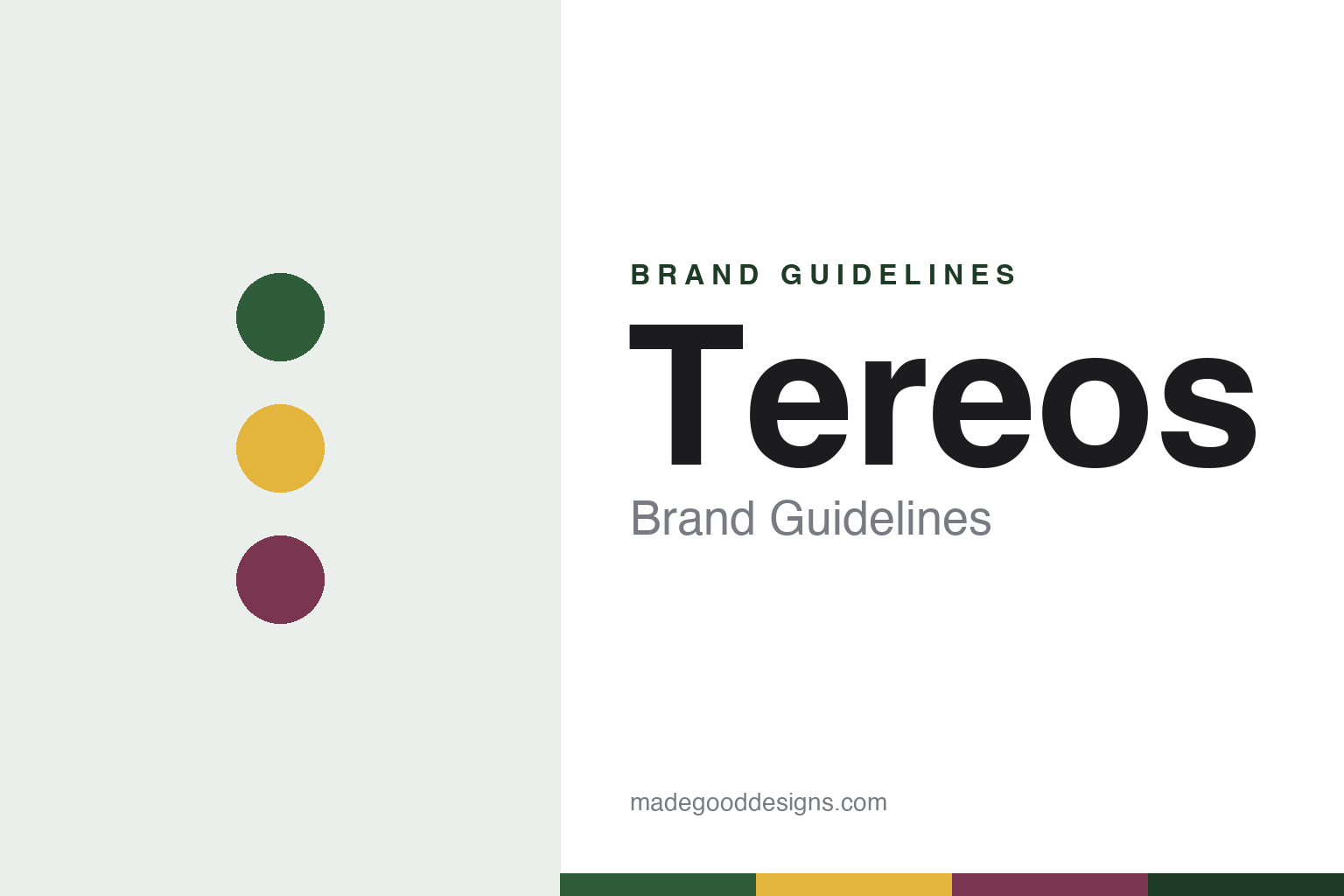
Tereos Brand Guidelines
A beet growers’ distillery in the Aisne that became a sugar group.
Aa
Two constants: a green, yellow and beetroot palette and an agrarian serif register. Abstract homage — not a Tereos product or mark; no pack, logo or label is reproduced.
Origny
A cooperative distillery built by beet growers.
Tereos traces its start to 1932, when a group of farmers founded a cooperative distillery at Origny-Sainte-Benoîte, in the Aisne department of northern France. The company’s own history names Paul Cavenne as the leader of those growers and says the first plant handled 400 tonnes of sugar beet a day. French Wikipedia places it in a wider pattern: most beet cooperatives of the period turned to alcohol, which was already being used as a fuel, and they were founded by the beet planters themselves.
The company says that about twenty years later Jean Duval, the cooperative’s managing director, turned the distillery into a sugar factory. French Wikipedia dates the building of the sugar works at Origny and at nearby Vic-sur-Aisne to 1951. The sources used for this guide do not say how the company’s predecessors operated during the occupation of 1940–1944.
For decades the Origny cooperative stayed a regional business. In 1990 it merged with the Vic-sur-Aisne cooperative to form Sucreries et Distilleries de l’Aisne (SDA), French Wikipedia says, and bought the Berneuil-sur-Aisne sugar works the following year. Its first step abroad came in 1992, with the purchase of TTD in the Czech Republic, which the company says gave it a way to make and sell sugar in Central Europe. In 1993 it added a wheat-ethanol unit at Origny, its first move into cereals, and in 1996 a partnership with Jungbunzlauer at Marckolsheim in Alsace took it into starch and cereal sweeteners. In 1999 SDA and the Artenay sugar and distilling business merged as Union SDA.
The other half of Tereos is older. French Wikipedia traces Say to a cane-sugar works opened in Nantes in 1812 by Louis Say, brother of the economist Jean-Baptiste Say, and to a Paris beet-sugar refinery of 1831; Béghin began in 1826 as the Cogez Béghin sugar works of Joseph Cogez and Antoine Ferdinand Béghin. The two merged as Béghin Say in 1972, joined the Italian group Eridania in 1992, and in 2001, when Eridania Béghin-Say split up, the beet growers who supplied the Béghin Say plants formed a cooperative of their own, Union BS.
Colour
Béghin Say, La Perruche and a yellow pack.
The turning point came in 2002. French Wikipedia says the two cooperatives, Union SDA and Union BS, took over the assets of Béghin Say, giving birth to the cooperative group Tereos; the company’s own history says the combination made it a French market leader with 9,500 cooperative growers. In 2004 the two unions took the Tereos name, and in 2006 Tereos merged with another cooperative group, Sucreries et Distilleries des Hauts de France (SDHF). In 2018, after extraordinary general meetings held between January and March, the beet, starch-potato and alfalfa cooperatives were merged into a single cooperative, which the company calls Tereos SCA.
For shoppers the group is mostly seen through its sugar brands. The company lists four consumer brands. Béghin Say, it says, is the most famous sugar brand on the French market, and it describes the brand’s “emblematic color” as yellow, calling the brand “warm, friendly” and “dynamic.” It credits Béghin Say with launching blond cane sugar in the 1980s and, more recently, a Sucre & Stévia range. La Perruche, the company says, was founded in 1890 on Réunion and is known for the irregular shape of its sugar pieces and their amber colour. TTD is its Czech beet business, part of the group since 1992, and Guarani is its Brazilian sugar brand, whose range includes organic crystal sugar and demerara sugar. On Réunion the group also sells sugar under the Sucreries de Bourbon name, which the company links to the Bois Rouge and Le Gol sugar works.
Behind the packs sits a much larger trade with industry. French Wikipedia says industrial customers account for about four-fifths of the group’s sugar sales and that Tereos produced 1.32 million tonnes of sugar in the 2021–22 season. The company describes itself as processing sugar beet, sugar cane, wheat, corn and alfalfa, and its product lines run from sugars and sweeteners to alcohol and bioethanol, starches, maltodextrins, wheat proteins, and fibres and germs for animal feed. Its markets, as its website lists them, include food and drink, animal feed, energy, paper and corrugated cardboard, pharmaceuticals and cosmetics, and plant chemistry.
The company ranks itself the second-largest sugar producer in the world and Europe’s third-largest maker of starch products; those are its own figures. Its group page counts more than 10,300 grower partners, and in June 2026 the Belgian broadcaster RTBF described Tereos as a French agricultural cooperative present in about ten countries, with 10,300 members and 38 industrial sites.
Typography
Fields, mills and reports.
Sugar and ethanol producers sit between the farm and the factory, and their identities usually show both sides. Many use green, blue or gold in their wordmarks and colour systems, and their websites and reports lean on photographs of the raw material: rows of cane in Brazil or India, beet harvests and clamps in northern Europe, and the mills, boilers and storage silos that turn a crop into sugar, alcohol and power.
Most of these companies sell more to industry than to shoppers, so the consumer face is often a separate brand. A packaged sugar name on a supermarket shelf can be older than the group that owns it, and the same group may also make bioethanol for fuel, alcohol for drinks and cosmetics, animal feed from beet pulp, and electricity from bagasse, the fibre left after cane is crushed. Tereos, for example, sells sugar in France under the Béghin Say name, while Raízen sells fuel in Brazil under a licensed Shell brand.
Ownership shapes the language. Cooperatives such as Tereos speak to and for their grower members, and talk about fields, harvests and the farmers who supply the mills; listed companies and family groups address investors, and joint ventures often carry the names of their parents. Their websites tend to follow a familiar pattern, with pages on products, sustainability and the communities around their mills.
Much of what can be checked about these companies sits in their annual and sustainability reports, stock-exchange filings and regional business press. This guide sets out who founded each producer, who owns it, where it operates and what it says about its brands, and marks clearly what rests on the company’s own word.
Aa
An agrarian serif for a cooperative born in the beet fields. (Specimen set in Fraunces, a serif STAND-IN; NOT the Tereos logo.)
Tereos
From the Aisne to Brazil and back.
Tereos turned to cane at the turn of the century. The company says it entered Brazil through a partnership with the Cosan group and in 2002 acquired Guarani, then two plants in São Paulo state; Guarani was listed on the São Paulo stock market in 2007. On Réunion it took a majority of the Bois Rouge sugar works and, in 2010, the assets of the Quartier Français group, after which it describes itself as the island’s sole sugar producer. In 2007 it bought five starch and glucose plants in Western Europe from Tate & Lyle, the company says, and French Wikipedia records a starch partnership in China with Wilmar from 2012 until Tereos sold its share in 2021.
The last few years have been a period of selling and closing. French Wikipedia records the closure of the group’s sugar business in Romania announced in January 2022, the end of its activities in Mozambique announced the following month, and, in March 2023, the end of sugar production at Escaudœuvres in the Nord and the closure of the Morains distillery. In Brazil, Globo Rural reported in June 2026 that Tereos’s Brazilian sugar and energy business processed 17.9 million tonnes of cane in the 2025–26 season, after a drought early in 2025, and that it had sold the Andrade mill to Viralcool.
Escaudœuvres is also the site of the group’s most serious legal case. In April 2020 a dike holding beet-washing water at a settling basin of the sugar works broke and the water ran into the Scheldt (Escaut), which flows on into Belgium. In 2023 a French court convicted Tereos, finding it guilty of negligence among other counts, RTBF reported; Tereos later limited its appeal to the civil damages owed to the Walloon Region, and on 22 June 2026 it announced an out-of-court settlement with the region, which RTBF said ended the dispute.
Today Tereos is a cooperative owned by its grower members, with its head office at Moussy-le-Vieux, English Wikipedia says; the company says it opened a Europe Campus near Charles de Gaulle airport in 2018 for the staff of its European operations.
For a design guide, Tereos shows how a growers’ cooperative can sit behind consumer packs that are older than the group’s own name. Compare Tate & Lyle, whose European starch plants Tereos bought in 2007, and Wilmar, its former partner in China. For this guide we use beet-leaf green, sugar-pack yellow and beetroot with a serif, an unofficial interpretation; no product or logo is reproduced.
Explore & save
Keep Tereos’s identity on hand — save it to a board in the Made Good inspiration library.
Tereos identity set
Save the Tereos green, yellow and beetroot palette and the agrarian serif register to your own board.