Apave Brand Guidelines
An acronym coined for steam-engine owners in 1867, still on the door.
Aa
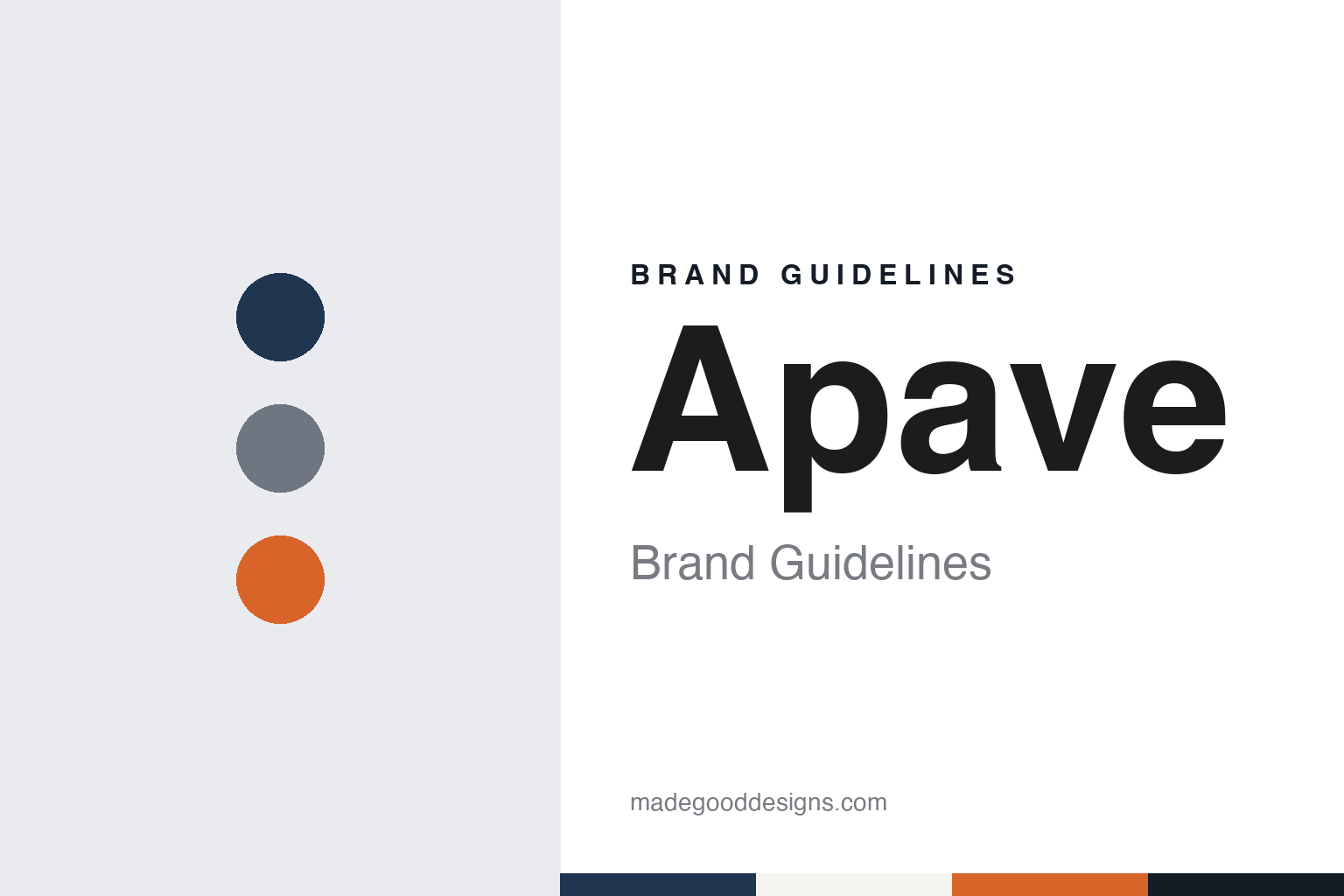
Two constants: a steam blue, boiler grey and signal orange palette and an engineering sans register. Abstract homage — not an Apave asset or mark; no logo, certificate or report is reproduced.
APAV
Steam-engine owners on the Alsatian plain.
Apave traces itself to 10 April 1867 in Mulhouse. The company’s history page says that Ernest Zuber, vice-president of the Société industrielle de Mulhouse, worked with industrialists from Alsace, Basel and Württemberg to set up the Association Alsacienne des Propriétaires d’Appareils à Vapeur, an association of owners of steam-powered machines. Its aims, the company says, were fewer boiler explosions and lower fuel use in the textile, finishing and engineering works of the Alsatian plain, where its first engineers began their rounds. French Wikipedia gives the same year and calls the body the APAV, set up through the Société industrielle de Mulhouse.
The model spread across France. French Wikipedia says the Société industrielle du Nord de la France founded Apave du Nord in 1873, and that the Société industrielle de Rouen founded a Normandy association, then called ANPAVE, in 1874, following the Mulhouse example after many Alsatian industrialists moved to Normandy in 1870. The same article names Paul Bonet, a graduate of the Institut industriel du Nord, as the northern association’s first chief engineer, and says the movement lay behind the first national rules on the operation of steam machinery. Apave’s own page says the first association led to about a dozen others across France, which later regrouped.
The extra letter in the name carries two dates. Apave’s timeline says the association added a department for inspecting electrical installations in 1897, and that the acronym APAV gained its “E” at that point; French Wikipedia instead says APAV became Apave in 1949, as its electrical service grew. The sources used for this guide do not say how Apave’s predecessor associations operated during the occupation of 1940–1944. After 1945, the company says, the post-war boom years in France brought new families of risk to inspect, in transport, nuclear power and electronics.
Colour
From regional associations to one group.
For most of its history Apave was a family of regional associations rather than a single company. The company says it went international in 2000 and that the Apave Group was created in 2011. Its governance page says Rémi Sohier, who joined Apave Alsacienne as an engineer in 1981 and later ran Apave Alsacienne and then Apave Parisienne, became the group’s chief executive that year, held the post until 2019 and now chairs the board. Since 2010 the subsidiary OSAC has carried out technical inspection work in civil aviation on behalf of the French civil-aviation safety directorate, French Wikipedia says, replacing an earlier grouping that linked Bureau Veritas and Egis Avia to the civil-aviation authority.
The ownership changed in July 2021. French Wikipedia says the investment firm PAI Partners took a 36 per cent stake, with Gapave, the grouping of the Apave associations, remaining the majority shareholder, and that an employee share plan launched in December 2021 made about 70 per cent of French staff shareholders. Apave’s timeline lists the same change, describing PAI as a growth partner. The move was contested inside the company: French Wikipedia records national strikes on 7 June 2021, over the capital opening and changes to collective agreements, and on 21 June 2022, over pay.
Growth since then has come largely by acquisition. French Wikipedia lists a 90 per cent stake in the Spanish company Eurocontrol in late 2020, seven French businesses in 2021 including Oppida, LSTI and AxesSim, Italy’s Tecno Piemonte, and Baltic Control Group in 2023. Apave’s timeline counts its eighteenth acquisition in three years in 2023, the year it created Apave Exploitation France and Apave Infrastructures et Construction France. On 22 May 2026 Ville, Rail & Transports reported that Apave had acquired the rail testing, laboratory and certification activities of DEKRA, including Dekra Rail in the Netherlands and Taiwan, to sit under its subsidiary Certifer. Apave also says it has finalised the purchase of the Singapore inspection and calibration group GEI, announced on 11 May 2026, which brings more than 200 staff in Singapore, Indonesia and India.
Typography
How inspection firms present themselves.
Testing, inspection and certification companies sell work that customers rarely see in full: a laboratory report, an inspector’s visit, a certificate. Their websites lean on a small set of visual and verbal devices to make that work visible. Service catalogues are often organised by industry rather than by technique, so a visitor looking for vehicle inspection, battery testing or management-system certification finds it under automotive, energy or certification headings, as the Applus+ and Element sites show.
Accreditation pages carry much of the weight. Firms list the standards their laboratories and certification bodies are accredited to, such as ISO/IEC 17025 for testing and calibration laboratories, and some publish counts of their accreditations and approvals; Element’s website, for example, gives a figure of more than 1,000. Certification marks and logos appear as the companies publish them, usually beside the scheme or standard they belong to.
Photography on these sites commonly shows people at work: technicians at laboratory benches, inspectors on site, engineers beside test rigs and proving grounds. Corporate pages add brand promises and value statements, such as the “Together beyond standards” promise Applus+ publishes, and history pages that trace how a group was assembled, often through long runs of acquisitions.
Investor and sustainability pages complete the picture. Applus+ keeps the records of its shareholder meetings online, including those of 2024, the year it left the stock market, and both Applus+ and Element publish sustainability or ESG sections beside their codes of ethics and corporate responsibility policies. The guides in this set describe each brand from those published materials and from dated independent sources; the colours and typefaces shown here are unofficial interpretations, not the companies’ own.
Aa
An engineering sans for a federation’s acronym. (Specimen set in Archivo, a sans STAND-IN; NOT the Apave logo.)
Apave
Five service lines under a nineteenth-century acronym.
Apave describes its work in five lines: inspection and non-destructive testing, testing and measurement, training, certification and accreditation, and consulting and technical support. The company says it has 18,500 employees, and in its 2026 GEI announcement it gave its footprint as nearly 60 countries. It says its model of trainer-inspectors trains 650,000 people a year. French Wikipedia adds that the group tests and certifies sites for EDF, Orano and Veolia, as well as for chemical and steel companies and rail and air operators. Specialist names sit beside the parent brand, among them Sopemea, Certifer, OSAC and Apave Digital, which the company says it created in 2022 for digital risk.
The name is the brand’s clearest piece of history: an acronym coined for steam-engine owners that the group still uses while it works on nuclear sites, rail certification and cyber security. Apave’s strategic plans carry labels of their own, from the 2025 plan presented in 2021 to AMPLIFY 2030, which the company says framed the GEI purchase and its push into North America and Southeast Asia.
For a design guide, Apave shows how a federation of regional associations can become one group without dropping its nineteenth-century acronym. Compare DEKRA, whose rail testing activities Apave acquired in 2026, and Bureau Veritas, another inspection name with French roots. For this guide we use a steam blue, a boiler grey and a signal orange with a sans, an unofficial interpretation; no product or logo is reproduced.
Explore & save
Keep Apave’s identity on hand — save it to a board in the Made Good inspiration library.
Apave identity set
Pin the Apave steam blue, boiler grey and signal orange palette and the engineering sans register to your own board.