twago Brand Guidelines
A Berlin bidding marketplace, a restart and Randstad.
Aa
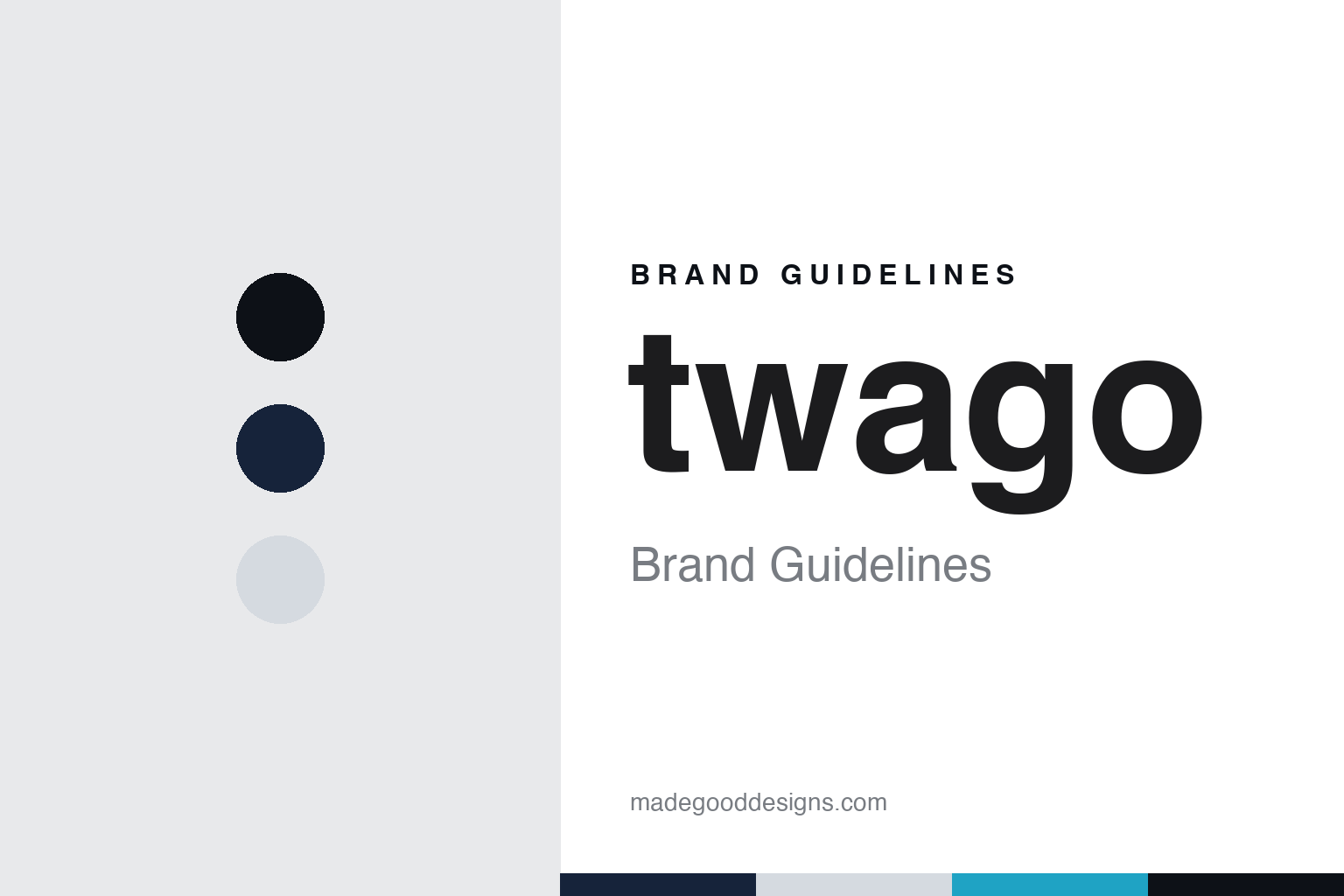
Two constants: a dark navy, cool grey and bright cyan palette and a lower-case sans register. Abstract homage — not a twago product or mark; no logo, interface or screen is reproduced.
A Berlin start
Three founders, an insolvency and a restart.
twago began in Berlin in 2009 as an online marketplace for freelance projects. The start-up news site deutsche-startups.de named its founders in June 2016 as Gunnar Berning, Maria Lindinger and Thomas Jajeh. TechCrunch described it in November 2010 as a “global online intermediation platform” for services in IT, design and business support: companies posted a project, and freelancers and agencies offered to take it on.
The early years were uneven. deutsche-startups.de reported that after an insolvency the company came back in mid-2012 with new financing, and that about a year later Berning left after a dispute over the company’s expansion policy. Before that, in November 2010, TechCrunch had reported backing from a Frankfurt investment group from the private-banking sector, and a platform already offered in English, German and, most recently, Italian, with further European market entries planned.
By mid-2014 the marketplace reached well beyond Germany. When the Randstad Innovation Fund, the corporate venture fund of the Dutch staffing group Randstad, invested in July 2014, Staffing Industry Analysts reported that twago targeted seven European countries, most notably Germany, the UK, Spain, Italy and France, and that more than 255,000 experts and agencies in more than 190 countries offered their services on it. Randstad’s own release called it the largest pan-European online marketplace for freelance work, and named it as the fund’s second investment, after the mobile-work app Gigwalk earlier that year. In the same report an analyst at Staffing Industry Analysts read the move as a sign that staffing firms were beginning to look at online platforms as a new way to connect clients with contingent workers.
Colour
Post a project, collect bids.
twago worked on a bidding model. Companies posted projects for free, Randstad said in 2014, and freelancers and agencies made offers; examples in Randstad’s release included website development, online marketing, mobile app development and data entry. TechCrunch listed programming, graphic and web design, translation and research enquiries. Beyond matching, the platform offered tools to manage a project once it was awarded, including features for accountability, mediation if things went wrong and the handling of transactions, according to the 2010 report.
The multilingual set-up was part of the plan from early on. In 2010 the company told TechCrunch it was betting on a multilingual approach, and by 2014 Randstad said it focused on seven European countries. Randstad’s 2016 release said twago had invested in a platform where freelancers could bid on projects in a fast, compliant and easy way, and called it a mobile and trusted global exchange for employers and freelance workers.
Jajeh stayed with the business up to its sale. In June 2016 deutsche-startups.de quoted Jajeh, as founder, welcoming a closer partnership with Randstad, and a partner of the Randstad Innovation Fund saying the 2014 investment had paved the way for the acquisition.
Randstad placed the purchase inside a wider plan. Its chief executive said in the 2016 release that the deal followed the group’s earlier move with RiseSmart, its first step towards new services through digital change, and that adding technology and new business models was part of what Randstad calls its “tech & touch” strategy. A board member named two of the group’s professional staffing businesses, Yacht in the Netherlands and Expectra in France, as examples of operations that twago-based platforms could be linked to.
Typography
Profiles, briefs and showcases.
Freelance and creative-talent marketplaces describe themselves in a small set of words. DesignCrowd’s about page calls it an online creative marketplace that connects businesses with a global network of designers; English Wikipedia describes Crowdspring as a marketplace for crowdsourced creative services. Category names on these sites are practical rather than poetic: logo and identity, web, print, product and merchandise, art and illustration, with designer directories sorted by type, country and city.
The client’s first screen is usually a brief. When Slate tested Crowdspring in May 2011, posting a job meant filling in a “creative brief” form with set questions about what a logo should communicate. Contest sites then add their own rules on top of the brief. DesignCrowd’s how-it-works page lets a client choose a three-, five- or ten-day deadline, keeps designers from seeing one another’s entries and passes full copyright in the winning files to the client.
Showcase work is presented plainly, as entries and finished projects rather than as campaigns. Slate found that anyone could browse other people’s projects and, in many cases, their submissions, and that the site prompted clients to rate entries on a five-star scale and send feedback. Forbes reported in 2009 that Crowdspring offered larger buyers a Pro option that hid submissions from public view, and that its own logo came through its marketplace.
Corporate pages fill in the rest. DesignCrowd’s about section names its founder and chief executive and has a separate board and investors page listing its venture backers, while dated press releases record new country sites and new brands. This guide sets out what can be checked about each marketplace — who founded it, who owns it and how its interface works — and marks clearly what rests only on the company’s own word.
Aa
A lower-case sans — the register of a short one-word name. (Specimen set in DM Sans, a sans STAND-IN; NOT the twago logo.)
Randstad
From open marketplace to talent pool.
On 14 June 2016, deutsche-startups.de reported that Randstad was taking over twago; the purchase price was not disclosed. Randstad Holding’s release described twago, in Randstad’s words, as Europe’s leading freelance marketplace, with more than 500,000 registered workers, and said the platform would help Randstad and its Randstad Sourceright business speed up clients’ freelance talent strategies. Randstad added that twago’s architecture could be adapted to build client-branded freelance recruitment platforms linked to its professional staffing businesses or to a client’s vendor-management system.
That is the direction the brand took. On 5 July 2016, HRO Today reported that Randstad Sourceright had launched twago as a freelance management system for its managed-service clients, connected to its own talent-analytics hub. Randstad Sourceright said linking freelance data with the rest of a client’s workforce data would give a full view of all workers, from permanent staff and contingent workers to freelancers, and support workforce planning across them. In November 2026 both twago.com and twago.de lead to Talent-Pool.com, which presents a white-label “twago talent pool” service for companies that want to keep their own pools of contingent workers, with a copyright line naming Randstad Sourceright GmbH. The site describes a service that combines HR technology, marketing campaigns and personal contact with candidates to fill client-branded talent pools, and calls itself an official Fieldglass partner; those are its own descriptions. Those addresses no longer lead to an open project marketplace.
For a design guide, twago shows how a marketplace name can be folded into a larger group and reused for a corporate service. Compare freelancermap, a German project platform owned by a media group, and Freelancer.com, another marketplace built on bids. For this guide we use a dark navy, a cool grey and a bright cyan with a sans, an unofficial interpretation; no product or logo is reproduced.
Explore & save
Keep twago’s identity on hand — save it to a board in the Made Good inspiration library.
twago identity set
Pin the twago dark navy, cool grey and bright cyan palette and the lower-case sans register to your own board.