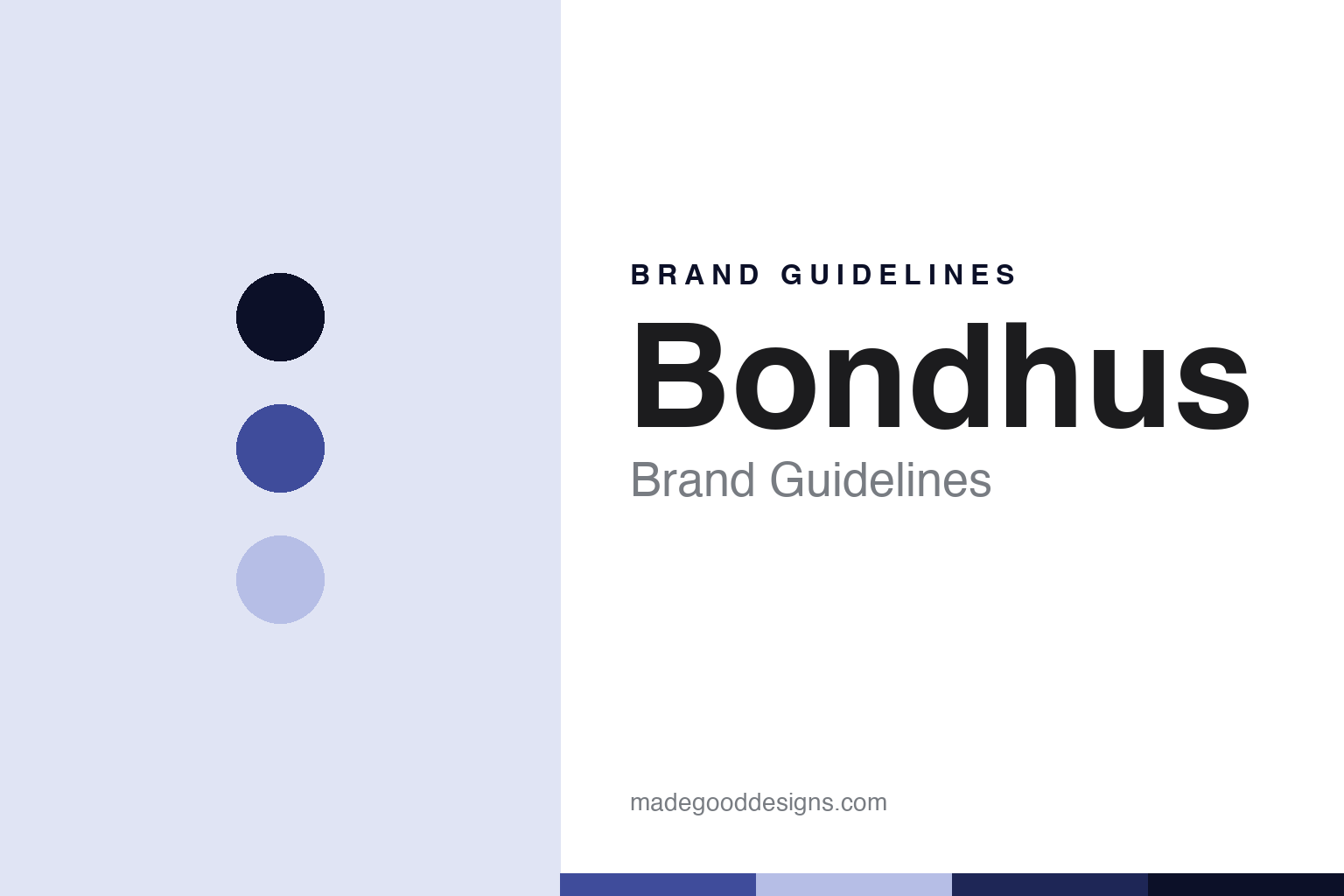
Bondhus Brand Guidelines
The ball-end claim, checked against the patent.
Aa
Two constants: a Bondhus-indigo palette and a specialist-sans register. Abstract homage — not a Bondhus product or mark; no hex key, blade or handle is reproduced.
The ball-end claim, checked against the patent
Bondhus is the Monticello, Minnesota hex specialist that says it invented the ball-end hex key in 1964 — a claim its own later patent quietly complicates.
Bondhus opens the round’s North American half, and it is the set’s best lesson in how to handle an origin story. The company says John Bondhus invented the ball-end hex key in 1964, and its commercial dominance of that category is not seriously disputed. But the claim does not survive contact with the paperwork unqualified. Its answer to a round about who owns and where-makes the driver is a specialist with a founding myth worth footnoting: the ball-end claim, checked against the patent.
Its identity is the ball-end claim, checked against the patent. The 1964 invention story, the Protanium steel and the three-country manufacturing are the story here. The hex key. The ball-end claim, checked against the patent.
(Honest notes, so the founding, the claim, the ownership and the making are framed accurately. On the claim, the substance of it: Bondhus states that in 1964 it invented and began manufacturing the original ball-end hex tool, the Balldriver. Ball-headed hex drivers had, however, already been patented in Britain — a 1942 publication and a 1961 publication, the latter expressly claiming a hexagonal ball-shaped head with six one-way-curved faces, three years before 1964. We know Bondhus is aware of both, because both are cited as prior art in Bondhus’s own United States patent 4,246,811. That patent, for a ball-head polygonal wrench, was filed in September 1979 and granted in January 1981, names John R. Bondhus and Fred L. Heim as co-inventors, and has long since expired; its novelty is an elliptical side curvature allowing greater tilt without binding. No 1964-era Bondhus patent appears on the public record. So the defensible version is this: Bondhus commercialised and popularised the ball-end hex key in the United States, owns the Balldriver name and a patented ball-head geometry, and did not originate the idea outright. On founding: Bondhus gives 1964 for the invention, but its own 2026 catalogue is headed 1965 to 2025 — the company’s own materials carry both years. On ownership: the founder died in 2006, and current ownership is simply not disclosed, so this article calls it undisclosed rather than guessing at family or employee control; the company lists an ESOP among staff benefits, which is not a statement that employees own it. On the making: the hex, ball-end and TORX programme is made in Monticello, but the pivot-head wrenches are made in Taiwan to Bondhus specifications, and the conventional slotted and Phillips screwdriver programme is German-made — by Felo, this round’s second brand. Its marks are IP we describe but do not reproduce; there is no official brand hex.)
Colour
Bondhus lives in a Bondhus indigo. Click a swatch to copy the hex.
Bondhus’s identity is American, specialist and unusually plain-spoken about steel — a Bondhus indigo, an ink, a pale indigo, a deep navy, and a paper. The palette leans Bondhus indigo and deep navy: a work-bench register that stands in for a hex specialist rather than a loud logo colour. It signals the ball-end claim, checked against the patent — American, specialist and material-led. The honest caveat: with no official brand hex, these values are an unofficial interpretation, not first-party colours.
The lesson is a material can be the brand. Bondhus’s real signature is not a colour at all: it is a steel name, Protanium, printed in the footer of nearly every American-made page of its catalogue, and a family of finish names that double as a size-coding system — BriteGuard, GoldGuard, ColorGuard, ProGuard, TuffKote. For designers, that is the useful move: where a rival would reach for a house colour, Bondhus reached for a proprietary alloy name and a finish vocabulary, and let the tool’s own surface carry the identification. Because a strong hue can fail as small text, keep type dark and let the colour live in the accents, palette and band. The takeaways: date the invention claim to 1964 while noting the catalogue says 1965; attribute the invention rather than asserting it; call ownership undisclosed; and never flatten a three-country supply chain into Made in USA.
Typography
The register is a specialist sans — American, focused, material-led.
Bondhus’s identity carries an American, specialist spirit — a firm that did one geometry extremely well for sixty years. A specialist sans captures the mood: plain, technical and unfussy, the register of a company whose marketing language is alloy grades and torque. Set in a Bondhus-indigo palette, the specialist sans feels functional and durable — exactly the personality Bondhus carries. It behaves like a ground, coated thing rather than a loud logo, mirroring a ball end and a hex ring. (Bondhus’s real products, its finish systems and the name itself are things we describe but do not reproduce, and the exact typeface is not ours to use.) Because it is not ours to use, the honest description is “a specialist-sans brand,” shown here in a stand-in. The type behaves like the brand: American, focused and material-led.
Aa
A specialist-sans brand — plain and technical. (Specimen set in Manrope, a specialist-sans STAND-IN; NOT the Bondhus logo or products.)
The specialist node
Bondhus stands for the ball-end claim, checked against the patent.
Bondhus holds the round’s specialist node. A Bondhus-indigo palette, a specialist sans and a 1964 invention claim make one thing — the ball-end claim, checked against the patent — the whole identity: American, focused and material-led. The claim is the frame, the prior art is the complication, and the three-country supply chain is the signature. The point is a genuine category specialist whose story needs one honest footnote, anchoring a round about who owns and where-makes the driver from the American side.
Put to work, the identity is the claim attributed, the record checked and the making stated in full. A brand in this spirit would report the 1964 invention story as the company’s own, note the British ball-head patents of 1942 and 1961 that Bondhus’s own filing cites, credit the real 1979 patent and its co-inventor Fred L. Heim, describe ownership as undisclosed since the founder’s death in 2006, and list all three countries of manufacture rather than the flattering one. A reader in this spirit would keep the facts right: Bondhus makes ball-end and hex tooling in Minnesota; its pivot-head wrenches come from Taiwan; its conventional screwdrivers come from Germany; and it has owned Huot Manufacturing since 2018. Bondhus follows Hazet, before Megapro. The honest editorial moves are to attribute the claim, to check it, to state the ownership honestly, and to place the making completely.
For designers and brand-builders, Bondhus holds the specialist node: a founding claim is a brand asset, and it should be able to survive being checked. The lessons: a category can be held by a single-geometry specialist, here Bondhus; an invention claim is attributed, not asserted — the company says it invented the ball-end hex key in 1964, while British patents of 1942 and 1961 describe ball-headed hex drivers and are cited as prior art in Bondhus’s own United States patent 4,246,811, filed 1979 and granted 1981 to John R. Bondhus and Fred L. Heim; a founding date is reported with its own internal conflict, 1964 on the website against 1965 on the catalogue cover; an ownership is called undisclosed, the founder having died in 2006, with an ESOP listed only as a staff benefit rather than as a controlling stake; a making is placed in full, Monticello for hex, ball-end and TORX tooling, Taiwan for the pivot-head wrenches, Germany for the conventional screwdriver programme; and a structure is noted, the 2018 acquisition of Huot Manufacturing and a Delaware holding vehicle. There is one more thread worth drawing, because it ties this round together: the German-made Bondhus screwdriver programme is produced by Felo, the second brand in this very set — so two firms picked independently for a round about ownership and origin turn out to be commercial partners, one making what the other sells. It is also a reminder about borrowed words: Allen is a registered trademark of another company, so the generic term is hex key, and a brand article should use it. The hook is that honesty: Bondhus is the ball-end claim, checked against the patent, the Monticello hex specialist whose conventional drivers are German-made. Read that way, Bondhus is less a single hex key than the ball-end claim, checked against the patent: American, focused, material-led. The lesson for a brand is that a well-told origin story earns more trust when it is accurate than when it is total. Bondhus made the-ball-end-claim the identity — proof that a specialist can hold a round.
Explore & save
Keep Bondhus’s identity on hand — save it to a board in the Made Good inspiration library.
Bondhus identity set
Pin the Bondhus-indigo palette and the specialist-sans register to your own board.