CACEIS Brand Guidelines
An acronym from a 2005 joint venture, folded back into its parent.
Aa
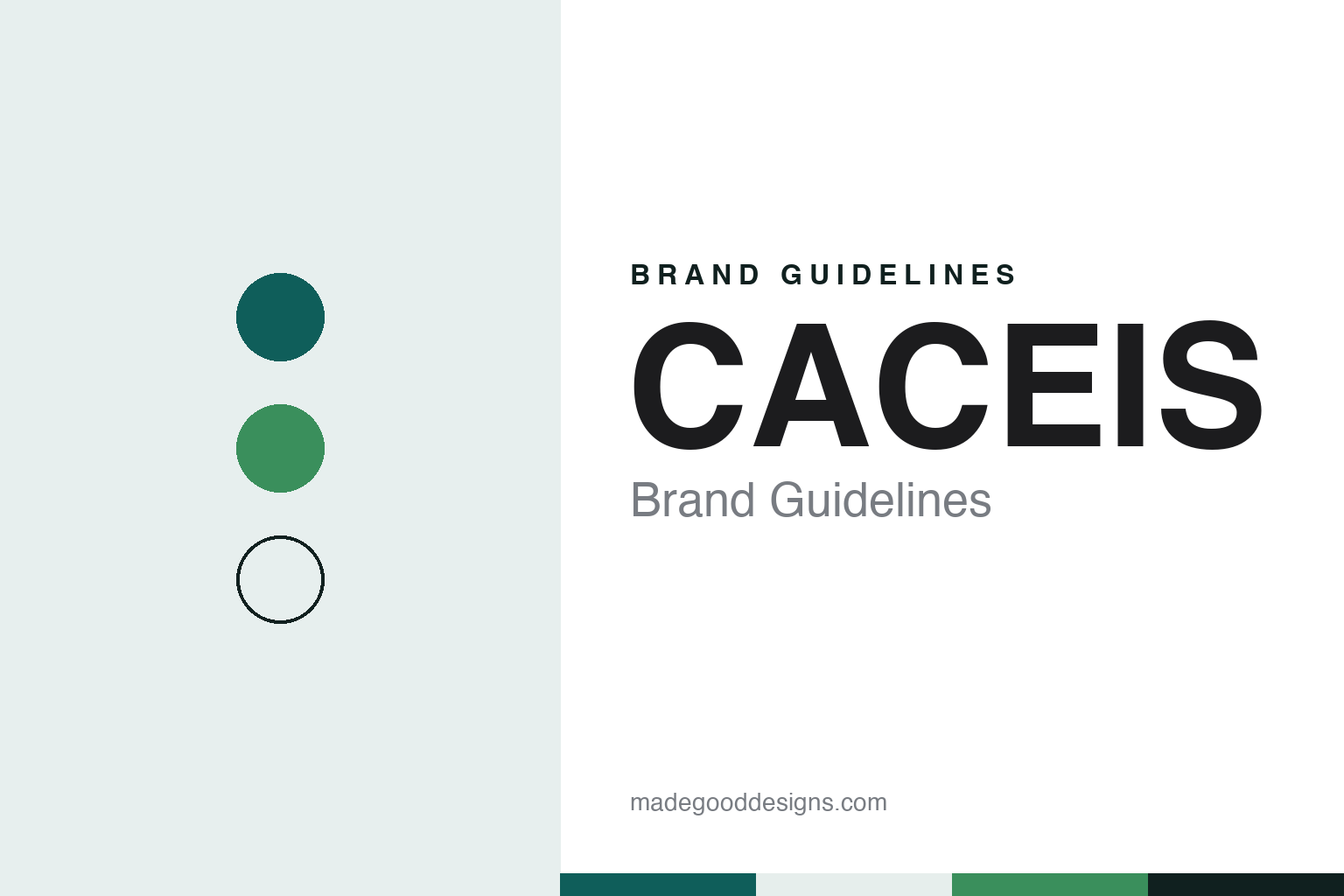
Two constants: a teal, ink and mist palette and an institutional sans register. Abstract homage — not a CACEIS product or mark; no logo, document or signage is reproduced.
Crédit Agricole – Caisse d’Epargne
Two back offices and one acronym.
CACEIS was born of a merger of back offices. French Wikipedia says it was created in 2005 by combining the custody and fund administration activities of Crédit Agricole and the Caisse d’Epargne, and that the name originally stood for Crédit Agricole – Caisse d’Epargne Investor Services; today CACEIS is a registered name rather than a spelled-out acronym. The two partners each held half of the capital at first.
Ownership then moved step by step towards Crédit Agricole. In 2009, French Wikipedia says, the group bought 35% from its partner, taking its holding to 85%, with the remaining 15% held by Natixis, the investment and markets arm of the BPCE group; Crédit Agricole SA bought that last 15% in December 2017 and controlled the whole company.
A second partner arrived in 2019. That year Crédit Agricole and Santander agreed to combine their services for institutional investors in one company: CACEIS took in the Spanish and Latin American activities of Santander Securities Services, kept its own name, and was owned 69.5% by Crédit Agricole and 30.5% by Santander, Le Figaro reported, citing AFP. French Wikipedia dates the integration to December 2019.
The circle closed in 2025. Following an agreement announced on 19 December 2024, Crédit Agricole SA said on 4 July 2025 that it had completed the purchase of Santander’s 30.5% stake and now owned 100% of CACEIS. The two groups kept their Latin American joint venture under joint control, the announcement said.
Colour
Custody, depositary and the RBC deal.
CACEIS describes itself as an asset servicing banking group. It says it provides execution, clearing, custody, depositary and asset valuation services to institutional investors, global custodians, asset managers, pension funds, private equity funds, banks, brokers and corporate clients, with what it calls a “follow-the-sun” model across time zones. French Wikipedia lists a wider range, including foreign exchange, securities lending, fund administration, fund distribution support, middle-office work and issuer services, across 18 countries in Europe, the Americas and Asia.
Its largest single step was the purchase of RBC Investor Services’ European business. On 3 July 2023 CACEIS and Royal Bank of Canada announced completion of the sale of RBC Investor Services’ European asset servicing activities and its Malaysian centre, with the UK branch and the Jersey business to follow once approved; the Canadian operations were not part of the deal. From 1 June 2024, CACEIS said, the former RBC staff in France, Luxembourg, Belgium, Ireland and Switzerland were regrouped under common legal structures. At the end of March 2024 it reported more than 5 trillion euros in assets under custody and more than 3.4 trillion euros under administration, with more than 7,000 staff in 18 countries.
Issuer services went into a separate company. Uptevia, owned equally by CACEIS and BNP Paribas and combining the two banks’ issuer services divisions, was founded on 1 January 2023; it keeps shareholder registers, organises general meetings and runs employee shareholding plans for companies in France, according to CACEIS.
Regulators have acted twice in recent years. On 18 December 2025 the Enforcement Committee of France’s Autorité des marchés financiers fined CACEIS and issued a warning, finding that, as depositary of funds managed by H2O, it had not checked closely enough the manager’s monitoring of investment ratios or the valuation of unlisted securities; the decision could be appealed, Le Figaro reported. In June 2026 the UK Financial Conduct Authority censured CACEIS UK for failing to act on register information about WealthTek, a wealth manager for which it had opened client accounts, and the bank agreed to make a voluntary payment to WealthTek’s clients, Asset Servicing Times reported on 30 June 2026.
Typography
Design and documentation.
Post-trade institutions do the work that follows a trade: settlement, clearing, custody, collateral management and asset servicing. Central securities depositories, or CSDs, hold securities in book-entry form and settle transfers between accounts; international CSDs such as Euroclear Bank in Brussels and Clearstream Banking in Luxembourg do the same for bonds issued across borders; clearing houses stand between buyers and sellers; and custody banks hold assets for investors. Global Custodian noted in 2010 that this business is sometimes called the “plumbing of the financial system.”
The names can mislead. English Wikipedia points out that neither Euroclear nor Clearstream runs central counterparty clearing, despite the word in their names, which date from a time when clearing and settlement were treated as a single activity. For a designer, that makes plain service pages important: settlement, custody, collateral and fund services each tend to get their own section, written for banks, brokers and central banks rather than private investors.
Much of what these institutions publish is documentation. Clearstream’s website, for example, groups banking licences, articles of association, disclosure reports and regulatory information under the EU’s settlement and digital-resilience rules on one regulation page, alongside due-diligence questionnaires and factsheets. Rulebooks, operating manuals and annual reports sit beside those pages, so for a design system a clear type hierarchy and readable tables do much of the work.
The palettes in this guide lean on deep blue, teal and grey, set with a sans for long technical text, and the imagery stays abstract: networks, links and data rather than people or products. These are unofficial interpretations of our own, not brand colours; no logo, wordmark or document from any institution is reproduced.
Aa
An institutional sans for a name that began as initials. (Specimen set in IBM Plex Sans, a sans STAND-IN; NOT the CACEIS logo.)
CACEIS
A subsidiary name moving closer to its parent.
Deals are still in motion. On 6 October 2026 CACEIS agreed to acquire Edmond de Rothschild’s third-party asset servicing business in Luxembourg, where it has worked for Edmond de Rothschild since 2013; the deal is subject to approval by Luxembourg’s financial regulator, the CSSF, and had not been completed at the time of writing. On 28 July 2026 State Street announced an initial agreement to acquire the Santander CACEIS Latam Securities Services joint venture in Brazil, Mexico and Colombia; that deal also had not been completed at the time of writing. Closer to home, CACEIS says its full-service Stockholm branch began client activity on 1 July 2026, and that it set up a dedicated digital assets business line in 2024.
The identity is moving closer to the parent. French Wikipedia says CACEIS changed its logo in October 2026 to align its visual identity with that of the Crédit Agricole group, and in November 2026 the header of its website reads “Crédit Agricole CACEIS,” while the footer describes it as “a company of Crédit Agricole.” Its pages pair that mark with service sections on custody, fund administration and regulatory watch, and with a standing warning that its corporate identity has been used by others to sell fraudulent investment offers.
For a design guide, CACEIS shows how a set of initials can outlive the partnership that coined them, and how a subsidiary’s mark can be brought back under its parent’s name without losing its own. Compare Euroclear, another European post-trade name, and State Street. For this guide we use a deep teal, a dark ink and a pale mist with a sans, an unofficial interpretation; no product or logo is reproduced.
Explore & save
Keep CACEIS’s identity on hand — save it to a board in the Made Good inspiration library.
CACEIS identity set
Save the teal, ink and mist palette and the institutional sans register to your own board.