Covanta Brand Guidelines
A conglomerate’s waste-to-power arm that became the whole company, then changed its name.
Aa
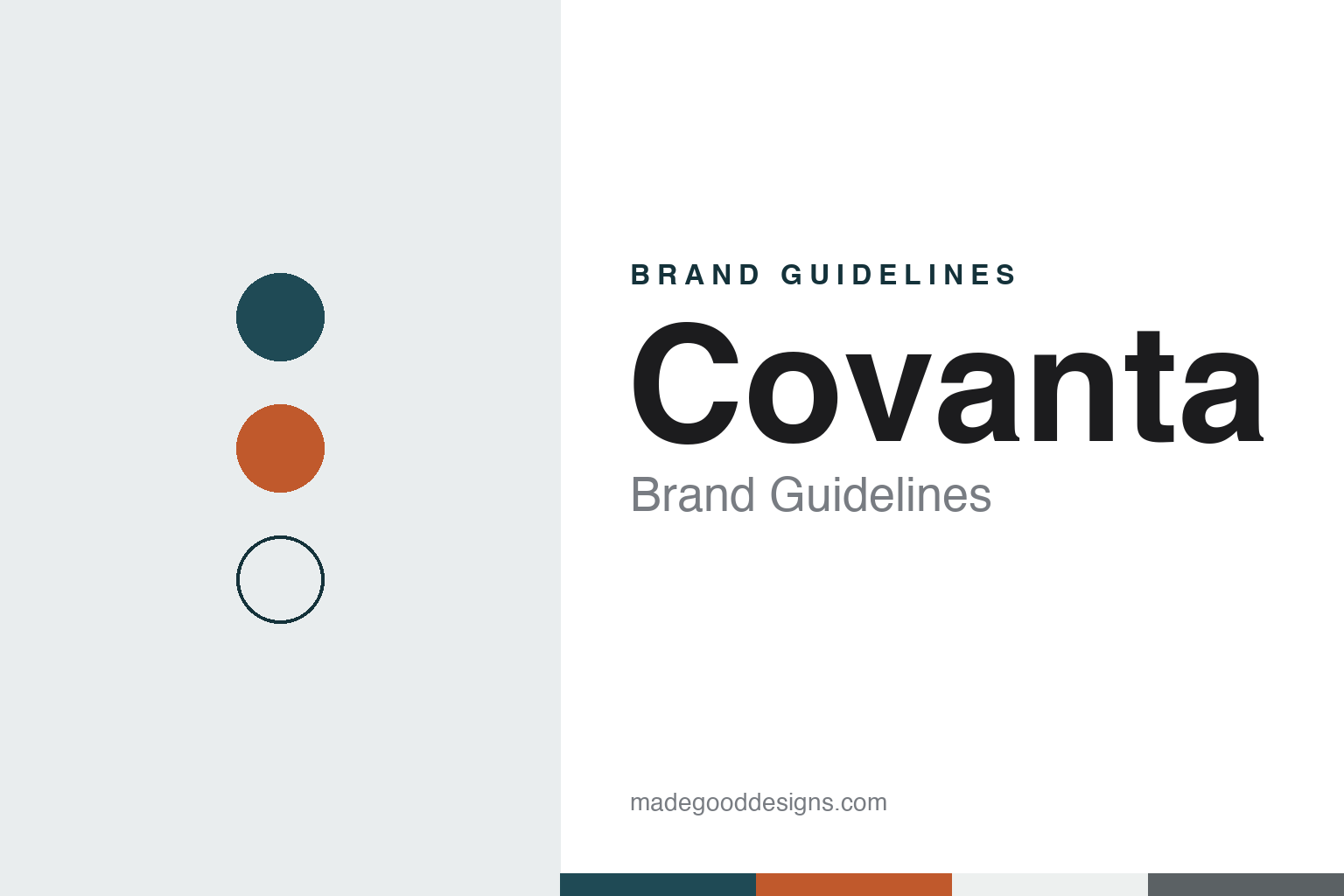
Two constants: a teal, ember and ash palette and an industrial grotesque sans register. Abstract homage — not a Covanta or Reworld asset; no plant, logo or mark is reproduced.
Ogden Corporation
A utility holding company that tried almost everything.
Covanta’s roots lie in the Ogden Corporation, formed in 1939 as the successor to Utilities Power and Light, a Chicago utility holding company that had been under court-ordered trusteeship since 1937, English Wikipedia says, citing The New York Times. Its first decade was spent taking that utility group apart: to comply with the Public Utility Holding Company Act of 1935, Ogden had to sell its utility interests, and by 1948 only the Interstate Power Company was left. The Atlas Corporation controlled Ogden until 1951.
What followed was one of the more varied American conglomerates. According to English Wikipedia, Ogden moved into manufacturing in 1953 with W. A. Case & Son, a plumbing and heating supplier, bought the iron and steel scrap business Luria Brothers in 1955 and the New Orleans shipbuilder Avondale Marine Ways in 1959. In the 1960s and 1970s it added the canner Tillie Lewis Foods, the Nedick’s fast-food chain through ABC Consolidated, the soup maker Progresso, bulk shipping, and horse and greyhound tracks including Suffolk Downs. In the 1980s it turned from making things to services: warehousing, janitorial work and running concession stands at stadiums and arenas.
The business that became Covanta began in 1983. That year Ogden acquired rights to the incinerator technology of Martin GmbH, widely used in Europe, and formed a subsidiary, Ogden Martin Systems, for energy-from-waste plants, English Wikipedia says, citing The Wall Street Journal and the New Jersey business weekly NJBIZ. In 1993 its subsidiary Ogden Projects bought the energy-from-waste business of ABB.
By the mid-1990s the plants had become the core of the group. From 1995 Ogden sold its other businesses one by one, and in 2000 it sold its theme parks, concessions and aviation services. In 2001 the company changed its name to Covanta Energy Corporation; English Wikipedia describes the word as a blend of “cooperation” and “advantages.”
Colour
Bankruptcy, Danielson and a public company.
The new name arrived in difficult years. Covanta and its subsidiaries filed for Chapter 11 bankruptcy in 2002, English Wikipedia says, citing the Los Angeles Times and linking the filing to the California electricity crisis and the wider downturn of that period. It came out of bankruptcy in 2004 when it was bought by Danielson Holding Corporation, which in 2005 sold Ogden’s remaining interests in casinos, hockey arenas and other areas to concentrate on energy-from-waste. Later in 2005 Covanta bought American Ref-Fuel, another energy-from-waste operator; by 2021 the listed parent was Covanta Holding Corporation, English Wikipedia says.
Its plants burn household and commercial rubbish to raise steam that drives turbines, recover metals from the ash for recycling, and sell both the disposal service and the electricity. English Wikipedia says most revenue came from long-term contracts with local governments and utilities, and that as of 2018 the company ran more than 40 waste-to-energy plants in North America, China and Europe. In 2009 it bought the energy-from-waste business of Veolia, and in 2014 it added the environmental services companies Advanced Waste Services and GARCO.
Waste-to-energy has long divided opinion. English Wikipedia records that supporters present it as an alternative to landfill, while critics point to the risk of releases from the plants, and that a lawsuit linked to emissions violations at one of the company’s New Jersey plants was settled in 2010, with the settlement going to a local green-space programme. In April 2024 Waste Dive noted pressure to close a plant in Stanislaus County, California, and scrutiny of the Delaware County plant in Pennsylvania; by October 2026 the company had left the Stanislaus and Long Beach contracts and closed a site in Marion County, Oregon, the same publication reported.
In July 2021 the Swedish investor EQT Infrastructure agreed to buy all of Covanta’s shares, and the deal was completed on 30 November 2021, taking the company off the public markets, Waste Dive reported. The company described it as a “sustainability-linked” buyout with targets for 2025, including a 25 per cent rise in waste recycled or reused. Azeez Mohammed became president and chief executive, and Howard L. Lance became chairman of the board.
Typography
Waste, recycling and documentation.
Waste and environmental-services companies speak to several audiences at once. A household wants a pickup day and a holiday calendar; a town council wants a collection contract; a hospital wants a compliant route for regulated medical waste; investors want results and a sustainability report. Their websites tend to separate those audiences into service pages: residential and commercial collection, recycling, roll-off containers, landfills and transfer stations, special and hazardous waste, medical waste and document shredding.
The plants are named the way the companies describe them. Waste Connections’ 2026 sustainability report speaks of collecting and treating landfill biogas for “beneficial use” and of a growing network of renewable natural gas facilities; trade coverage such as Waste Dive reports these plants, along with leachate-treatment systems, through quarterly results and project announcements. Where this guide uses terms such as recycling operation, energy-from-waste plant or landfill-gas plant, it follows the wording of the company or of a dated report, and environmental claims are given as the company’s own description.
Much of a waste brand is seen on the street rather than on a screen: on collection trucks, containers and depots, and in the photography of fleets and yards that fills sustainability reports. Mobile apps now carry part of the load, sending collection reminders and service alerts, as Waste Connections says its WasteConnect app does. Greens, blues and ambers recur in this guide’s own palettes for the sector; those palettes are unofficial interpretations, not company colours, and no truck livery, logo or mark is reproduced.
Ownership matters as much as identity. Large groups grow by buying local haulers, and specialist names often survive inside them: Stericycle, the medical-waste company bought by WM in 2024, now forms WM’s Healthcare Solutions business. Each guide sets out who founded a company, who owns it now and what rests only on the company’s own word.
Aa
An industrial grotesque sans for a plant operator. (Specimen set in Work Sans, a sans STAND-IN; NOT the Covanta or Reworld logo.)
Reworld
The Covanta name gives way in 2024.
The Covanta name is no longer the company’s brand. On 16 April 2024 the company announced that it was rebranding as Reworld, Waste Dive reported, with its divisions renamed in the same pattern: ReDirect360 for zero-waste-to-landfill programmes, ReDrop for wastewater treatment, ReKiln for alternative fuels and ReMove for transport and logistics. The old covanta.com address now forwards to the Reworld website, and English Wikipedia gives the legal name as Reworld Holding Corporation, with headquarters in Florham Park, New Jersey. Its website says “Reworld® is a Trademark of Reworld Waste, LLC.”
Ownership has widened since. In October 2024 EQT agreed to sell a 25 per cent stake to GIC, the manager of Singapore’s sovereign wealth fund, with EQT remaining the majority owner, Waste Dive reported, and in October 2026 the same publication described the stake as sold. The company has also grown by acquisition, including the hazardous-waste and water business Circon in 2023. In its 2025 sustainability report, as summarised by Waste Dive, Reworld listed 33 thermomechanical treatment facilities, 45 material processing facilities, 14 transfer stations and 2,600 vehicles; its website gives about 4,200 employees and more than 90 facilities. The company describes itself as the largest operator of municipal solid-waste incinerators in the United States, Waste Dive reported.
Leadership changed again in autumn 2026. Mohammed left the chief executive role, and on 30 October 2026 the company named Howard L. Lance, its chairman since the EQT purchase, as president and chief executive with immediate effect, ROI-NJ and Waste Dive reported; Mohammed stayed on as a senior adviser to the company and to EQT. ROI-NJ described Reworld as a Florham Park-based company with six New Jersey locations.
For a design guide, Covanta shows a brand built by subtraction: a conglomerate sold everything except its waste-to-power plants, coined a new word for what was left, and later replaced that word too. Compare Veolia, which sold Covanta its energy-from-waste business in 2009, and WM. For this guide we use a deep teal, an ember orange and ash grey with a sans, an unofficial interpretation; no product or logo is reproduced.
Explore & save
Keep Covanta’s identity on hand — save it to a board in the Made Good inspiration library.
Covanta identity set
Save the Covanta teal, ember and ash palette and the industrial grotesque sans register to your own board.