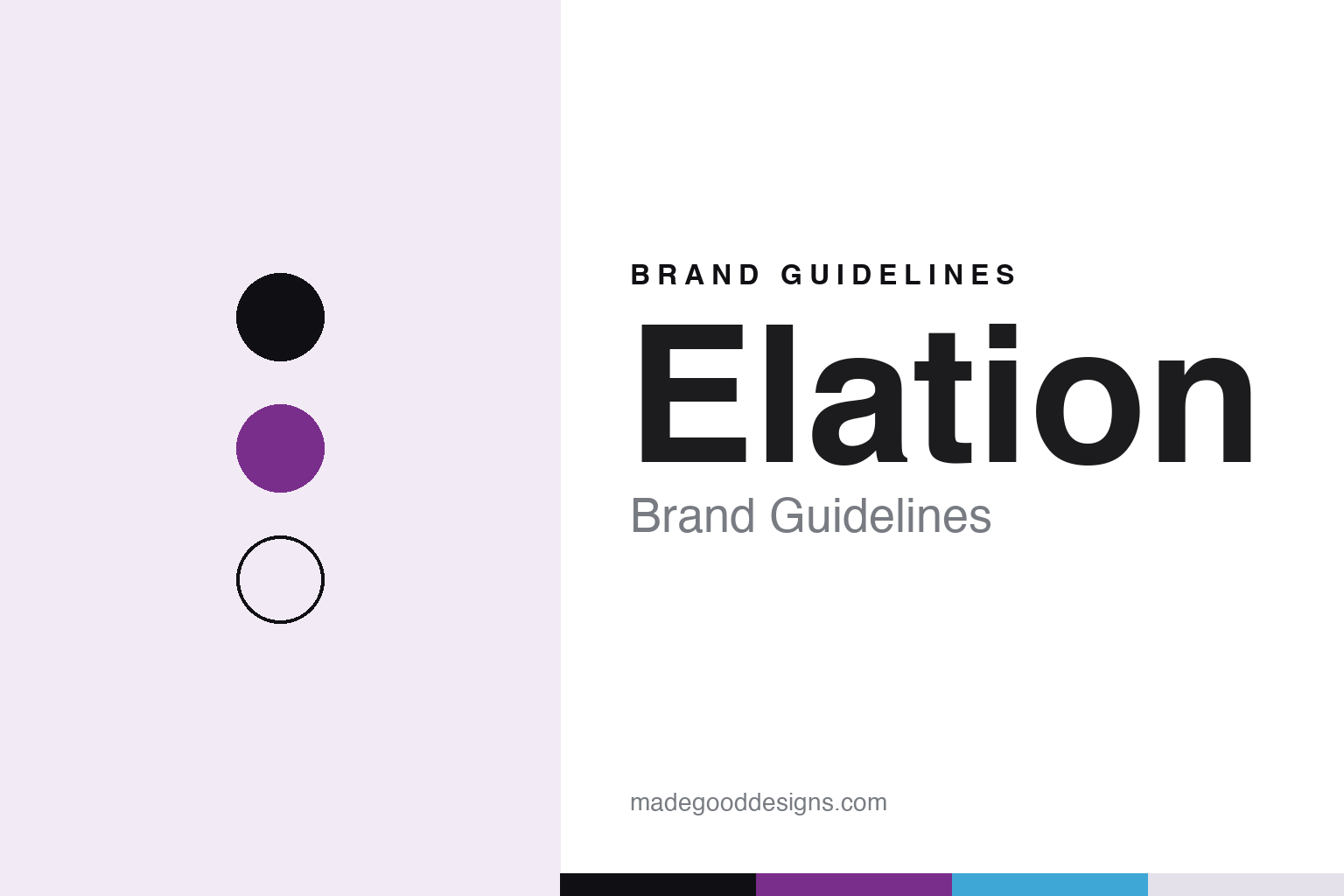
Elation Brand Guidelines
The Los Angeles lighting brand that grew out of American DJ.
Aa
Two constants: a night black, magenta and cyan palette and a grotesque sans register. Abstract homage — not an Elation product or mark; no fixture, logo or nameplate is reproduced.
American DJ
A hi-fi shop in East Los Angeles.
Elation is part of a Los Angeles lighting group that started with one man and a shop. Chuck Davies founded American D.J. — now ADJ — in 1985, after running a hi-fi store in East Los Angeles, the lighting trade magazine PLSN reported in June 2015, in an article marking the group’s thirtieth anniversary. As the local DJ market grew, he moved into DJ lighting; the first products were effect lights such as the Hyper Gem and the Vertigo.
The date of Elation’s own start depends on the source. The company’s website says Elation was founded in 1992 and is headquartered in Los Angeles. PLSN’s 2015 account dates the professional line to around 2000, saying Elation first imported products through a partnership with Robe, the Czech moving-light maker, before it began making its own fixtures under the Elation name.
In 2015, PLSN reported, the group’s brands were ADJ, Elation Professional, American Audio, the architectural line Acclaim Lighting and Global Truss America/DuraTruss, with offices in Los Angeles, which is the headquarters, in Opa-locka, Florida, in Kerkrade in the Netherlands and in Guangzhou, China. Toby Velazquez was president, and Davies was chairman. The same article says ADJ was the first in its market to sell its lights in colour boxes, starting in 1997.
The magazine also credits the ADJ side with early work on lights that respond to music automatically, and with keeping prices within reach of mobile DJs — the market from which Elation later moved up into professional stage lighting. For the group’s thirtieth anniversary in 2015, the magazine reported, ADJ relaunched its Startec series of effect lights, including the Stinger and the Starburst, models from its earlier catalogue.
Colour
Hybrids, LEDs and video.
The professional push gathered pace in the mid-2000s. Lee Loader rejoined the company in 2005 to lead Elation and Acclaim and to build Elation’s presence in professional lighting, PLSN reported. The magazine names the Design Spot 250 of 2007 as an early hybrid fixture, and the Sniper 2R as a later hybrid that combined laser-like beams with a scanning mirror.
Elation’s technical partnerships became part of its story. Its Platinum series, released in 2009, was developed with Philips, which created a new lamp for it, according to the same 2015 article. PLSN also says Elation was among the first to offer fixtures with multichip tri-colour LEDs, around 2009, and that it entered the video business that year with LED screens, later adding a DMX-controlled video camera. Loader told the magazine that the company’s research and development takes place in Los Angeles, that many products start from lighting designers’ input, and that he saw the future as the merging of lighting and video.
The best-documented award came with Proteus. At the LDI trade show in Las Vegas in October 2016, the Proteus Beam and Proteus Hybrid — the first two fixtures in an IP-rated, weather-resistant moving-head series — won the LDI Best Debuting Product Award, recognised, LSi Online reported in November 2016, for advancing weather-resistant design in a high-quality automated fixture. The award was accepted by sales director Eric Loader and ADJ Group president Toby Velazquez, and the fixtures were due for delivery in early 2017.
The Proteus name has since become one of the brand’s main series; the website now lists it alongside other ranges such as Artiste, Fuze and KL.
Typography
Light, rigs and control.
Stage and entertainment lighting is sold to a small, technical audience — lighting designers, programmers, rental companies and venue technicians — and its makers present themselves accordingly. The product is the picture: moving heads, LED washes and profile fixtures photographed against black, often with a single beam cutting through haze, so that the shape and colour of the light carry the message rather than the housing.
Much of that presentation happens on the show floor. Fixture makers routinely launch new products at trade shows such as Prolight + Sound in Frankfurt, PLASA in London and LDI in Las Vegas, and their stands are built as small productions, with timed light shows and rigs of their own fixtures. Robe, for instance, marked its twentieth anniversary at PLASA in 2014, and Claypaky first showed its one-word logo at LDI in 2016, according to trade reports and the company.
Ranges are usually split by use. Touring fixtures are sold on output, speed and weight; theatre fixtures on quiet running, framing and colour rendering; architectural lines on outdoor ratings and long-term installation. Control is its own category, and several fixture makers now also own console or data brands, so screenshots of control-desk interfaces sit beside photographs of the lights themselves.
The visual language that results is consistent across the sector: dark backgrounds, saturated beams, and colour-temperature scales running from warm to cool white. This guide sets out what can be checked about each company — who founded it, who owns it and where it says its fixtures are made — and attributes to the company anything that rests on its own word.
Aa
A clean grotesque for a brand that promises to “deliver the extraordinary.” (Specimen set in Archivo, a sans STAND-IN; NOT the Elation logo.)
Elation
Privately held, engineered in Los Angeles.
Elation remains in private hands. Its website describes the company as privately held, headquartered in Los Angeles, with sales and support offices in the United States, Mexico and Europe; PLSN’s 2015 report places the group’s European office in Kerkrade, in the Dutch province of Limburg. The trade press refers to ADJ, Elation and Acclaim as companies of the ADJ Group, led as president by Toby Velazquez.
On where its products come from, the website says that “all Elation products are developed and engineered in the USA,” which matches what Lee Loader told PLSN in 2015 about research and development in Los Angeles.
The catalogue is organised by series rather than by product type. The website groups its range into automated lights, static lights, control, accessories, wireless products, white-housing fixtures and the Magmatic line of atmospheric effects, and it links to X-Laser for laser products. Its stated brand promise is “Deliver the extraordinary,” and it describes its customers’ experience as “the Elation Experience.”
The brand’s history places it between two markets. It shares a parent with ADJ, a name built on lights for mobile DJs, while Elation’s best-documented honour came at LDI, the Las Vegas trade show for professional entertainment technology, where the jury cited the Proteus series for its weather-rated design.
For a design guide, Elation shows how a professional brand can grow out of a DJ-lighting company and present itself with a separate name and promise. Compare Chauvet, the Florida company that split its own name into DJ and professional ranges, and Robe, the Czech maker whose products Elation first imported. For this guide we use night black, magenta and cyan with a grotesque sans, an unofficial interpretation; no product or logo is reproduced.
Explore & save
Keep Elation’s identity on hand — save it to a board in the Made Good inspiration library.
Elation identity set
Pin the Elation night black, magenta and cyan palette and the grotesque sans register to your own board.