Humm Brand Guidelines
A leasing business that renamed itself after its instalment product.
Aa
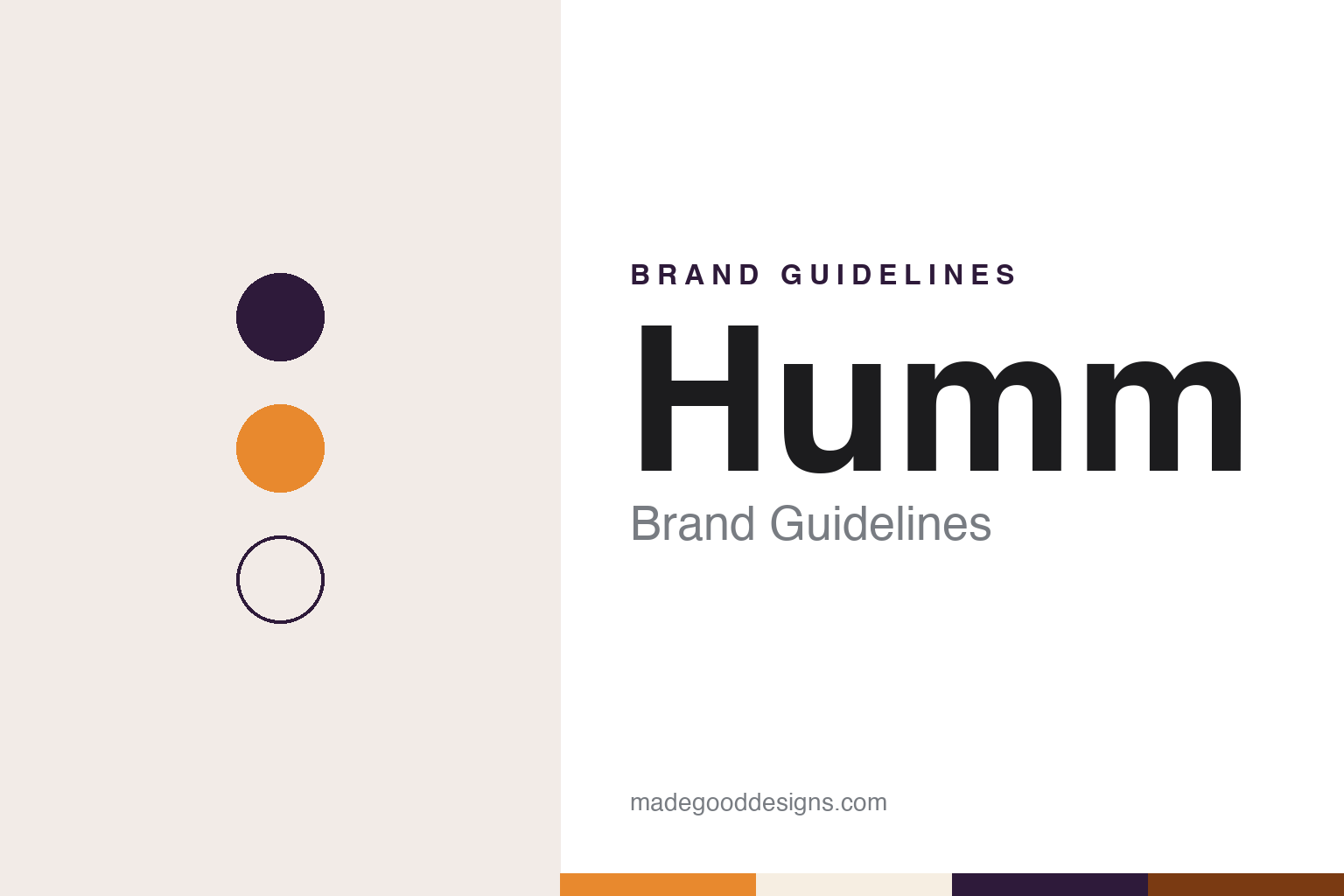
Two constants: a tangerine, plum and sand palette and a rounded sans register. Abstract homage — not a Humm product or mark; no logo, card or app screen is reproduced.
Flexirent
A leasing service in electronics stores.
Humm, which the company writes in lowercase, is the consumer instalment brand of Humm Group Limited, an ASX-listed non-bank lender based in Sydney. The group was known until 2020 as FlexiGroup, and its roots lie in a leasing product called Flexirent.
English Wikipedia says Flexirent was launched in 1993 as a finance service for digital handset equipment. In 1995 it was trialled for twelve months in three Harvey Norman stores in Brisbane and then rolled out across the retailer’s stores; from 1998 it was offered to retail customers to finance technology and electrical appliances. The business was floated on the Australian Stock Exchange on 11 December 2006, trading under the code FXL, the same article says. The group’s investor site still notes that the humm group trade mark belongs to Flexirent Capital Pty Limited.
The product that started it has gone. The company’s Flexirent page says that all existing FlexiRent agreements were closed or terminated on or before 30 June 2022, and that the lease is no longer offered as a way to pay. Wikipedia describes the typical Flexirent contract as a rental of 12, 24 or 36 months, offered through many computer and IT retailers as well as Harvey Norman.
Colour
Renaming the company after its product.
The change of name came in August 2020. The company’s own news archive, which reposts press coverage, links the rename to a push into buy now, pay later and records the launch of humm as a refreshed instalment offering in New Zealand in September 2020.
Expansion followed under the new name, according to those news pages. A country head was appointed for a new operation in Canada in May 2021; humm launched in the United Kingdom in June 2021; and in June 2022 humm announced UK and Ireland e-commerce partnerships following its approval by the Financial Conduct Authority as an authorised provider of consumer credit. In New Zealand the group worked with Westpac New Zealand to launch bundll, an instalment product, in July 2021, after announcing a five-year partnership with Mastercard around the same platform in November 2020.
Today the group describes itself as a diversified non-bank financial services institution offering business finance, credit cards and point-of-sale finance plans. Its products page names four brands: humm, an instalment plan for larger purchases such as home renovation, furniture and dental, optical or veterinary bills, with repayment terms of up to 120 months; the humm90 Mastercard credit card; the Q Mastercard in New Zealand; and FlexiCommercial, its commercial finance arm. The same page says humm is available in Australia, the UK, Ireland and Canada, and the website lists offices in Sydney and Dublin.
The news pages also show the brand being stretched to new uses in 2021: humm//TAPP, a digital card launched in June that lets shoppers tap a phone wallet at any humm merchant in Australia; hummpro, an instalment product for businesses, named in August as the exclusive partner of that kind for trade customers at Mitre 10 and Home Hardware; and a partnership with LG Energy Solution, announced the same month, to offer virtual power plant schemes that pool energy from home solar panels. The group calls itself “Australasia’s original FinTech”, a description that is its own.
Typography
How instalment brands present themselves.
Buy now, pay later providers sell a way of paying rather than a product, so most of their design work happens on other companies’ pages. A shopper meets the brand as a small wordmark beside a price, a badge in a row of card logos, or a button at the end of a checkout. Many of these marks are short, rounded names set in bright mint, pink, purple or plain black, and several providers publish kits for merchants with approved logos, lockups and banners in light and dark versions.
The second surface is the app. Providers show purchases as instalment schedules: a row of dates and amounts, a progress marker for payments made, and reminders of what is due next. Many also run shopping directories of participating merchants, with categories, deals and store pages, which turn the payment brand into a place to browse.
The third surface is explanation. Providers typically keep a page on how payments work, usually a sequence of three or four steps, and most carry dense small print: who the lender is, which licences apply, what fees and rates can be charged and where to go for help with hardship. In several markets these disclosures are set by regulators, and merchant kits often spell out which phrases need a full disclaimer and which claims may not be made at all.
The last surface is the investor page. Several providers are listed companies, in Sydney, New York or both, and publish results, presentations and announcements alongside their consumer sites. This guide sets out what can be checked about each provider — who founded it, who owns it, where it operates and how regulators have treated it — and gives company statements as the company’s own.
Aa
A soft rounded sans for a lowercase instalment brand. (Specimen set in Nunito, a sans STAND-IN; NOT the Humm logo.)
Humm
A takeover contest and a new board.
Between 2025 and 2026 the group went through a long takeover contest. On 17 December 2025 Humm announced a conditional, non-binding indicative offer from Credit Corp Group, a debt purchaser and consumer lender, to acquire control of the company. In a release dated 18 March 2026 the Takeovers Panel, which hears takeover disputes in Australia, said it had made a declaration of unacceptable circumstances, finding that statements in that announcement were misleading; it noted that it had separately accepted an undertaking from Humm in February 2026 on insider participation and the management of conflicts of interest. A review Panel affirmed the declaration, with minor variations, on 17 April 2026.
The bid did not go ahead. Humm ended talks with Credit Corp after a revised, non-binding proposal on 19 June 2026 at a materially lower price, according to an update reported by TipRanks on 22 June 2026; its independent board committee judged that the new offer could not be recommended to shareholders. In October 2026 Grafa reported that Credit Corp was looking at other growth options following the termination of its proposed acquisition. The board was also reshaped: the company’s leadership page lists several independent directors appointed on 10 April 2026, one of whom became chair on 11 May 2026. Humm Group was still listed on the ASX under the code HUM in November 2026.
For a design guide, Humm shows a brand that grew out of a leasing business and later gave its product’s name to the whole company. Compare Afterpay, another Australian instalment brand, and Zip, the instalment provider from Sydney. For this guide we use a warm tangerine, a deep plum and a pale sand with a rounded sans, an unofficial interpretation; no product or logo is reproduced.
Explore & save
Keep Humm’s identity on hand — save it to a board in the Made Good inspiration library.
Humm identity set
Pin the Humm tangerine, plum and sand palette and the rounded sans register to your own board.