Joyo Brand Guidelines
The Shenzhen budget-pedal maker that turned low prices into a catalogue.
Aa
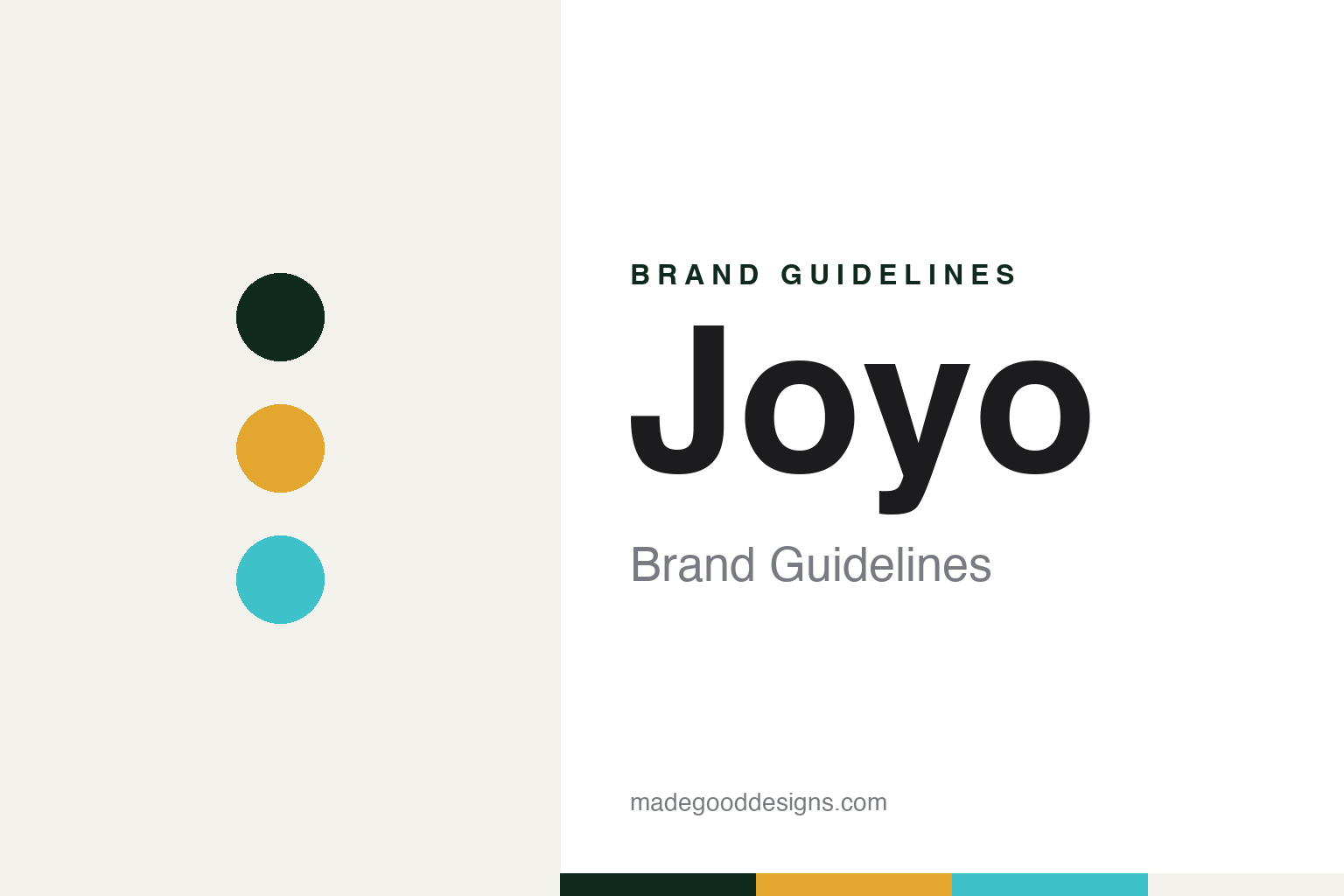
Two constants: a deep green, warm amber and ambience cyan palette and a sturdy sans register. Abstract homage — not a Joyo product or mark; no pedal, logo or nameplate is reproduced.
Joyo Technology
A Shenzhen company that publishes no founding year.
Joyo is a Shenzhen company. Its English website names Joyo Technology Co., Ltd., with an address in the Bao’an district of Shenzhen, in Guangdong province. Its Chinese site gives the legal name as 深圳市卓乐科技有限公司 — Shenzhen Zhuole Technology — and calls the business 卓乐科技. Neither site’s company profile gives a founding year or names a founder, and we could not establish either from sources we could check, so this guide gives neither. No parent company is named, and we found no report of an acquisition or a stock-market listing.
The company describes itself in modest terms. In English it is “a professional company specializing in R&D, manufacturing and marketing digital products for music education”; in Chinese, a technology company focused on developing, producing and selling electro-acoustic digital music products. The Chinese profile also calls Joyo a national “high-tech” and “specialised and sophisticated” enterprise — designations awarded by Chinese authorities — which we give as the company’s own claim. It says it has applied for several patents (“utility patents” in the English text, invention patents in the Chinese) and that it develops products with large instrument makers “at home and abroad,” none of which it names.
The range is much wider than pedals. Joyo lists practice, guitar, bass, acoustic, drum and keyboard amplifiers; busking and live-streaming amps; amplifiers and electro-acoustic versions of traditional Chinese instruments; and audio interfaces, wireless systems, tuners, metronomes, pickups, capos and cables. Its Chinese site says that in 2014 the Spanish guitarist Jose De Castro became a Joyo endorser, and that it launched a sub-brand, Dr.J, with his signature Compdriver pedal. In 2019 MusicRadar reported the launch of a second sub-brand, Guitto, for pedalboards and accessories.
Colour
Budget pedals and famous circuits.
Joyo reached the Western guitar press as a budget pedal maker. In July 2012 MusicRadar reviewed four of its pedals and wrote that the “Chinese company Joyo is tempting all of us cash-strapped, effects pedal-loving guitar players with a range of inexpensive stompboxes,” noting solid metal cases for under £40; the Analog Chorus used a bucket-brigade chip and cost about £30. By April 2015 Total Guitar could write that “over the last half decade Chinese brand Joyo has led the charge on affordable pedals,” in a review of its mini IronMan range.
Reviewers were also clear that many early Joyo designs were modelled on famous circuits. Reviewing the Vintage Overdrive in 2012, MusicRadar reported that “Joyo says” the pedal “is a representation of the classic Tube Screamer,” and opened its verdict with “There are Tube Screamer clones everywhere you look,” adding that at £29 originality hardly mattered. The British Sound of 2013 aimed “to emulate classic Marshall tones,” and the US Dream was “based upon a highly sought-after boutique distortion.” In 2015 Total Guitar wrote that the Husky Drive “apes Fulltone’s famous OCD overdrive,” a circuit it called “the basis for a wealth of pedals.” These are reviewers’ descriptions of sound and design lineage. We found no court ruling or legal action against Joyo over them in the sources we checked, and the practice is common across the pedal trade: Hotone’s Grass, for instance, was reviewed as “based on” Dumble amplifiers.
Later lines kept the low prices and gained an identity. The R Series, launched in November 2018 with the Tauren overdrive at $54.99, added an “ambience” LED that lights the sides of the case, which MusicRadar called “handy for stomping on dark stages.” The series grew to include the Uzi distortion; the Taichi, which MusicRadar said promised “Dumble Overdrive Special tones” for $52.99; and the R-15 preamp pedal, whose model names, the magazine wrote, “only allude to the famed preamp models they’re based on.” The BanTamP mini valve heads, such as the Jackman and the Atomic of 2017, and the GEM Box multi-effects filled out a catalogue built around price.
Typography
Chinese guitar gear, documented.
The seven brands in this guide sell affordable guitar gear, much of it online. Six are Chinese companies; the seventh is the house brand of a German retailer.
Most are in Guangdong province. Mooer is the brand of Shenzhen Mooer Audio, created in 2010, according to English Wikipedia. NUX says it is one of three brands owned by Cherub Technology, which lists its headquarters in Shenzhen and an industrial park in Zhuhai; NUX dates its debut to 2006. Joyo’s website names Joyo Technology, in Shenzhen’s Bao’an district. Donner belongs to Guangzhou Rantion Technology, according to its own press material and the Red Dot award records.
Two brands come from Changsha, in Hunan. The Chinese-language websites of Hotone and Valeton both name the same company, Changsha Hotone Technology, in their footers. Valeton says its team spent more than ten years designing and building products for other brands before launching its own.
Harley Benton is different: it is the house brand of Thomann, the music retailer founded in 1954 by Hans Thomann Sr. in Bavaria and still family-owned, according to English Wikipedia. Thomann GmbH, of Burgebrach, runs the brand’s website. Not all of its guitars are made in China; MusicRadar listed one 2026 model as made in Indonesia.
Few of the companies’ websites we checked name a factory; where a country of manufacture is documented, it is usually in reviewers’ specification lists.
This guide sets out what can be checked about each brand — who founded it, who owns it, and what it says about where its products are made — and marks clearly what rests only on the company’s own word.
Aa
A sturdy, workmanlike sans for a maker of metal boxes at low prices. (Specimen set in Archivo, a sans STAND-IN; NOT the Joyo logo.)
Joyo
A manufacturer, by its own description.
Joyo says it manufactures as well as designs: its English profile lists “R&D, manufacturing and marketing,” and its Chinese one development, production and sales. We found no independent account naming its factory or saying where its products are assembled, so we report that as the company’s description. Reviewers have consistently called it a Chinese brand. Abroad, its website links to Joyo sites for Argentina, Brazil, Mexico, the UK, Korea and Chile, and its pedals are widely sold through large online retailers; MusicRadar’s review pages quote its prices at Thomann.
Visually, Joyo has worked in series rather than with one house look: the original pedals in full-size metal boxes, the IronMan minis, the R Series with its glowing ambience light and the BanTamP lunchbox heads. Its legal notice says the JOYO word and design are registered trademarks. It publishes no brand book or colour codes that we could find, and we do not reproduce its logo.
For a design guide, Joyo shows how a budget maker can turn familiar sounds into a recognisable catalogue through price, naming and small design details. Compare Behringer, another maker known for affordable gear, and Fulltone, whose OCD overdrive reviewers heard in Joyo’s Husky Drive. For this guide we use a deep green, a warm amber and an ambience-light cyan with a sans, an unofficial interpretation; no product or logo is reproduced.
Explore & save
Keep Joyo’s identity on hand — save it to a board in the Made Good inspiration library.
Joyo identity set
Pin the Joyo deep green, warm amber and ambience cyan palette and the sturdy sans register to your own board.