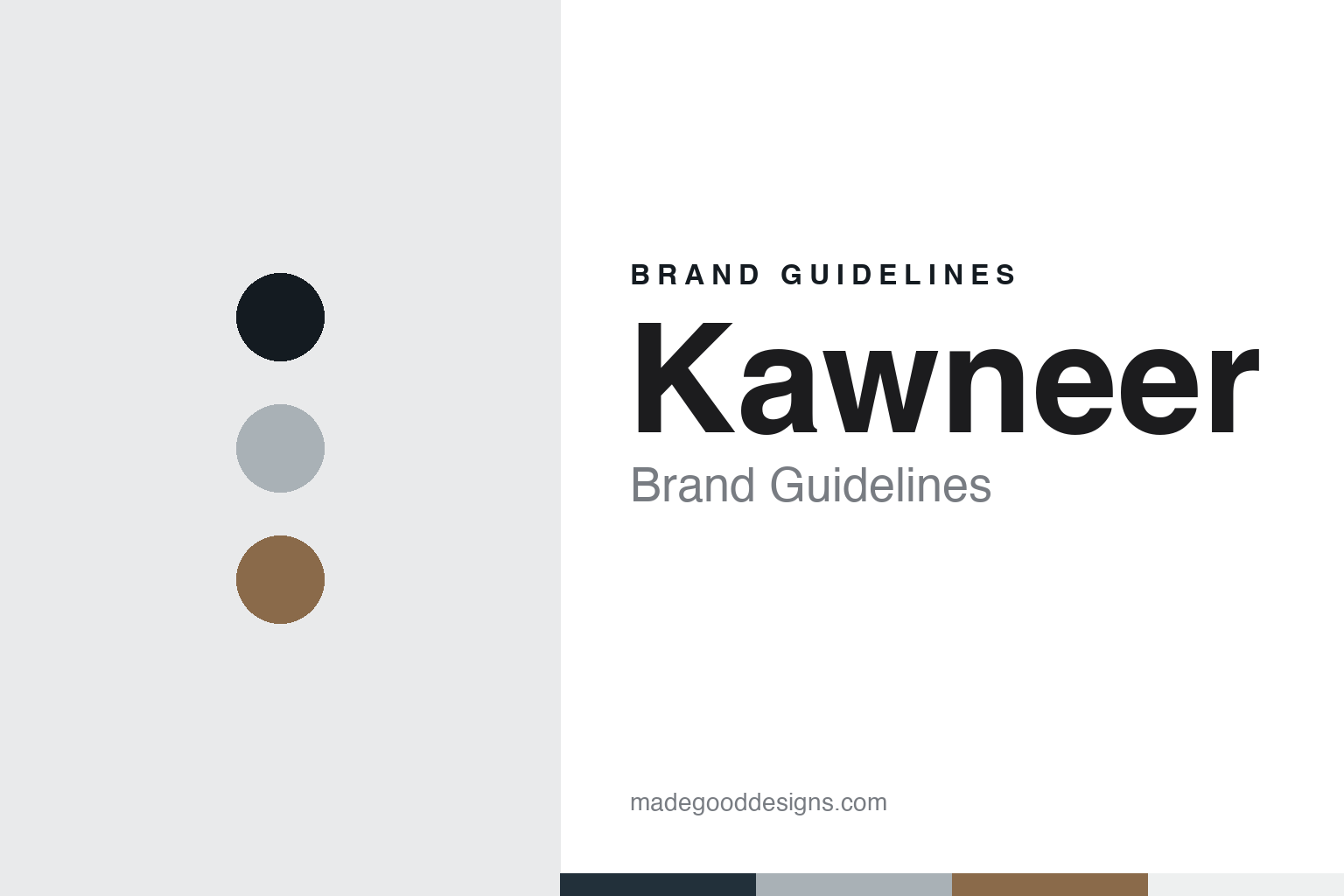
Kawneer Brand Guidelines
Francis Plym’s 1906 storefront maker, from Niles to Apollo.
Aa
Two constants: a Kawneer silver, bronze and ink palette and an engineered sans register. Abstract homage — not a Kawneer product or mark; no system, logo or drawing is reproduced.
A storefront patent
An architect, a sheet-metal shop and a plant in Niles.
Kawneer began with a storefront. English Wikipedia says the company was founded by an architect, Francis Plym, who in 1906 devised a metal moulding for shop fronts; the business started as a sheet-metal shop in Kansas City, Missouri, received its first patent that year and opened its first plant in Niles, Michigan, in 1907. In a release dated March 2026, the company marked 120 years since its incorporation on 10 March 1906 and said it filed the first patent for a storefront system that year and created the first modern retail glass storefront; those are the company’s own claims.
The early business was not only architectural. Kawneer’s own history page says it also made components for car makers in the 1910s and 1920s, and that Plym was offered contracts to move his plant to Detroit but kept it in Niles. In the same period, English Wikipedia says, Kawneer became the first manufacturer to use aluminium in architectural products, a claim the company repeats. By 1937, according to English Wikipedia, about three quarters of its storefront business was in aluminium and it was the largest American user of the metal for architectural work. The same source says Kawneer made no storefronts between 1942 and 1945.
Growth after 1945 came in steps the company lists on its own timeline: a move into Canada in 1946; a fabrication method it calls dual moment corner construction in the 1960s or 1970s; and, by its account, a move into Europe with manufacturing and distribution in the United Kingdom, France and Germany, which it describes as a first for an American architectural aluminium systems company. In the 2000s and 2010s it bought Traco, a window maker, to widen its window range.
Colour
Alumax, Alcoa, Arconic and Apollo.
Kawneer’s owners have changed several times. English Wikipedia says the company was owned by Alumax and became a subsidiary of Alcoa when Alcoa acquired Alumax in 1998. When Alcoa Inc. split on 1 November 2016, the part that kept its engineered and rolled products was renamed Arconic Inc., according to English Wikipedia’s article on Arconic; that company separated again on 1 April 2020, into Howmet Aerospace and a new Arconic Corporation. Kawneer’s own timeline says it moved into Arconic Corporation after that separation, and English Wikipedia places it in Arconic’s Building and Construction Systems unit.
Arconic itself changed hands in 2023. English Wikipedia says private equity firm Apollo Global Management completed its purchase of Arconic on 18 August 2023. In a release dated 1 October 2026 and issued from Alpharetta, Georgia, Kawneer Company, Inc. announced a new chief executive and finance chief and said these appointments marked a step in its transition to an independent company under the continuing ownership of funds managed by Apollo; that transition was under way at the time of writing. Its earlier releases in 2026 carried a Norcross, Georgia dateline, and English Wikipedia also gives Norcross as the head office.
The European business took a different path. The Dutch architecture site Architectenweb reported in October 2025 that Kawneer Europe, with offices in the Netherlands, France and the United Kingdom, became part of the listed Munich investment group Mutares on 1 October 2025. In April 2026 the same publication reported that the European company would change its name, and in June 2026 it reported that the change was completed on 28 May 2026: the European company now trades as Novastruct, with its Dutch head office in Harderwijk. In North America the Kawneer name continues.
Typography
Design and documentation.
Window, door and façade system makers rarely sell a finished window to a homeowner. Most of them design and produce the profiles, in PVC or aluminium, that independent fabricators cut, assemble and glaze, and that installers then fit. Their identities are shaped by that chain: the companies speak first to fabricators and architects, and only then to the people who will live behind the glass.
Two kinds of picture recur in how these companies present themselves. One is the profile cross-section, a technical drawing of the frame’s chambers, gaskets and reinforcement, published in system brochures and on product pages. The other is building photography: houses, flats and offices shown with the finished windows and doors in place, often in a range of colours and woodgrain finishes. Between the two sit the swatches, since surface choices such as foils, lacquered finishes and aluminium cover shells have become a large part of what is offered.
Naming tends to be systematic. Ranges are grouped into systems and series, and the name often carries a number tied to a dimension: VEKA, for example, explains that its SOFTLINE 82 profile measures 82 mm in depth. Behind the public pages, many makers run separate areas for professional partners, such as fabricator sections, training seminars and technical downloads, alongside the consumer-facing site.
Corporate pages tell a further story about plants and owners. Makers in this group publish histories that trace small workshops into international groups, list their extrusion and recycling sites, and, where shares are listed, maintain investor pages with shareholder notices. This guide sets out what those pages and independent dated sources say about each brand, and marks what rests on the company’s own word.
Aa
An engineered sans for a maker of framing systems. (Specimen set in IBM Plex Sans, a sans STAND-IN; NOT the Kawneer logo.)
Kawneer
Framing systems, manuals and a 120-year campaign.
Kawneer describes its work by system type rather than by single products. Its website groups the range into curtain wall, window wall and ribbon window, doors and entrances, windows, storefront framing, interior framing, sun control and overhead glazing, and says the systems are used on non-residential buildings from offices and schools to stadiums. Its English Wikipedia entry gives a similar list, adding railings, shutters and conservatories in some markets. Named systems appear in its releases: in May 2026, for example, it introduced the MetroView 4-SSG window wall, a unitised system with structural silicone glazing intended for slab-to-slab use in mid-rise and high-rise buildings.
The company presents itself to architects and glaziers through documentation as much as through imagery. Its site offers architectural detail manuals, technical downloads, a training centre and continuing-education courses for architects, alongside a project gallery sorted by building type. Its anniversary year was framed by a campaign it calls Building the Legacy, launched with the March 2026 release, and its about page uses the line “Shaping a better world” with the words pioneering, distinctive, positive and resilient as its stated values. It calls itself a pioneer in façade design; that is the company’s description.
The palette here is our own reading of the material, not a corporate standard: the silver of anodised aluminium, a warm bronze and a dark ink for text.
For a design guide, Kawneer shows how a building-products maker can lean on a long patent history, plain system names and dense technical documentation, and how one name can split in two when a business is sold in parts. Compare Schüco and Technal. For this guide we use mullion ink, anodised silver and storefront bronze with an engineered sans, an unofficial interpretation; no product or logo is reproduced.
Explore & save
Keep Kawneer’s identity on hand — save it to a board in the Made Good inspiration library.
Kawneer identity set
Pin the Kawneer silver, bronze and ink palette and the engineered sans register to your own board.