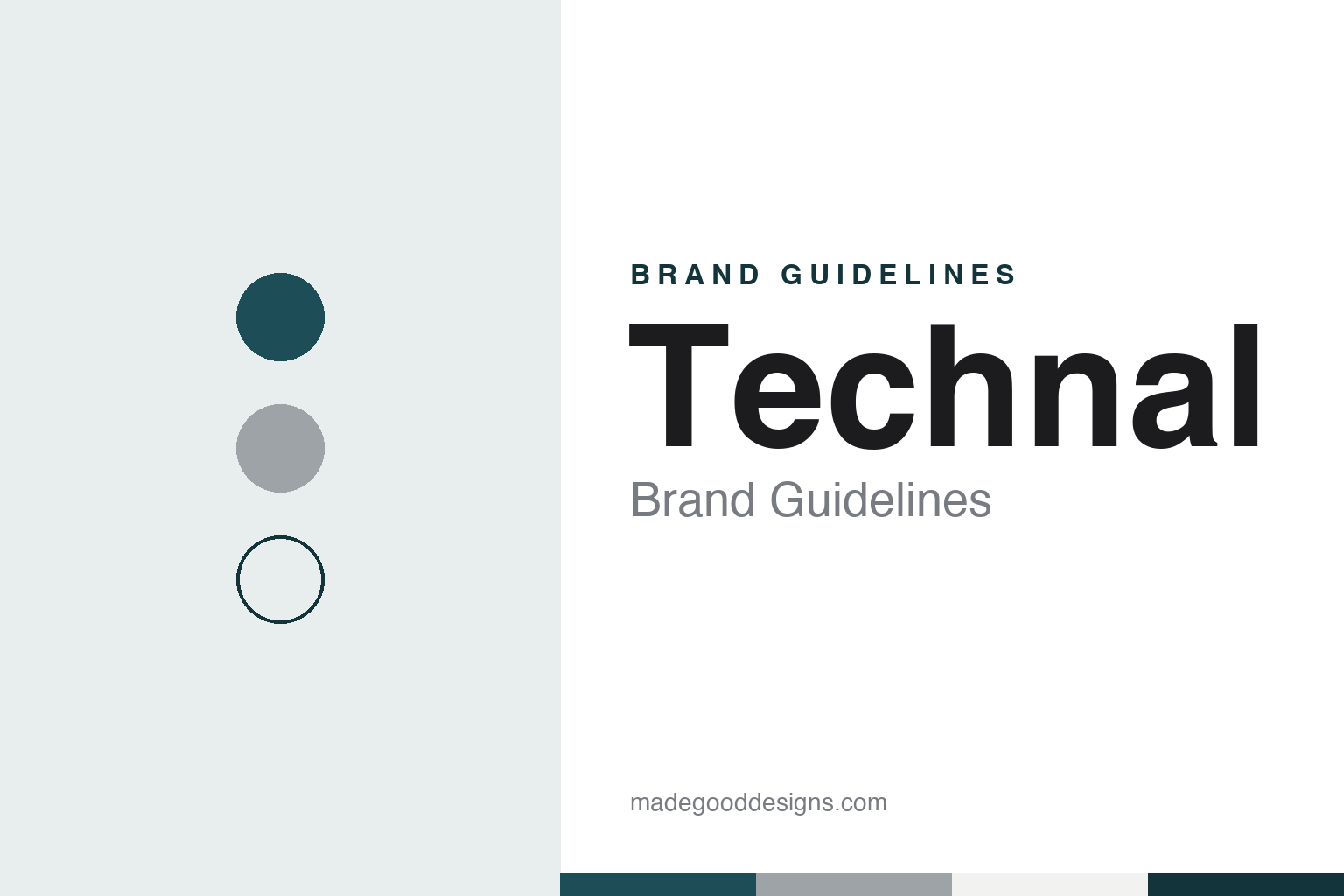
Technal Brand Guidelines
A Toulouse aluminium maker whose logo is a profile.
Aa
Two constants: an anodised silver, deep teal and off-white palette and an engineered sans register. Abstract homage — not a Technal product or mark; no profile drawing, logo or nameplate is reproduced.
Alusud
Profiles and anodised sheet in Toulouse.
Technal began in Toulouse as Alusud. English Wikipedia says André Bos founded the company in 1960 in the Amidonniers district of the city, designing aluminium window systems and selling aluminium profiles and anodised sheets. Working with glaziers, metalworkers and locksmiths, it developed shopfront systems in the early 1960s and grew across the south of France. The trade site Batiactu reported in November 2026 that the company’s Toulouse industrial site has operated since 1961 and now covers 17 hectares, six of them given over to production lines.
The Technal name came with exports. In the 1970s Bos took the business abroad as Technal International, English Wikipedia says, and by 1986 Technal Export had licensees in Lebanon, South Africa and Ivory Coast, followed by markets in the Caribbean, the Pacific and Indian Ocean regions, Africa, Latin America and Asia; a joint venture in Bahrain followed in 2000. The company also built an installer network, Technal Aluminier, which English Wikipedia describes in France, Spain and Portugal.
By 1999 the company had offices in Spain, England and Portugal and about 3,000 customers, from large companies to local dealers, French Wikipedia says. Ownership changed several times. The same source says the investment firm Monitor Clipper Partners bought the brand from Alcan in 1999, and that in January 2002 Technal was sold to Hydro Building Systems, part of the Norwegian group Norsk Hydro. In 2013 Hydro combined its aluminium extrusion business with Sapa’s in a joint venture, which brought Technal into Sapa, English Wikipedia says. Hydro agreed in July 2017 to buy Orkla’s half of Sapa, and Orkla announced on 2 October 2017 that the sale had been completed. In 2019 the Toulouse head office employed about 750 people, French Wikipedia says.
Colour
Windows, façades and an architecture prize.
Technal’s catalogue covers aluminium windows, doors, sliding systems, façades, balustrades, verandas, pergolas and solar shading, according to its websites. In France its window range is sold as Soleal, including Soleal Next and Soleal Evolution, and its curtain walls and glazed roofs under the Tental name. English Wikipedia says the company markets its products through aluminium glazing firms and also works directly with architects, contractors and building owners, and lists its main categories as doors, sliding and casement windows, balustrades and curtain walling.
The brand name travels unevenly. Technal’s international site says the range is sold as Domal in Italy and as Sapa in the Benelux countries, Scandinavia and the Baltic states. It lists local sites across Europe and in markets from India and the Middle East to Australia, Argentina, French Polynesia and New Caledonia. French Wikipedia says the company launched a store concept, Maisons de Lumière, in 2007, and that the concept received a Janus du commerce award in 2008.
Its reach is wide. English Wikipedia says Technal is present in Belgium, the United Kingdom, Ireland, Switzerland, Italy, Spain and Portugal and in more than 70 countries in all, run from Toulouse and from subsidiaries in South East Asia, the Middle East, India, South America, South Africa and Morocco. The international site describes the brand as premium, points to its own ranges of colours and handles, and says it works through a network of qualified fabricators and installers; in France that network is the Réseau d’Aluminiers Agréés, the company says.
Architects are a constant audience. Technal runs the Palmarès Architecture Aluminium Technal, an architecture prize whose winners’ books from 2016 to 2024–2025 are listed on its French site, and its product pages are illustrated with buildings credited to named architects and photographers. English Wikipedia says the Toulouse headquarters houses a development and research centre that makes and tests prototypes, with a laboratory that tests products against European and international standards.
Typography
How system makers present themselves.
Window, door and façade system makers rarely sell a finished window to a homeowner. Most of them design and produce the profiles, in PVC or aluminium, that independent fabricators cut, assemble and glaze, and that installers then fit. Their identities are shaped by that chain: the companies speak first to fabricators and architects, and only then to the people who will live behind the glass.
Two kinds of picture recur in how these companies present themselves. One is the profile cross-section, a technical drawing of the frame’s chambers, gaskets and reinforcement, published in system brochures and on product pages. The other is building photography: houses, flats and offices shown with the finished windows and doors in place, often in a range of colours and woodgrain finishes. Between the two sit the swatches, since surface choices such as foils, lacquered finishes and aluminium cover shells have become a large part of what is offered.
Naming tends to be systematic. Ranges are grouped into systems and series, and the name often carries a number tied to a dimension: VEKA, for example, explains that its SOFTLINE 82 profile measures 82 mm in depth. Behind the public pages, many makers run separate areas for professional partners, such as fabricator sections, training seminars and technical downloads, alongside the consumer-facing site.
Corporate pages tell a further story about plants and owners. Makers in this group publish histories that trace small workshops into international groups, list their extrusion and recycling sites, and, where shares are listed, maintain investor pages with shareholder notices. This guide sets out what those pages and independent dated sources say about each brand, and marks what rests on the company’s own word.
Aa
An engineered sans for an aluminium systems brand. (Specimen set in Archivo, a sans STAND-IN; NOT the Technal logo.)
The 4114 profile
A logo drawn from a section of aluminium.
The logo has a documented story. English Wikipedia says the Technal mark represents one of the system’s key components, the 4114 profile. The first logo of 1960 spelled out “Alusud”; the “A” became a stylised graphic in 1966; and in 1970, when the company opened abroad, the name and a drawing of the 4114 profile were combined into a new logo and the emblem of the Technal system, and Alusud became Technal. The brand and logo were brought together in 1983, a new graphic followed two years later and spread internationally, and the graphic identity was redesigned in 1995.
On manufacturing, Technal says its products for France are made entirely in France, and its Toulouse plant extrudes aluminium billets into profiles, powder-coats them and carries out further finishing work. In a news item in autumn 2026 the company said that Hydro Building Systems had paid for a new powder-coating oven, in service since August, and a new extrusion press, which produced its first profile in mid-September, replacing a press that had run for about thirty years; the new oven replaced equipment more than twenty years old. Technal says it has been based at Toulouse for more than 65 years, and Batiactu described the site in November 2026 as one of the industrial brands of the Norwegian Hydro group.
For a design guide, Technal shows a system maker whose logo is drawn from its own aluminium profile. Compare Reynaers, a Belgian family firm making aluminium systems, and Schüco, the Bielefeld maker of window and façade systems. For this guide we use an anodised silver grey, a deep teal and off-white with a sans, an unofficial interpretation; no product or logo is reproduced.
Explore & save
Keep Technal’s identity on hand — save it to a board in the Made Good inspiration library.
Technal identity set
Pin the Technal anodised silver, deep teal and off-white palette and the engineered sans register to your own board.