Majestic Brand Guidelines
A Harringay wine warehouse that became a Watford chain of shops, bars and a distributor.
Aa
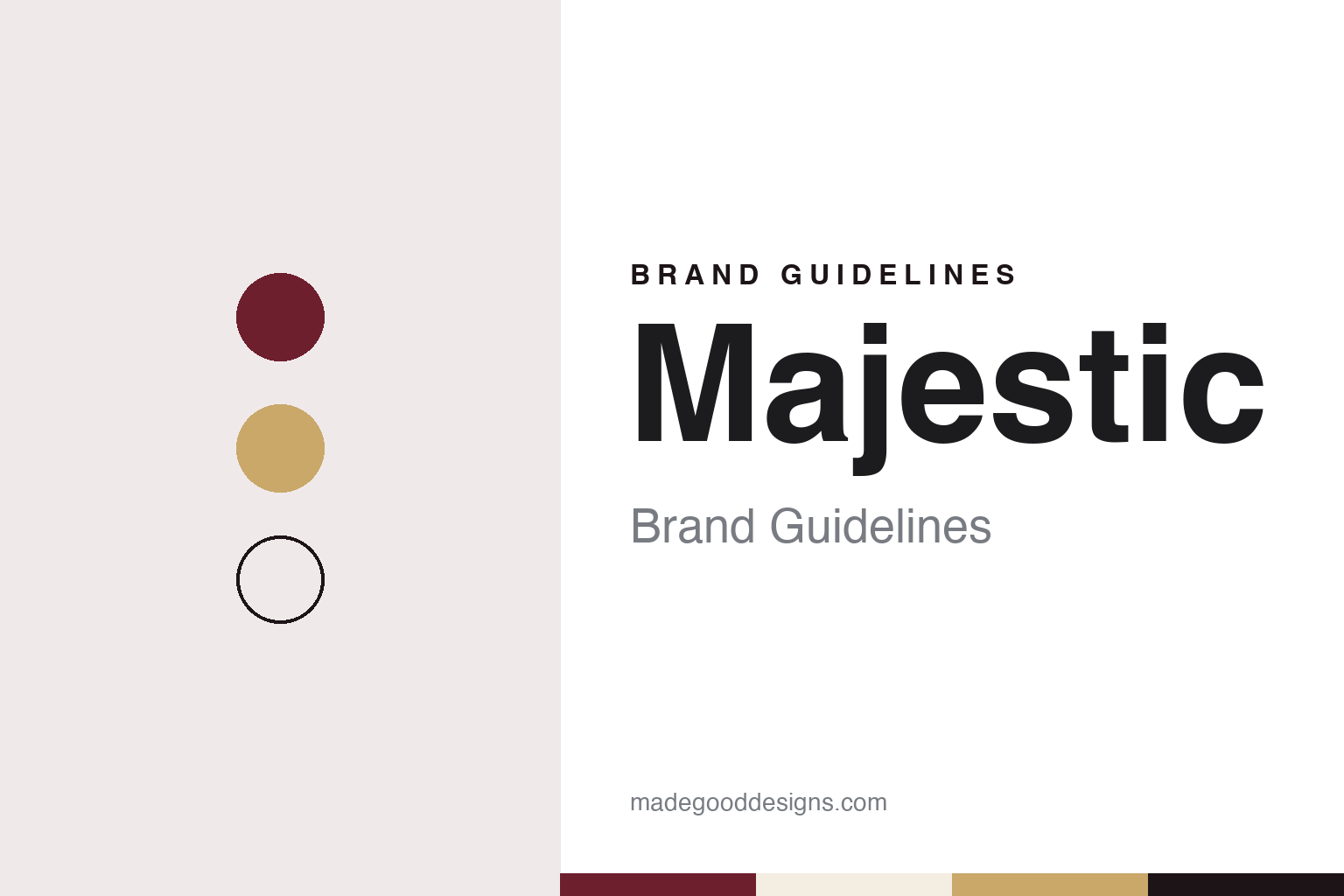
Two constants: a claret, straw and cream palette and a warehouse sans register. Abstract homage — not a Majestic product or mark; no sign, label or logo is reproduced.
Majestic Vintners
A wine warehouse in Harringay, 1980.
Majestic began in north London in 1980. English Wikipedia says the business was founded as Majestic Vintners by Sheldon Graner, who opened its first wine warehouse in Harringay that year and a second shop in Battersea in May 1981; Decanter, reporting on the company in 2019, also gives 1980 as its founding year. The early format was a warehouse rather than a high-street shop, and the scale grew from there: Decanter reported in August 2019 that Majestic had sold more than 37 million bottles of wine, spirits and beer in the previous year. English Wikipedia says the company sold wine by the case and offered tastings, a way of working within the licensing rules of the time.
Ownership changed quickly. According to English Wikipedia, receivers were called in within months of the Battersea opening, and Majestic’s assets passed to a new owner, Giles Clarke. In August 1987 Majestic bought Liquor Barn, a chain of 104 stores in California and Arizona, as part of a push into the United States. The American business was later sold, and Majestic itself changed hands again in 1989.
A parallel business shaped the company that trades today. Tony Mason, who had managed the Harringay warehouse, set up Wizard Wine in 1986 on the same model. The frozen-food retailer Bejam bought Wizard in 1987, and after the retailer Iceland took over Bejam in 1989, Mason and his partners bought Wizard back. In September 1991 Wizard Wine bought Majestic, and the combined business, based in Watford, Hertfordshire, joined London’s Alternative Investment Market in 1996, English Wikipedia says. The Majestic name, rather than Wizard, was the one carried forward on the shops.
Colour
Calais, fine wine and Naked Wines.
Through the 2000s Majestic added channels around its stores. English Wikipedia dates online sales through its own website to April 2000. In October 2001 the company bought Les Celliers de Calais, a business built on cross-Channel shoppers; the stores became Wine & Beer World and, in 2013, Majestic Wine Calais. Majestic closed its two remaining French stores, in Calais and Coquelles, in 2021, saying they were no longer commercially viable after the duty-free allowance changed when the UK left the EU. In March 2009 it added the fine-wine merchant Lay & Wheeler and two related companies.
The biggest shift came in April 2015, when Majestic bought the online retailer Naked Wines and Naked’s founder, Rowan Gormley, became group chief executive, according to English Wikipedia. Four years later the group reversed course. On 2 August 2019 the listed company agreed to sell the Majestic retail business to the US investment firm Fortress Investment Group, Decanter reported; the deal covered more than 180 UK stores, the two shops in France, the on-trade division and the headquarters. Retail Gazette noted that August that the sale would separate Majestic from its sister brand Naked Wines. After the split the listed parent was renamed Naked Wines plc, while Majestic returned to private ownership.
The sale completed in December 2019. Decanter reported on 12 December that more than 190 stores would stay open, that up to 140 had previously been earmarked for closure, and that the former managing director John Colley had returned to lead the business. Earlier that year the board had set out plans to refit the shops, moving away from the traditional warehouse look of piled wine boxes towards shelving and tasting areas that would be easier to navigate, and to launch a service called Wineify that used eight wines to gauge a customer’s palate, Decanter reported.
Typography
Shops, shelves and catalogues.
Wine merchants and alcohol retailers sell a product that shoppers cannot always taste before they pay, so their identities lean on words, place and guidance more than on packaging of their own. A shop name, a fascia and a few lines of handwriting on a card next to a bottle carry much of the work. For a designer, the useful material is what these companies show in public: their shop fronts, shelf cards, tasting areas, catalogues and the corporate pages that explain who founded and who owns them.
The physical shop is the first layer. Some chains began in warehouse-style units where wine was stacked in cases, and later refits moved towards shelving and tasting areas, as Decanter reported of one British chain in 2019. Shelf talkers, the small cards that describe a wine’s style and origin, sit beside the bottles and can be written in a personal, conversational voice. Tasting counters and by-the-glass machines turn part of the shop into a place to try before buying.
Mail-order and online merchants work through a different set of objects: printed catalogues, mixed cases, club mailings and order pages. Their own-label wines, sold under invented names rather than the merchant’s own, are part of the range and are presented much like any producer’s bottle. A founder’s story, such as a first trip to a vineyard or a single van, can be retold in these materials.
Corporate pages fill in the rest: founding dates, changes of ownership, parent groups and, for state retailers, the legal basis on which they operate. This guide uses dated, independent sources for those facts and treats the company’s own descriptions as its own words. The palette and type on each page are an unofficial interpretation chosen for the guide, not a copy of any retailer’s signage, labels or logo.
Aa
A sturdy warehouse sans for fascia-style headings. (Specimen set in Archivo, a sans STAND-IN; NOT the Majestic logo.)
Majestic
Shops, wine bars and a distributor.
Under Fortress, Majestic widened beyond its own shops. In April 2024 it bought the Vagabond Wines brand and nine of its twelve wine bars out of administration, The Grocer and Harpers reported; the sites at Gatwick Airport and Canary Wharf were not part of the deal. Vagabond’s bars serve more than 100 wines by the glass from self-pour machines, and The Grocer said Majestic had opened 16 new stores since 2019.
A year later, in April 2025, Majestic completed its purchase of the wine and spirits distributor Enotria&Coe, a deal announced in late March, Harpers reported. Enotria&Coe continues as a standalone business from its base in Park Royal, and the deal included its shop, The Great Wine Co, in Bath. It sits alongside Majestic Commercial, the existing arm that supplies pubs, bars, restaurants and hotels and uses the shops as supply hubs. Harpers put the number of new stores opened since the split from Naked Wines at 23.
The visual story runs from warehouse to wine shop. English Wikipedia says the company’s original logo was based on a definitive set of King George V postage stamps from 1929, a stately reference for a business that sold by the case from industrial units. The 2019 refit plans described by Decanter traded stacked boxes for shelving and tasting areas, and the Vagabond bars added a third setting, where self-pour machines put the range on display by the glass.
For a design guide, Majestic shows how a merchant can carry one name through several owners and formats, from warehouse to high street to wine bar. Compare the online model of Naked Wines, its former stablemate, and the mail-order story of Laithwaites. For this guide we use a cellar claret, straw gold and case cream with a sturdy sans, an unofficial interpretation; no product or logo is reproduced.
Explore & save
Keep Majestic’s identity on hand — save it to a board in the Made Good inspiration library.
Majestic identity set
Pin the claret, straw and cream palette and the warehouse sans register to your own board.