Stag Brand Guidelines
India’s umbrella since 1860.
Aa
Two constants: an oxblood palette and a heritage serif register. Abstract homage — not a Stag design, umbrella or the deer emblem.
India’s umbrella since 1860
Stag, by Ebrahim Currim & Sons, has been India’s household umbrella since 1860.
Stag is a lesson in a national institution as the identity. The umbrella brand of Ebrahim Currim & Sons, it traces to 1860, when a Bombay shopkeeper imported India’s first rain umbrellas and then learned to mend and make them; its stag emblem outlived its sibling brands to become a household word. Its answer to how a place lives with the umbrella is a heritage one: it is the archetypal affordable black Indian umbrella, the one that carried generations through the monsoon. An umbrella that taught a country to use one.
Its identity is India’s heritage umbrella. Stag’s long history, its household familiarity and its stag emblem are the work it is known for. An institution, made a signature. A name older than modern India.
(Honest notes, so the story stays precise. Stag is the surviving brand of Ebrahim Currim & Sons, founded when Ebrahim Currim imported India’s first rain umbrellas in 1860 in Bombay; his sons set up the National Umbrella Factory in 1902, and the “Stag” deer emblem, chosen for its grace, outlasted early sibling brands. It remains a privately held family firm. On where it is made we are careful: it is assembled in India, in Mumbai and Chennai, but its components are largely imported, so we describe it as an Indian institution that assembles in India from imported parts, not a wholly Indian-made product. It should not be confused with unrelated brands sharing the “Stag” name, nor with the separate Currimbhoy Ebrahim family. Its stag emblem and designs are its IP, described but never reproduced, and there is no official brand hex — these tones are an unofficial interpretation. This is design commentary and does not promote any product.)
Colour
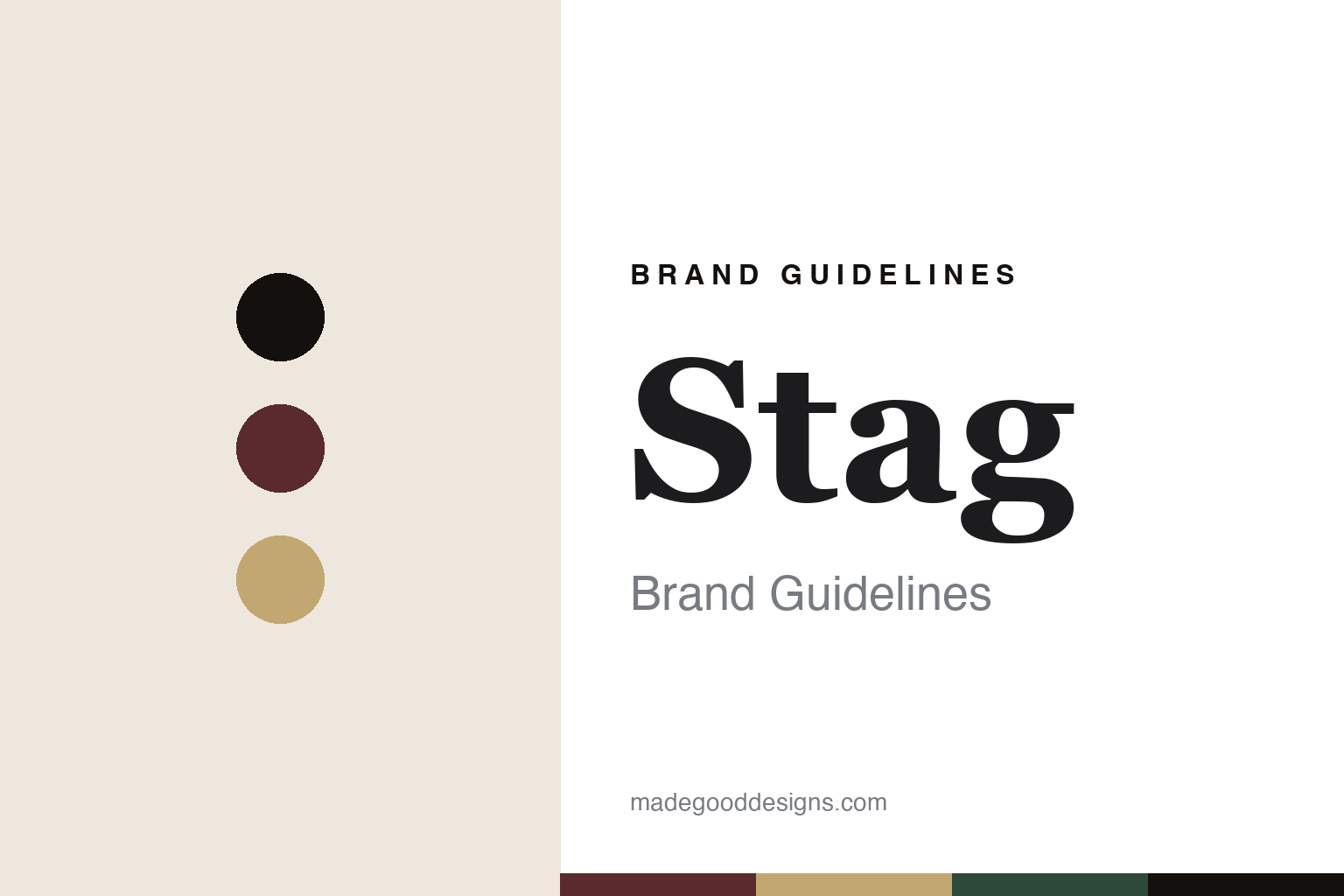
Stag lives in an oxblood palette. Click a swatch to copy the hex.
Stag’s identity is heritage, sturdy and Indian — an oxblood, an ink, a brass, a monsoon green, and a cream. The palette leans oxblood and brass: the register of a classic black umbrella with a brass ferrule, carried through the rains. It signals heritage and use over show. The honest caveat: with no published brand hex, these values are an original, unofficial interpretation, not first-party colours.
The lesson is an oxblood palette signals a heritage, Indian identity. Stag’s world is an everyday, assembled-in-India, century-and-a-half object. For designers, it is a reminder that a deep oxblood and a warm brass can carry a brand built on a long history — the oxblood of an old canopy and the brass of a worn ferrule. Because these tones can fail as small text, keep type dark and let the colour live in the accents, palette and band. The takeaways: let a real date anchor the brand; keep a familiar signature; be honest about assembly; and treat any single hex as unofficial.
Typography
The register is a heritage serif — classical, warm, institutional.
Stag’s identity carries a classical, warm, institutional spirit — a heritage object, not a modern one. A heritage serif captures the mood: high-contrast, dignified and old, the register of a household name from 1860. Set in an oxblood palette, the heritage serif feels classical and warm — exactly the personality Stag carries. It is institutional rather than trendy, mirroring a century-and-a-half-old umbrella brand. (Stag’s real designs and stag emblem are things we describe but do not reproduce, and the exact typeface is not ours to use.) Because it is not ours to use, the honest description is “a heritage-serif spirit,” shown here in a stand-in. The type behaves like the maker: classical, warm and institutional.
Aa
A heritage-serif spirit — classical and warm. (Specimen set in Gilda Display, a heritage-serif STAND-IN; NOT the Stag wordmark or the deer emblem.)
The umbrella around the world
Stag stands for India’s heritage umbrella.
Stag is a lesson in a founding date as a national institution. An oxblood palette, a heritage serif and a stag emblem make one long history the whole maker — heritage, sturdy and Indian. The institution is the differentiator. The differentiator is longevity and familiarity: a brand that introduced a country to the umbrella and stayed the household default for a hundred and sixty years.
Put to work, the identity is institution as design. A maker building in this spirit would let a genuine, long history anchor it, keep a simple recognisable emblem, and be honest that a modern product is assembled from parts made elsewhere, so the customer trusts the story. It would treat the stag as a mark of continuity. It would say plainly what is assembled at home and what is imported. The lesson Stag teaches is that a founding institution can build a brand: the history gives it authority, and the Indian assembly gives it presence. The institution is the personality, and the long lineage is the proof.
For designers and brand-builders, Stag holds the heritage pole in this round about the umbrella around the world: let a real institution anchor the brand, and be honest about assembly. The lessons: date it truthfully; keep a familiar emblem; disclose what is imported; and never reproduce a protected mark. It is also a reminder to stay precise: Stag is the umbrella brand of Ebrahim Currim & Sons, dating to 1860, a household name in India, assembled in India from imported parts — with the palette here an unofficial interpretation. Stag made the institution the maker — proof that a long history can be the difference.
Explore & save
Keep Stag’s identity on hand — save it to a board in the Made Good inspiration library.
Stag identity set
Pin the oxblood palette and the heritage-serif register to your own board.