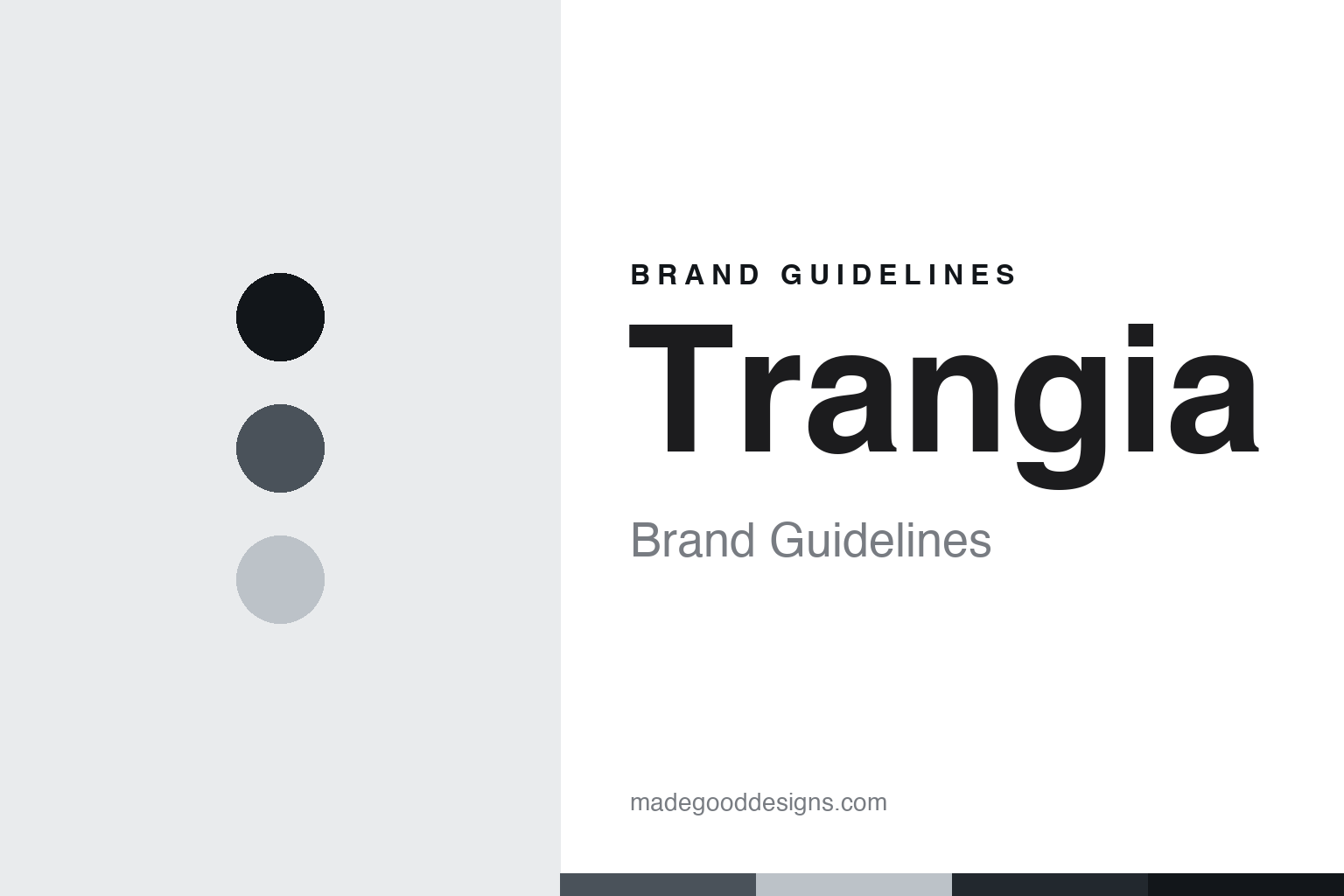
Trangia Brand Guidelines
The storm cooker, made in Sweden.
Aa
Two constants: a storm-slate palette and a storm-sans register. Abstract homage — not a Trangia product or mark; no stove, cookset or logo is reproduced.
The storm cooker, made in Sweden
Trangia is the family-owned Swedish maker whose windproof alcohol “storm cooker” has been built in the same village since 1925.
Trangia follows Primus as the round’s made-at-home node — the family-owned Swedish company whose windproof alcohol cooking system, the storm cooker, has been built in the same small northern village for a hundred years. Its answer to a round about who owns the flame and where it is made is the round’s most rooted: an independent, family-owned maker that still makes its stoves in the village where it began.
Its identity is the storm cooker, made in Sweden. The windproof alcohol design, the family ownership and the century in one Swedish village are the story here. Built where it began. The storm cooker, made in Sweden.
(Honest notes, so the origin and the making are framed accurately. Trangia sells its storm cooker — the stormkök — as its hero, a complete windproof system built around a brass spirit burner with nesting pots, a base and an integrated windshield; we report its language as the brand’s own. On origin: Trangia was founded in 1925 in Trångsviken, in northern Sweden, by John E. Jonsson with his father-in-law Fritjof Svensson, originally as a maker of aluminium household cookware; the complete storm-cooker system itself came later, in 1951, so we keep the 1925 founding and the 1951 system distinct. We also correct a stray attribution: the owning family is the Jonsson family, and we do not use any other family name. On ownership: Trangia is private and family-owned, now into its fourth generation, a small operation of a couple of dozen people. On where it is made: Trangia states it has always made and will continue to make its products in Trångsviken, so we credit its core storm-cooker sets and pots as made in Sweden, while noting that some gas and multifuel burner inserts are sourced through partners. Its designs and the Trangia name are IP we describe but do not reproduce; there is no official brand hex; these tones are an unofficial interpretation.)
Colour
Trangia lives in a storm slate. Click a swatch to copy the hex.
Trangia’s identity is rooted, family and made-in-Sweden — a storm slate, an ink, a pale slate, a deep slate, and a paper. The palette leans storm slate and pale slate: a cool, functional register that nods to brushed aluminium and windproof simplicity rather than a loud logo colour. It signals the storm cooker, made in Sweden — rooted, family and made-in-Sweden. The honest caveat: with no official brand hex, these values are a functional, unofficial interpretation, not first-party colours.
The lesson is a cool slate signals a rooted, functional identity. Trangia’s world is a simple system that just works in the wind. For designers, it is a reminder that a cool slate and a soft pale can carry a functional, no-nonsense brand — a rooted tone held as an accent, not a product shot. Because a mid hue can fail as small text, keep type dark and let the colour live in the accents, palette and band. The takeaways: credit Trangia’s windproof alcohol design; attribute the Jonsson family ownership; distinguish the 1925 founding from the 1951 storm-cooker system; and credit the made-in-Sweden manufacturing of its core sets.
Typography
The register is a storm sans — rooted, family, made-in-Sweden.
Trangia’s identity carries a rooted, family, made-in-Sweden spirit — a small, consistent maker, not a global conglomerate. A storm sans captures the mood: plain, sturdy and even, the register of a tool that never changed because it never needed to. Set in a storm-slate palette, the storm sans feels rooted and functional — exactly the personality Trangia carries. It behaves like a made, useful thing rather than a loud logo, mirroring a burner-ring and a heat-plume. (Trangia’s real products and the name are things we describe but do not reproduce, and the exact typeface is not ours to use.) Because it is not ours to use, the honest description is “a storm-sans brand,” shown here in a stand-in. The type behaves like the brand: rooted, family and made-in-Sweden.
Aa
A storm-sans brand — rooted and functional. (Specimen set in Manrope, a storm-sans STAND-IN; NOT the Trangia logo or products.)
The flame node
Trangia stands for the storm cooker, made in Sweden.
Trangia sits third in the round as its made-at-home node. A storm-slate palette, a storm sans and a century in one village make one thing — the storm cooker, made in Sweden — the whole identity: rooted, family and made-in-Sweden. The windproof alcohol design is the pitch, the family ownership is the frame, and the made-in-Sweden manufacturing is the point. The point is an independent maker that still makes where it began, in a round about who owns the flame and where it is made.
Put to work, the identity is the brand told straight, the dates kept distinct and the making credited. A brand in this spirit would credit Trangia’s windproof design, attribute the Jonsson family ownership, keep the 1925 founding and the 1951 storm cooker distinct, and credit the made-in-Sweden manufacturing. A reader in this spirit would keep the facts right: Trangia sells the storm cooker, a windproof alcohol system, as its hero; it was founded in 1925 in Trångsviken by John E. Jonsson and Fritjof Svensson as an aluminium-cookware maker, with the complete storm-cooker system arriving in 1951; it is private and family-owned by the Jonsson family, now the fourth generation; and it makes its core sets and pots in Sweden, with some gas and multifuel burners sourced through partners. Trangia sits after Primus and before Soto. The honest editorial moves are to credit the design, to attribute the family, to keep the dates distinct, and to credit the Swedish making.
For designers and brand-builders, Trangia carries the flame node: keep two dates distinct — and credit a genuine made-at-home story. The lessons: a brand can make one enduring design its whole identity, here the windproof alcohol storm cooker; a founding year and a product’s birth year are kept separate, 1925 for the company and 1951 for the system; a family ownership is attributed to the correct family, the Jonssons; and a genuine made-in-Sweden manufacturing base is credited for the core sets, with honest limits on which accessories are sourced elsewhere. It is also a reminder to stay precise: Trangia is the family-owned Swedish storm cooker, still made in Trångsviken — with the palette here an unofficial interpretation. The hook is that constancy: a windproof alcohol cooker that generations of Scandinavian scouts, conscripts and hikers learned to cook on, essentially unchanged and still hand-built in the same tiny village a hundred years on. Read that way, Trangia is less a single stove than the storm cooker, made in Sweden: rooted, family, made-in-Sweden. The lesson for a brand is that keeping the dates distinct and crediting the made-at-home story reinforce each other, and attributing the family correctly keeps the story earned. Trangia made the-storm-cooker-made-in-Sweden the identity — proof that a rooted, made-at-home brand can anchor a node.
Explore & save
Keep Trangia’s identity on hand — save it to a board in the Made Good inspiration library.
Trangia identity set
Pin the storm-slate palette and the storm-sans register to your own board.