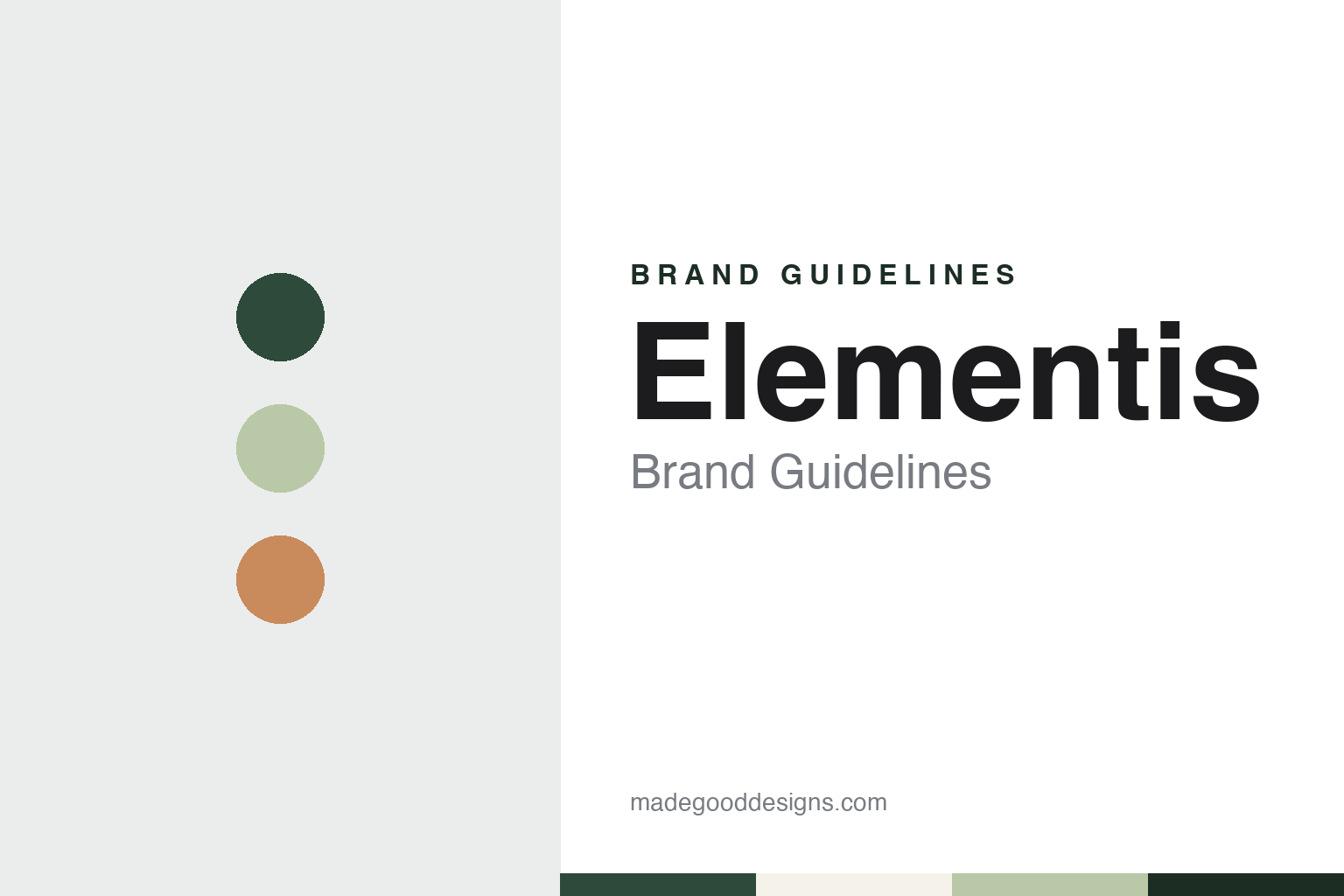
Elementis Brand Guidelines
From an 1844 tea partnership to coatings and personal care additives.
Aa
Two constants: an Elementis tea-leaf green, sage and terracotta palette and a Merchant serif register. Abstract homage — not an Elementis product or mark; no logo, pack or label is reproduced.
Harrisons & Crosfield
Tea and coffee merchants in Liverpool, then London.
Elementis began as a tea business. English Wikipedia records that the Harrisons & Crosfield partnership was formed in 1844 by the brothers Daniel and Smith Harrison and Joseph Crosfield, a former employee of Daniel’s, to trade in tea and coffee from Liverpool. About four-fifths of the trade was tea from China and the rest coffee from South America. The firm moved to London in 1854, and by the 1860s it was the third-largest tea trader, according to Wikipedia; control later passed to a second generation of Harrison and Crosfield partners.
Two newcomers changed the firm’s direction. Arthur Lampard joined in 1881 and Heath Clark in 1885, Wikipedia says. Instead of simply trading, Harrisons & Crosfield began blending its own tea under the brand “Nectar”, later sold to Twinings, and built an export trade from Ceylon Wharf on London’s South Bank. Lampard opened offices abroad, including a branch in Colombo under the name Crosfield Lampard, which set the firm on the path to its main business for nearly a century: tropical plantations of tea, then rubber, timber and palm oil.
The firm did not usually own those estates outright. It worked through the agency system used by several British houses in south-east Asia, Wikipedia explains: the capital came from plantation companies floated on the London Stock Exchange, while the agency supplied management, technical and commercial expertise and acted as company secretary, holding only a small stake but exercising effective control. Harrisons formed and floated rubber companies in Malaya and Sumatra in the early 1900s, among them Golden Hope Rubber Estate and London Asiatic Rubber and Produce, and tea companies in southern India.
Colour
From plantation agent to chemicals group.
In 1908 the partnership became a company and was floated on the Stock Exchange, with only preference shares offered to the public, Wikipedia records; that company continues as Elementis (Holdings). By 1921 Harrisons acted as agent for 52 plantation companies in Malaya, Sumatra, Ceylon, southern India, Java and Borneo. Between the wars it moved into timber in North Borneo through the British Borneo Timber Company, formed in 1920, into palm oil in Sumatra from 1926, and into industrial products through Wilkinson Process Rubber and its Linatex material. Supplying chemicals to plantations led it into North American chemical distribution, culminating in the purchase of Dillons Chemical Company of Canada in 1938, Wikipedia says.
After the war, independence movements and host governments’ wish to control their own resources reshaped the business. Harrisons’ plantations in Sri Lanka were nationalised in 1975; in 1982 a Malaysian company was formed to acquire its Malaysian estates, with Harrisons keeping a minority stake; London Sumatra was sold in 1994 and the Papua New Guinea business in 1996, according to Wikipedia.
Chemicals grew in their place. The building block was Durham Chemicals, with which Harrisons formed a joint venture in 1947 and in which it held a majority by 1962. In 1973 it bought Albright & Wilson’s chrome business, renamed British Chrome & Chemicals, and in 1979 a matching American business. Timber and builders’ merchants traded as Harcros, and the 1985 purchase of Pauls added malting and animal feed. In 1997 the timber and food divisions were sold, the remaining food business followed a year later, and the Harrisons & Crosfield name was changed to Elementis, with a policy of concentrating on specialty chemicals, Wikipedia records. In 1998 it bought the American additives maker Rheox, which made rheological additives for coatings: ingredients that control how a paint flows and thickens.
Typography
Specialty chemicals, sold by function.
Specialty chemicals makers sell mostly to other companies, so their brands rarely appear on a shelf. What they make ends up inside shampoo, paint, crop sprays, plastics and circuit boards under someone else’s name. Their identities have to work for buyers, chemists, investors and job seekers at once, and most of them settle on a similar, restrained toolkit.
The marks tend to be precise sans-serif wordmarks, often a coined or shortened name set in lower case or in a clean capital form, sometimes paired with a small symbol that suggests a molecule, a droplet, a leaf or a ring. Colour usually runs through blues, greens and teals, the shades a reader links with water, science and the outdoors, with one brighter accent kept for highlights and charts. Photography leans on laboratories, gloved hands, pilot plants and pipework, alongside close-ups of the everyday products that the chemistry ends up in.
Websites in the category are organised by end market rather than by chemical family. A visitor picks personal care, home care, coatings, adhesives, agriculture, mining, energy or electronics, and lands on pages of named product ranges. Product finders, technical data sheets, certificates and sample requests sit close to the top of the navigation, because that is what formulators come for. Many groups also run regional sites and separate pages for each business unit.
The rest of the site carries the corporate story. Sustainability reports, innovation pages, purpose statements and annual reports explain strategy to investors and the wider public, while careers pages show researchers, plant teams and graduate programmes. For a designer, the category is a study in clarity: a calm palette, a readable sans and a structure that lets very technical material stay easy to find.
Aa
A merchant serif — a nod to a Victorian tea partnership. (Specimen set in Libre Caslon Text, a serif STAND-IN; NOT the Elementis logo.)
Elementis
Chromium, talc and a narrower focus.
The new Elementis kept reshaping itself. It added the chromium chemicals business of OxyChem in the US in 2002 and built a chromium plant in China in 2004, the year it also bought the Dutch coatings additives supplier Sasol Servo; the UK chromium plant closed in 2009, English Wikipedia says. In personal care it bought the lanolin supplier Fancor and, in 2017, SummitReheis, a maker of antiperspirant ingredients based in the US and Germany, followed in 2018 by the talc producer Mondo Minerals. In 2020 and 2021 the board rejected three offers from Minerals Technologies and one from Innospec, Wikipedia records.
Two sales then narrowed the group. In December 2022 CHEManager reported that Elementis had agreed to sell its chromium business to Turkey’s Yildirim Group, which would leave three divisions: personal care, coatings and talc. In May 2025 Elementis signed and completed the sale of its talc business to the Italian talc maker IMI Fabi, Chemical Engineering reported, with the talc sites set to trade under the Mondo Minerals name within IMI Fabi. The same report described Elementis as focusing on specialty additives for coatings and personal care, under Luc van Ravenstein, appointed chief executive on 29 April 2025.
Elementis now describes itself as a global specialty chemicals company in the FTSE 250, listed in London and employing about 1,000 people, with “a nearly 200-year tradition.” Its stated purpose is “Unique chemistry, sustainable solutions,” and its site lists two businesses, Personal Care and Coatings, with personal care products sold under names such as Bentone.
For a design guide, Elementis shows how a company can change its name entirely when its business changes, leaving a Victorian tea partnership behind for a short, invented word that points to chemistry. Compare Johnson Matthey, another London-listed chemicals company with nineteenth-century roots, and Innospec, which once bid for it. For this guide we use a tea-leaf green, a sage and a terracotta with a serif, an unofficial interpretation; no product or logo is reproduced.
Explore & save
Keep Elementis’s identity on hand — save it to a board in the Made Good inspiration library.
Elementis identity set
Pin the Elementis tea-leaf green, sage and terracotta palette and the Merchant serif register to your own board.