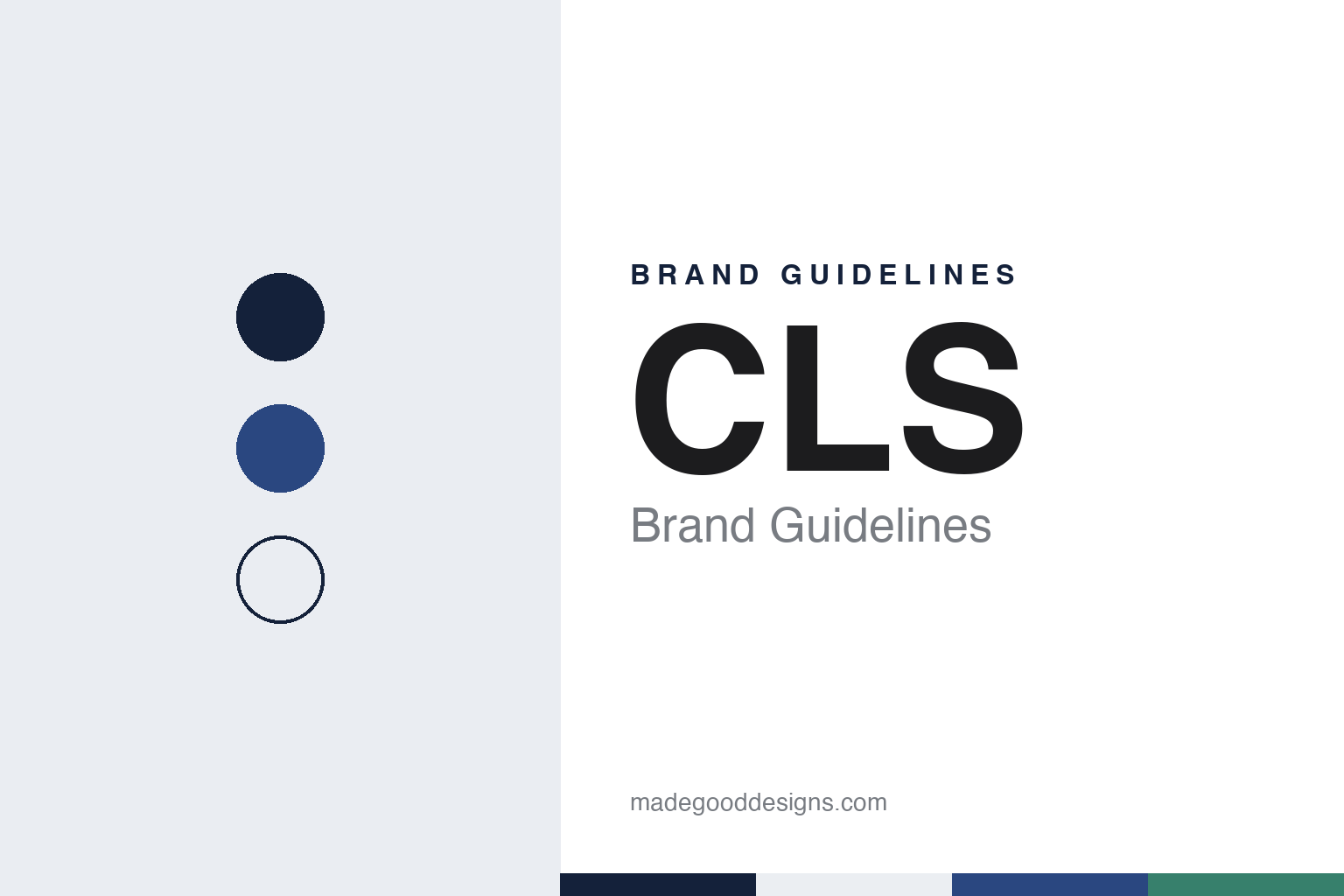
CLS Brand Guidelines
Both legs of a currency trade, settled at the same moment.
Aa
Two constants: a midnight, cobalt and sea green palette and a plain technical sans register. Abstract homage — not a CLS product or mark; no logo, screen or service document is reproduced.
Continuous Linked Settlement
A bank-built answer to settlement risk.
CLS takes its name from Continuous Linked Settlement, and it was built to solve one specific problem in the foreign exchange market. When each side of a currency trade is paid separately, in different countries and time zones, one party can pay out the currency it sold without receiving the currency it bought. English Wikipedia says this settlement risk became known as Herstatt risk after the failure of Germany’s Herstatt Bank on 26 June 1974, and that later market episodes in the 1980s and 1990s kept it on the agenda of central banks.
The answer took years. English Wikipedia traces a series of reports by central-bank committees at the Bank for International Settlements, from the Angell Report of 1989 to the Allsopp Report of 1996, which called on the private sector to find a practical remedy. A group of large international banks, known as the “group of 20,” formed in October 1994 and in January 1996 settled on a clearing bank that would settle both legs of a trade at the same moment, a payment-versus-payment model. CLS Services Ltd was established in the United Kingdom on 1 July 1997, and CLS Bank International was established in New York on 1 November 1999 after the Federal Reserve approved its application, English Wikipedia says; IBM was chosen in April 1998 to build the technical infrastructure.
CLS Bank began operating on 9 September 2002, settling seven currencies, among them the euro, the yen, the pound sterling and the US dollar. CLS itself says it was “established in 2002 as a result of unprecedented co-operation among the global FX community” and began settling for 39 settlement members. More currencies followed; English Wikipedia lists additions between 2003 and 2015, and CLS now says it settles 18 currencies, holding an account at each issuing central bank.
Colour
Payment versus payment, at the centre of FX.
The core service is CLSSettlement. The Federal Reserve Board describes CLS Bank International as a special purpose bank that settles both payment obligations, or “legs,” arising from a single foreign exchange transaction at the same time, so that one leg settles only if the other does. It also settles net payment obligations arising from over-the-counter credit derivatives held in DTCC’s Trade Information Warehouse. CLS Bank is chartered by the Board as an Edge corporation, and the Fed says it is the lead overseer of CLS in a cooperative arrangement with the central banks whose currencies CLS settles.
English Wikipedia explains the mechanics. Settlement members submit payment instructions, CLS matches them, and settlement and funding take place in a daily five-hour window when the real-time gross settlement systems of all the CLS currencies are open. Each member holds a single multi-currency account with CLS, and multilateral netting means members pay in only their net position in each currency rather than the full value of every trade.
Around that core sit newer services. CLS lists CLSNet, a bilateral payment netting calculation service; CLSClearedFX, for central counterparties; a cross currency swaps service; and market data products. Securities Finance Times reported on 22 July 2025 that CLS had redesigned CLSClearedFX, with LCH’s ForexClear the first central counterparty to go live on it. In October 2026, FinanceFeeds reported that CLS had completed a move of its settlement infrastructure to a new data centre environment with Kyndryl, part of a multi-year modernisation programme.
Regulation shapes the company. The Federal Reserve lists CLS Bank International among the financial market utilities that the Financial Stability Oversight Council has designated as systemically important under Title VIII of the Dodd-Frank Act; English Wikipedia dates that designation to July 2012.
Typography
Settlement, clearing and custody.
Post-trade institutions do the work that follows a trade: settlement, clearing, custody, collateral management and asset servicing. Central securities depositories, or CSDs, hold securities in book-entry form and settle transfers between accounts; international CSDs such as Euroclear Bank in Brussels and Clearstream Banking in Luxembourg do the same for bonds issued across borders; clearing houses stand between buyers and sellers; and custody banks hold assets for investors. Global Custodian noted in 2010 that this business is sometimes called the “plumbing of the financial system.”
The names can mislead. English Wikipedia points out that neither Euroclear nor Clearstream runs central counterparty clearing, despite the word in their names, which date from a time when clearing and settlement were treated as a single activity. For a designer, that makes plain service pages important: settlement, custody, collateral and fund services each tend to get their own section, written for banks, brokers and central banks rather than private investors.
Much of what these institutions publish is documentation. Clearstream’s website, for example, groups banking licences, articles of association, disclosure reports and regulatory information under the EU’s settlement and digital-resilience rules on one regulation page, alongside due-diligence questionnaires and factsheets. Rulebooks, operating manuals and annual reports sit beside those pages, so for a design system a clear type hierarchy and readable tables do much of the work.
The palettes in this guide lean on deep blue, teal and grey, set with a sans for long technical text, and the imagery stays abstract: networks, links and data rather than people or products. These are unofficial interpretations of our own, not brand colours; no logo, wordmark or document from any institution is reproduced.
Aa
A plain technical sans for a service measured in settlement windows. (Specimen set in Manrope, a sans STAND-IN; NOT the CLS logo.)
CLS
Owned by the market it serves.
CLS describes itself as “created by the market for the market.” Its parent, CLS Group Holdings AG, is incorporated in Switzerland and, the company says, is regulated by the US Federal Reserve as if it were a bank holding company. Beneath it, CLS UK Intermediate Holdings Ltd in London, with a representative office in Tokyo and a branch in Hong Kong, holds CLS Bank International in New York and the service companies. English Wikipedia says the group is operated on a not-for-profit basis, with shareholders holding governance rights rather than dividends; CLS says it is mutually owned by its shareholders, a list that includes banks from Australia, Canada, France, Japan, Singapore, South Africa, Sweden and the United States, State Street among them.
That ownership shapes the voice. CLS’s pages speak of trust, systemic risk and efficiency; its mission, the company says, is “to minimize systemic risk while improving funding and operational efficiency.” It says more than 75 financial institutions are settlement members and over 38,000 more organisations use its services. The site’s news pages mix monthly FX trading activity reports, announcements of members going live and commentary on settlement cycles.
For a design guide, CLS shows how a three-letter name can carry an institution whose work is mostly out of sight: a short acronym and a plain technical vocabulary for a service that runs in a fixed daily window. Compare the LCH brand guidelines, for the clearing house that Securities Finance Times reported as the first on the redesigned CLSClearedFX, and the State Street brand guidelines, for one of its shareholders. For this guide we use midnight blue, cobalt, sea green and fog with a sans, an unofficial interpretation; no product or logo is reproduced.
Explore & save
Keep CLS’s identity on hand — save it to a board in the Made Good inspiration library.
CLS identity set
Save the CLS midnight, cobalt and sea green palette and the plain technical sans register for your own reference.