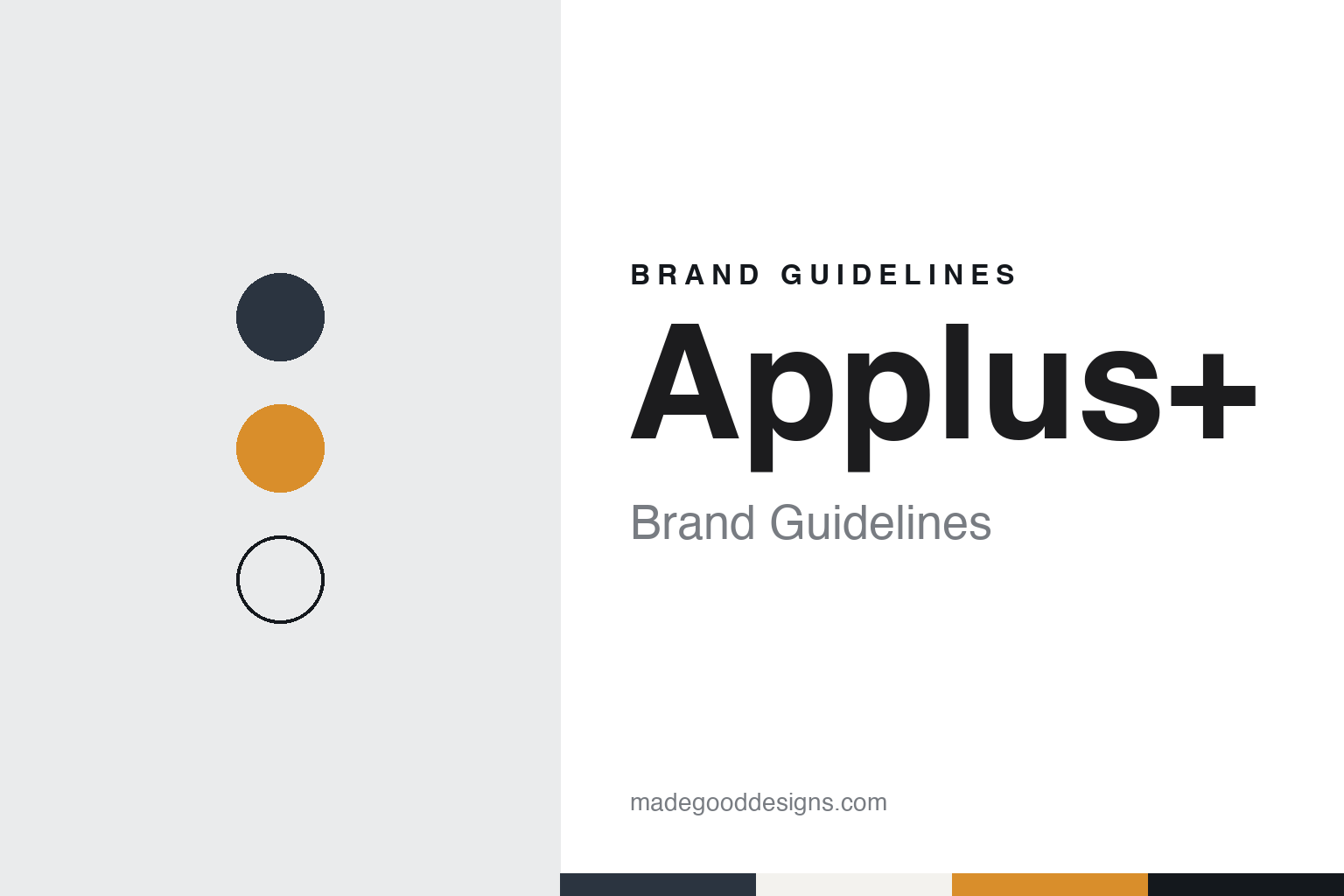
Applus+ Brand Guidelines
A Barcelona vehicle-inspection arm that became a global testing group.
Aa
Two constants: an Applus+ slate, white and amber palette and a technical sans register. Abstract homage — not an Applus+ product or mark; no logo, certificate or seal is reproduced.
AGBAR Automotive
A water group’s move into vehicle inspection.
Applus+ began in 1996 as AGBAR Automotive, a subsidiary set up by the Barcelona water group Aguas de Barcelona (Agbar) to diversify into statutory vehicle inspection, the company’s own history page says. In Spain that work is known as ITV, and it was the core of the business in its first years. Catalan Wikipedia adds that the young company entered the United States around 2000 by buying Keating, a vehicle-emissions control business.
Two Catalan public institutions then shaped the group. In 1999 it won the concession for IDIADA, the Institute for Applied Automotive Research created in 1971 at the Polytechnic University of Catalonia. The company says IDIADA is 80 per cent owned by Applus+ and 20 per cent by the Government of Catalonia, which owns the technology centre near Barcelona where IDIADA has operated under an exclusive contract since 1999. Spanish Wikipedia places that site, with its proving ground, at Santa Oliva in the province of Tarragona, and says IDIADA had been made a separate company owned by the Catalan government in 1990.
In 2003 Applus+ took in LGAI, the General Laboratory for Testing and Research, founded in Barcelona in 1907, whose laboratories work from a technology centre on the campus of the Autonomous University of Barcelona; the company says the Catalan government kept a 5 per cent stake. The company dates the global launch of the Applus+ brand to 2003, while Catalan Wikipedia gives 2002.
By then the outline of the group was in place: vehicle inspection, automotive engineering and testing, and laboratory work, gathered under one short name with a plus sign attached.
Colour
Norcontrol, RTD, Velosi and a Madrid listing.
Growth came through acquisitions. In 2004 the group bought Norcontrol, created in 1981 to serve the electricity company Unión Fenosa’s environmental and maintenance needs, and the company says this made Applus+ the largest testing, inspection and certification company in Spain. Unión Fenosa and the savings bank Caja Madrid joined Agbar as shareholders in 2004 and 2005. In 2006 it acquired the Dutch group Röntgen Technische Dienst (RTD), which the company describes as a European leader in non-destructive testing and inspection for the oil and gas sector; Catalan Wikipedia says the same year brought K1, a Finnish vehicle-inspection operator.
The private-equity firm The Carlyle Group became a shareholder in 2008, the company says, while Catalan Wikipedia gives 2007 and puts its stake above 70 per cent. Around 20 more companies followed. Among them was Velosi, founded in Malaysia in 1982 and bought in 2011 for its vendor inspection, certification, testing and technical-staff services. According to Catalan Wikipedia, the group also won Ireland’s national car-testing service, the NCT, in 2009, and bought John Davidson and Associates in Australia in 2012.
In May 2014 Applus+ listed on the Madrid Stock Exchange, and later on the Barcelona, Bilbao and Valencia exchanges. RTD, Velosi and Norcontrol were later merged into a single Energy & Industry Division, and the group’s brand-portfolio page now lists four divisions: Energy & Industry, Laboratories, Automotive and IDIADA.
The service catalogue on its website is organised by industry rather than by technique. Automotive work covers component testing, vehicle engineering, homologation and a proving ground. Certification covers management systems and products. Other headings take in construction products, electrical goods and cybersecurity; renewables, power and oil and gas; and vehicle inspection in a dozen countries, among them Spain, Ireland, Sweden and Chile.
Typography
How testing firms present themselves.
Testing, inspection and certification companies sell work that customers rarely see in full: a laboratory report, an inspector’s visit, a certificate. Their websites lean on a small set of visual and verbal devices to make that work visible. Service catalogues are often organised by industry rather than by technique, so a visitor looking for vehicle inspection, battery testing or management-system certification finds it under automotive, energy or certification headings, as the Applus+ and Element sites show.
Accreditation pages carry much of the weight. Firms list the standards their laboratories and certification bodies are accredited to, such as ISO/IEC 17025 for testing and calibration laboratories, and some publish counts of their accreditations and approvals; Element’s website, for example, gives a figure of more than 1,000. Certification marks and logos appear as the companies publish them, usually beside the scheme or standard they belong to.
Photography on these sites commonly shows people at work: technicians at laboratory benches, inspectors on site, engineers beside test rigs and proving grounds. Corporate pages add brand promises and value statements, such as the “Together beyond standards” promise Applus+ publishes, and history pages that trace how a group was assembled, often through long runs of acquisitions.
Investor and sustainability pages complete the picture. Applus+ keeps the records of its shareholder meetings online, including those of 2024, the year it left the stock market, and both Applus+ and Element publish sustainability or ESG sections beside their codes of ethics and corporate responsibility policies. The guides in this set describe each brand from those published materials and from dated independent sources; the colours and typefaces shown here are unofficial interpretations, not the companies’ own.
Aa
A technical sans for a plus-sign name. (Specimen set in IBM Plex Sans, a sans STAND-IN; NOT the Applus+ logo.)
Applus+
One name for many acquisitions.
The brand is built around the name itself. Applus+ says its brand promise is “Together beyond standards” and that three “pillars” sit behind it: global leader, trusted partner and passion for improvement. Under each pillar it lists attributes: technology, accreditations, human capability and what it calls “Global+local” for the first, and flexibility, versatility, integrity and impartiality for the second. Its brand-portfolio page says the group has acquired more than 50 companies since 2004 and uses a flexible brand-integration model, based on what it calls a value-transfer process, to carry the equity of each acquired name over to Applus+. Its website says the group employs more than 29,000 people in over 58 countries.
Ownership changed again in 2024. The investment firm Apollo made the first bid for the company, Cinco Días reported. On 30 April 2024 TDR Capital and I Squared Capital announced that their offer, made through Amber Equity Company, had won the contest after confirmation by Spain’s markets regulator, the CNMV. At an extraordinary meeting in July 2024 shareholders were asked to approve a delisting and a follow-up bid by Amber EquityCo, the company’s shareholder pages show. The CNMV suspended trading on 15 November 2024, and the Madrid, Barcelona, Bilbao and Valencia exchanges excluded Applus+ shares from trading from 27 November 2024, ten years after the listing, Cinco Días reported. At that point Amber controlled 77.7 per cent of the capital, while Apollo, with about 21.8 per cent, had chosen to keep its stake.
For a design guide, Applus+ shows how a group assembled from many acquisitions can be held together by one short name and a single symbol, with a brand promise doing the work of a slogan. Compare Bureau Veritas and SGS, two other testing, inspection and certification groups. For this guide we use a deep slate, near-black ink and a warm amber with a sans, an unofficial interpretation; no product or logo is reproduced.
Explore & save
Keep Applus+’s identity on hand — save it to a board in the Made Good inspiration library.
Applus+ identity set
Pin the Applus+ slate, white and amber palette and the technical sans register to your own board.