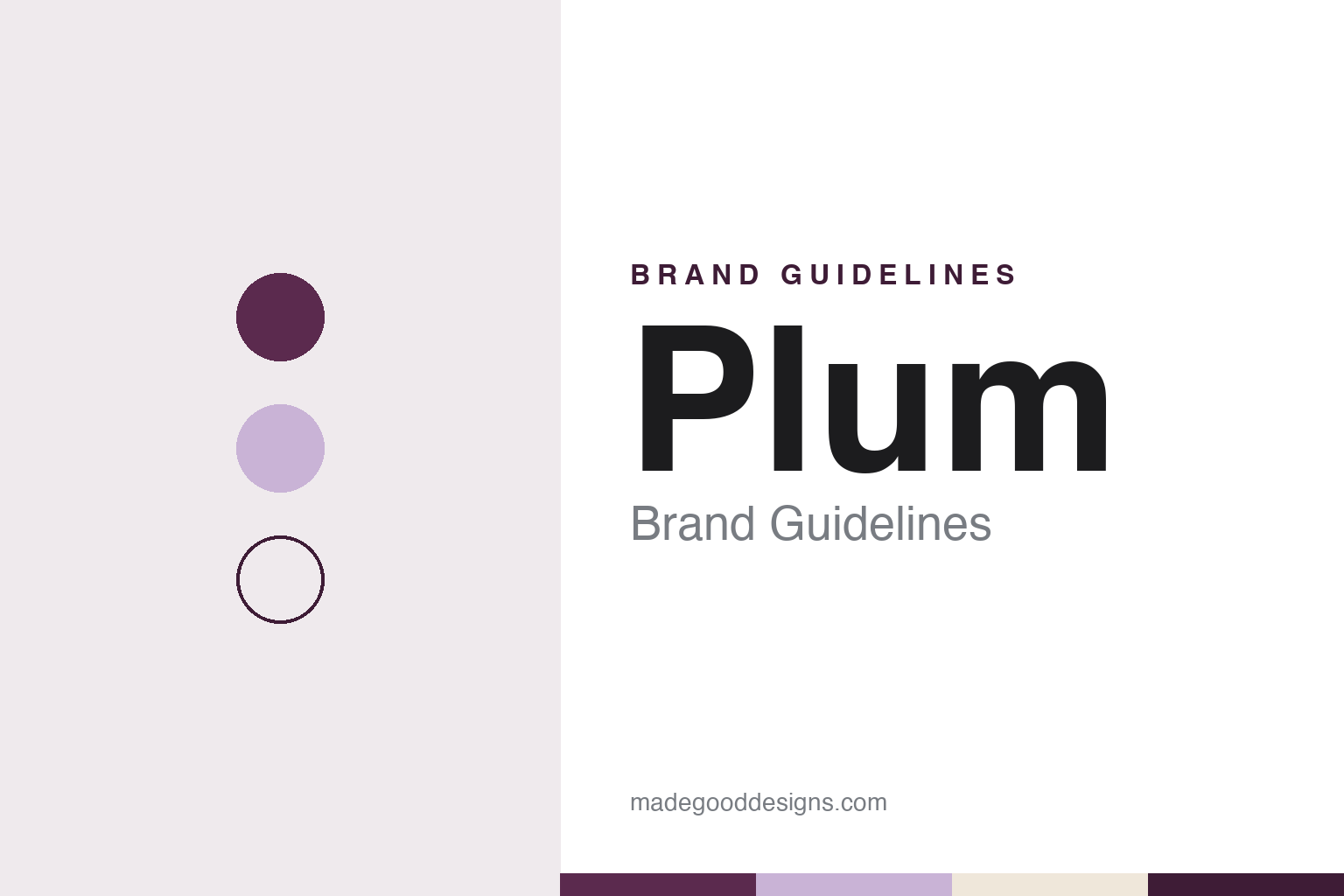
Plum Brand Guidelines
A 2013 Mumbai start-up that moved from a website into stores.
Aa
Two constants: a plum, lilac and oat palette and a soft serif register. Abstract homage — not a Plum product or mark; no pack, logo or label is reproduced.
Pureplay Skin Sciences
A founder, a company name and a brand name.
Plum was founded in 2013 by Shankar Prasad. Before starting it, Prasad studied chemical engineering at the Indian Institute of Technology in Mumbai and worked at Hindustan Unilever, McKinsey & Company and the investment firm Everstone Capital, according to the beauty-business site BeautyMatter. The brand’s own website says simply “when we began in 2013,” and The Hindu BusinessLine described Plum as Mumbai-headquartered in September 2022.
Three names are involved. The company is Pureplay Skin Sciences (India) Pvt. Ltd, which BeautyMatter and the trade site vegconomist name as the owner of the brand. The brand itself is Plum. Online it trades as Plum Goodness, the name of its website, and the Indian business press often uses that longer form too. Prasad remains founder and chief executive, ETRetail reported in June 2026.
For its first years the company ran without outside investors. In January 2019 BeautyMatter reported that Pureplay had taken investment from Unilever Ventures, the venture arm of the consumer-goods group, and that the business had been bootstrapped since its launch; Prasad described Unilever Ventures as a purely financial investor, and said the company had not set out to raise money but needed it as it grew. Unilever Ventures’ investment director told the publication that the fund had a long-term interest in digital-first beauty brands and had followed the work Prasad’s team had done in shaping Plum. Further investors followed. In December 2020 vegconomist reported that a round led by Faering Capital had included the existing investors Unilever Ventures and Trifecta Capital, and in April 2022 BeautyMatter named A91 Partners alongside Faering in a later round; a general partner at A91 pointed to the company’s focus on product and brand in a crowded field of new consumer brands.
Plum began as an online seller. The Hindu BusinessLine reported in 2022 that it had started as an online platform and had since added physical shops, and that Prasad described nine years of steady growth up to that point.
Colour
From 60 products to several hundred.
The range grew quickly. In December 2020 vegconomist reported that the Plum range already held about 60 products. By September 2022, according to The Hindu BusinessLine, it had grown to about 300 products, with around 100 of them added in that financial year alone. BeautyMatter described the portfolio in 2020 and again in 2022 as covering skin care, hair care, body care and eye make-up.
Skin care remains the core. Prasad told The Hindu BusinessLine in 2022 that it was the company’s “mother category,” followed by make-up and hair care. Pureplay also owns a second brand, Phy, a men’s grooming line, which vegconomist named in 2020 and which Prasad described to The Hindu BusinessLine two years later as the company’s men’s segment.
Labels are given here as sources state them. BeautyMatter and vegconomist both describe Plum as a vegan and cruelty-free brand, and the company says on its website that it has always been 100% vegan. The website also says Plum creates its formulas itself in its own laboratory.
Retail followed the website. In September 2022, The Hindu BusinessLine reported, Plum had eight exclusive brand outlets, a presence in about 1,200 assisted-sales stores and more than 12,000 other shops, and online delivery to around 60,000 postal codes; Prasad said a large part of the business came from smaller cities. By June 2026 the fastest-moving channel was quick commerce, the app-based delivery services that bring orders within minutes or hours. Prasad told ETRetail that the company had grown from two fulfilment centres to four, with further fulfilment locations for that channel, and had begun trying same-day delivery from its own website in large cities through outside logistics partners. He added that the company was putting money into warehousing, automation and software to manage a growing number of smaller orders across its channels.
Typography
Design and documentation.
India’s beauty and personal-care brands range from names that began inside old industrial groups to labels that started on their own websites. Lakmé was incorporated in December 1952 as a Tata company, according to Trent, the retailer that the original company became, and its brands passed to Hindustan Lever, now Hindustan Unilever, in 1998, Business Today reported. Dabur says on its corporate site that it started operations in Calcutta in 1884.
Some newer brands describe themselves as digital-first. Honasa Consumer, the owner of Mamaearth, calls itself a “digital-first house of brands” on its corporate website, and says Mamaearth began in 2016. Sugar Cosmetics sold only through its own website and a marketplace partner until 2017, Inc42 reported in 2020, before moving into general trade, large-format stores in malls and its own shops.
Shops and counters remain part of the picture. Sugar’s chief executive told the trade magazine Retail4Growth in 2023 that the brand used exclusive outlets, shop-in-shop counters and multi-brand stores, and that it changes its visual merchandising every year. Lakmé has tied its name to a runway since 2000, when the Fashion Design Council of India and IMG brought it in as title sponsor of a new fashion week, The Tribune reported in 2025.
This guide sets out what can be checked about each brand: when and where it began, who founded and owns it, which named product lines and campaigns it publishes, and how it presents itself in packs, logos and stores. Where a fact rests only on a company’s own pages, the text says so, and the palettes and typefaces shown are an unofficial interpretation rather than any brand’s own.
Aa
A soft serif for a warm, considered register. (Specimen set in Fraunces, a serif STAND-IN; NOT the Plum logo.)
Plum
A fruit name, a longer web name and a community word.
The brand name is a single short word, Plum, and the longer form, Plum Goodness, carries the brand online. The company calls its customers “Plumsters” on its website, where it thanks them for feedback, letters and photographs of their own shelves. The same pages speak of formulating and testing as the work the company enjoys, and present the business in the first person, as “we.”
That voice sits alongside a corporate structure that most shoppers never see. Pureplay Skin Sciences is the name used in investment reports, while Plum and Phy are the brand names sold to shoppers. Investors such as Unilever Ventures, Faering Capital and A91 Partners appear in the business press, not in the brand’s own storytelling, which centres on the product range and the people who buy it.
The move from a website into exclusive outlets, other retailers and, later, quick-commerce apps also widened the places where the brand has to be read. In 2022 Plum’s range was sold online across tens of thousands of postal codes and in thousands of shops, according to The Hindu BusinessLine; by 2026 a growing share of orders arrived through delivery apps, Prasad told ETRetail.
For a design guide, Plum shows how a founder-led Indian beauty brand of 2013 kept one short name while moving from its own website into exclusive outlets and delivery apps. Compare Mamaearth, another Indian beauty brand that began online, and Sugar Cosmetics. For this guide we use a ripe plum, a soft lilac and an oat cream with a serif, an unofficial interpretation; no product or logo is reproduced.
Explore & save
Keep Plum’s identity on hand — save it to a board in the Made Good inspiration library.
Plum identity set
Pin the Plum plum, lilac and oat palette and the soft serif register to your own board.
Source & notes
Frequently Asked Questions
What font can I use to match the Plum look?
This guide describes Plum’s type as “A soft serif for a warm, considered register”. Its type specimen is set in Fraunces from Google Fonts as a stand-in; Fraunces is not Plum’s own lettering.
What colours are in the Plum palette?
This guide’s Plum palette is Ripe plum #5B2A4E, Dark damson #3E1C36, Soft lilac #C9B3D6, Oat cream #EFE7DA and Tea-leaf green #7C9A6A. The tones are the guide’s own unofficial interpretation, not official Plum hex codes.
When was Plum founded?
Plum was founded in 2013, in Mumbai, India. This guide lists Pureplay Skin Sciences (India) Pvt. Ltd as its owner.
Who founded Plum?
Plum was founded by Shankar Prasad in 2013. This guide lists Pureplay Skin Sciences (India) Pvt. Ltd as its owner.
Who owns Plum?
Plum is owned by Pureplay Skin Sciences (India) Pvt. Ltd.