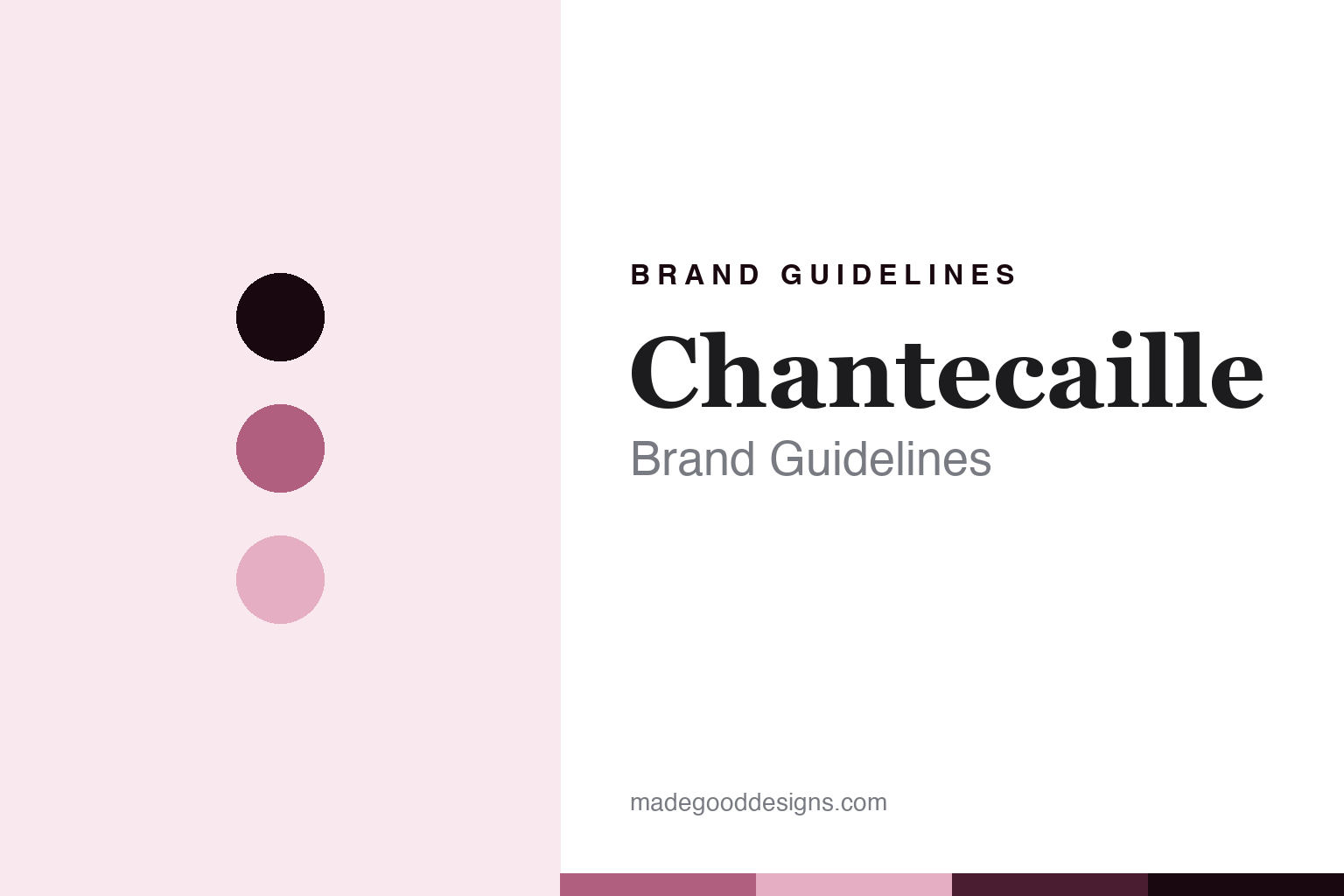
Chantecaille Brand Guidelines
Botanical luxury with a conservation cause.
Aa
Two constants: a rose-mauve palette and a conservation-serif register. Abstract homage — not a Chantecaille product, mark, or conservation artwork.
Botanical luxury with a conservation cause
Chantecaille is the botanical-luxury beauty house, founded by Sylvie Chantecaille, now owned by Beiersdorf.
Chantecaille brings the round a cause — the botanical-luxury beauty house, founded by the beauty veteran Sylvie Chantecaille, known for tying prestige collections to wildlife conservation, and now owned by the German group Beiersdorf. Chantecaille makes luxury skincare and makeup, and its answer to a round about the high shelf is beauty with impact: botanical formulas, a gold recovery serum, and collections whose sales support conservation causes. A brand, botanical.
Its identity is botanical luxury with a conservation cause. Chantecaille’s botanical luxury, its conservation collections and its Beiersdorf ownership are the story here. A brand, botanical. Botanical luxury with a conservation cause.
(Honest notes, so the story stays precise, and the claims stay the brand’s own. Chantecaille, at chantecaille.com, makes luxury skincare, makeup and fragrance, with signatures such as a Future Skin foundation, a Bio Lifting line and a gold recovery serum, under a botanical-luxury framing, and we report its clean, pure-botanical and efficacy language as the brand’s own marketing, not established fact. It was founded in 1998 by Sylvie Chantecaille, a beauty-industry veteran with an earlier career at a large beauty company, based in New York, and it is family-run with her daughter Olivia and son Philippe, whose exact titles we present as reported. On ownership, a star theme of this round, it is owned by Beiersdorf, the German group behind Nivea and La Prairie, which lists Chantecaille among its brands and is reported to have acquired it around July 2022, with the founding family staying creatively involved, so it is not independent. On where it is made, a theme of this round, a country of manufacture is not documented, so we do not assert one. Its conservation collections support wildlife causes, which is a genuine signature; the animal artwork on those collections is protected IP we describe but do not reproduce. Its name and packaging are IP we describe but do not reproduce; there is no official brand hex; these tones are an unofficial interpretation.)
Colour
Chantecaille lives in a rose mauve. Click a swatch to copy the hex.
Chantecaille’s identity is botanical, luxurious and purposeful — a rose mauve, an ink, a petal, a deep plum, and a paper. The palette leans rose mauve and petal: a soft, floral register that nods to a botanical luxury and a rose-forward signature rather than a loud palette. It signals botanical luxury. The honest caveat: with no published brand hex, these values are an original, unofficial interpretation, not first-party colours.
The lesson is a rose mauve signals a botanical, luxurious identity. Chantecaille’s world is a considered, made object. For designers, it is a reminder that a rose mauve and a soft petal can carry a beauty brand — the tone of botanical luxury. Because these tones can fail as small text, keep type dark and let the colour live in the accents, palette and band. The takeaways: tie it to a cause; keep it botanical; be honest about ownership; and treat any single hex as unofficial.
Typography
The register is a conservation serif — botanical, refined, purposeful.
Chantecaille’s identity carries a botanical, refined, purposeful spirit — a beauty house with a cause, not a fashion. A conservation serif captures the mood: refined, botanical and confident, the register of a purposeful luxury. Set in a rose-mauve palette, the conservation serif feels botanical and purposeful — exactly the personality Chantecaille carries. It is a cause rather than a logo, mirroring a botanical and a serum. (Chantecaille’s real packaging and conservation artwork are things we describe but do not reproduce, and the exact typeface is not ours to use.) Because it is not ours to use, the honest description is “a conservation-serif beauty,” shown here in a stand-in. The type behaves like the brand: botanical, refined and purposeful.
Aa
A conservation-serif beauty — botanical and purposeful. (Specimen set in Playfair Display, a conservation-serif STAND-IN; NOT the Chantecaille logo or its conservation artwork.)
The high shelf
Chantecaille stands for botanical luxury with a conservation cause.
Chantecaille brings the round a cause. A rose-mauve palette, a conservation serif and a purpose make one thing — botanical luxury with a conservation cause — the whole identity: botanical, luxurious and purposeful. The botanical luxury is the substance, and the conservation cause is the meaning. The point is a prestige beauty whose collections support wildlife causes, from a founder with a long beauty career, now inside a conglomerate.
Put to work, the identity is a cause told straight, as design. A maker in this spirit would tie it to a cause, keep it botanical, and be honest about ownership. A reader in this spirit would keep the facts right: Chantecaille makes luxury skincare and makeup, with a gold recovery serum and a Bio Lifting line among the signatures; it was founded in 1998 by Sylvie Chantecaille and is family-run with Olivia and Philippe; it is owned by Beiersdorf, the German group, reported acquired around July 2022, so it is not independent; and a country of manufacture is undocumented. Chantecaille anchors the round’s who-owns thread from the conglomerate side, with Augustinus Bader, against Sisley’s independence. The honest editorial moves are to date it to 1998, to name Sylvie Chantecaille, to state the Beiersdorf ownership, to say the making is undocumented, and to reproduce none of the conservation artwork. The lesson Chantecaille teaches is that a cause can be a whole identity, and stating the ownership keeps it credible.
For designers and brand-builders, Chantecaille continues the high shelf: tie it to a cause — and be honest about ownership. The lessons: pair a luxury with a genuine cause, like conservation; build a botanical identity; state a conglomerate ownership plainly; report clean and botanical language as your own; and never reproduce packaging or cause-collection artwork. It is also a reminder to stay precise: Chantecaille is the botanical-luxury beauty house, founded by Sylvie Chantecaille, now owned by Beiersdorf — with the palette here an unofficial interpretation. Read that way, Chantecaille is less a bottle than a cause: botanical luxury, with a purpose. The lesson for a brand is that a cause and honest ownership reinforce each other, and stating the Beiersdorf ownership keeps the story earned. Chantecaille made botanical-luxury-with-a-conservation-cause the identity — proof that a cause can define a brand.
Explore & save
Keep Chantecaille’s identity on hand — save it to a board in the Made Good inspiration library.
Chantecaille identity set
Pin the rose-mauve palette and the conservation-serif register to your own board.