Akulaku Brand Guidelines
The Jakarta pay-later lender that took control of a bank.
Aa
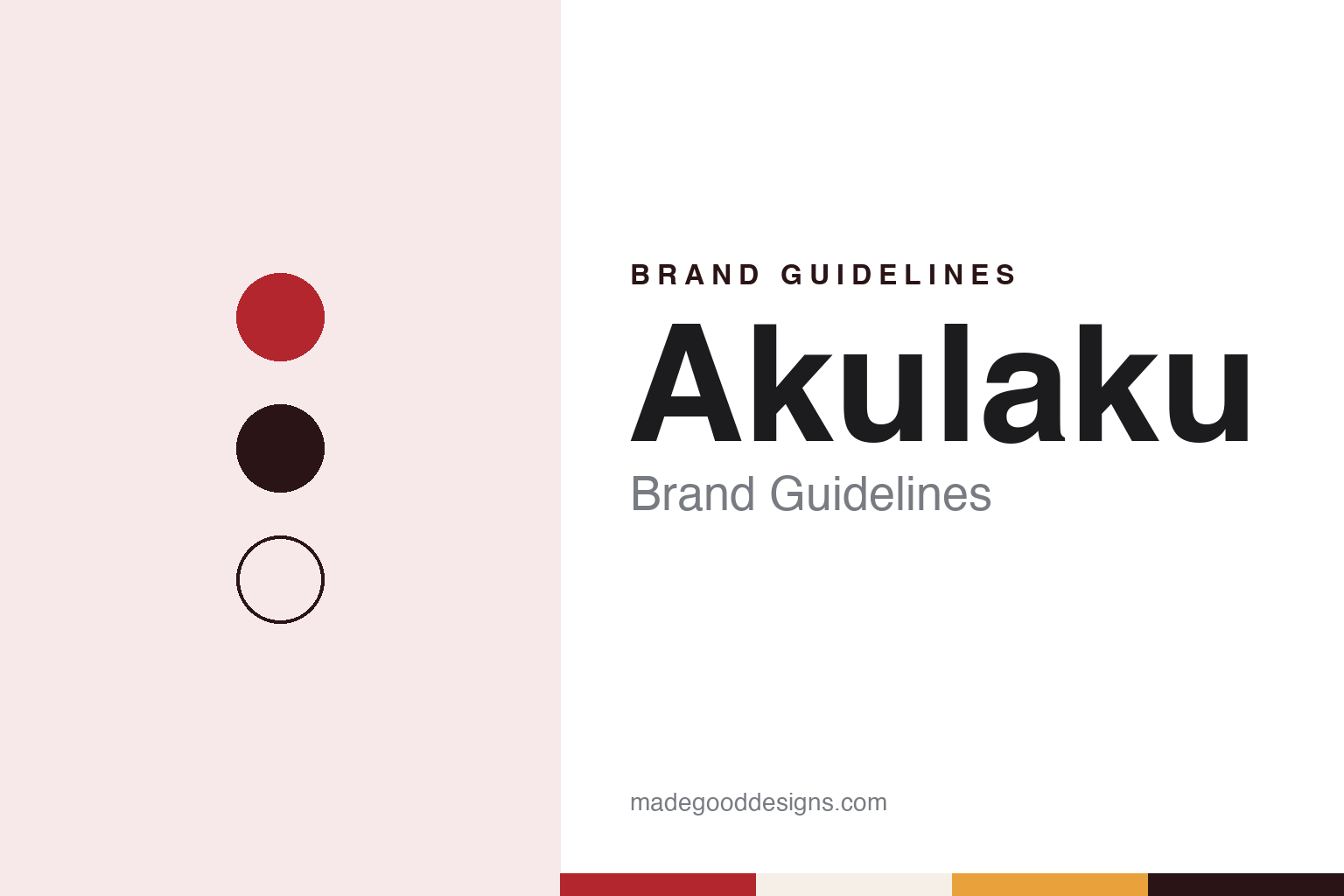
Two constants: a brick red, clove and warm white palette and a friendly geometric sans register. Abstract homage — not an Akulaku product or mark; no app screen, logo or card is reproduced.
From Silvrr
A remittance service that turned into a lender.
Akulaku is a consumer-finance company based in Jakarta, and its story starts before its name. According to Indonesian Wikipedia, the business began operating in 2014 as Silvrr, a cross-border money-transfer service for domestic workers in Hong Kong, before opening in Indonesia and the Philippines with online credit and e-commerce. The same article dates the official founding of Akulaku to 2016, names William Li and Gorden Hu as its founders, and says that 2016 was the year the business turned itself into a financial-technology company.
Sources give both years. TechCrunch in December 2022 and Fintech Singapore in February 2022 described Akulaku as founded in 2016, while Fintech Singapore wrote in March 2024 that it was established in 2014. Read together, the earlier year belongs to Silvrr and the later one to Akulaku as a lending brand. The old name has not gone away: on Akulaku’s Indonesian website, the company that runs its marketplace is still called PT Akulaku Silvrr Indonesia.
William Li has led the company as chief executive. When Akulaku announced a strategic investment from Thailand’s Siam Commercial Bank in February 2022, Fintech Singapore quoted him saying that the founders set up Akulaku “to meet the daily financial needs of underserved customers in emerging markets.” A month later, Singapore’s Business Times called Akulaku a “fintech unicorn” and described it as an Indonesia-based buy now, pay later and consumer-financing platform working in Indonesia, the Philippines and Thailand.
Akulaku’s own website, read in November 2026, sets out the group as three businesses: a peer-to-peer lending company, a marketplace company and a multifinance company, PT Akulaku Finance Indonesia. The site lists Indonesia, the Philippines, Vietnam and Malaysia as its markets, and offers Indonesian and English versions.
Colour
PayLater, a marketplace and a bank.
The product at the centre is Akulaku PayLater, which Fintech Singapore reported was launched in 2016. It lets shoppers spread the cost of a purchase over instalments, and Akulaku also runs its own marketplace where sellers open shops and customers buy on instalments; the company says more than 90,000 sellers have sold through it. In September 2022 Alipay+, the cross-border payments service from Ant Group, added Akulaku PayLater to its supported payment methods so that Indonesian customers could use it at Alipay+ merchants, Fintech Singapore reported. TechCrunch listed the wider range in December 2022: a virtual credit card, an instalment shopping platform, an investment platform and a neobank.
The neobank grew out of an acquisition. Akulaku’s route into banking was Bank Yudha Bhakti, a small Jakarta lender that, Indonesian Wikipedia says, began operating in January 1990 and listed on the Indonesia Stock Exchange in January 2015. The article records that Akulaku bought a 5.2 percent stake from the shareholder Gozco on 21 March 2019, reached 14.24 percent in April and 24.08 percent by September 2019 through a rights issue.
On 30 July 2020 the bank’s shareholders approved a new name, PT Bank Neo Commerce, which took effect on 7 September 2020. Indonesian Wikipedia explains the name as a pairing of “neo,” for new, with “commerce,” and puts Akulaku’s holding after the change at 24.98 percent, ahead of the other main shareholders, with Akulaku then becoming the controlling shareholder. The bank soft-launched its app as Neo+ at the end of March 2021; it was later renamed Neobank. In 2024 Fintech Singapore described Akulaku’s digital banking services as offered in partnership with Bank Neo Commerce, alongside virtual credit cards and wealth-management products.
Typography
How pay-later brands present themselves.
Buy now, pay later providers sell a way of paying rather than a product, so most of their design work happens on other companies’ pages. A shopper meets the brand as a small wordmark beside a price, a badge in a row of card logos, or a button at the end of a checkout. Many of these marks are short, rounded names set in bright mint, pink, purple or plain black, and several providers publish kits for merchants with approved logos, lockups and banners in light and dark versions.
The second surface is the app. Providers show purchases as instalment schedules: a row of dates and amounts, a progress marker for payments made, and reminders of what is due next. Many also run shopping directories of participating merchants, with categories, deals and store pages, which turn the payment brand into a place to browse.
The third surface is explanation. Providers typically keep a page on how payments work, usually a sequence of three or four steps, and most carry dense small print: who the lender is, which licences apply, what fees and rates can be charged and where to go for help with hardship. In several markets these disclosures are set by regulators, and merchant kits often spell out which phrases need a full disclaimer and which claims may not be made at all.
The last surface is the investor page. Several providers are listed companies, in Sydney, New York or both, and publish results, presentations and announcements alongside their consumer sites. This guide sets out what can be checked about each provider — who founded it, who owns it, where it operates and how regulators have treated it — and gives company statements as the company’s own.
Aa
A friendly geometric sans — the register of a consumer finance app. (Specimen set in Plus Jakarta Sans, a sans STAND-IN; NOT the Akulaku logo.)
Akulaku
Banks as backers, and a regulator’s pause.
Akulaku’s investors include several large financial groups. TechCrunch named Ant Group among its backers in December 2022, when it reported a strategic investment from Japan’s Mitsubishi UFJ Financial Group, under which Akulaku agreed to work with MUFG companies in Southeast Asia on technology, product development, financing and distribution. That followed the Siam Commercial Bank investment announced in February 2022. TechCrunch also said Akulaku then operated in the Philippines and Malaysia as well as Indonesia.
The company has also been through a regulatory pause. In October 2023 Indonesia’s Financial Services Authority, OJK, restricted the pay-later business of its multifinance arm, Fintech Singapore reported on 26 October 2023, because Akulaku had not carried out supervisory actions OJK had requested, namely limits on financing through the buy now, pay later scheme. The restriction barred new pay-later business, pay-later financing to existing customers and financing through channelling or joint-financing schemes, and OJK ordered the company to carry out the corrective plan it had submitted on 5 October 2023.
The restriction lasted about four months. On 5 March 2024 Fintech Singapore reported, citing a company statement to Tech in Asia, that OJK had lifted it, allowing Akulaku PayLater to resume financing as before, and that Akulaku had committed to follow the regulator’s rules closely.
For a design guide, Akulaku shows how a pay-later brand can stretch from a checkout option to a marketplace and a bank while keeping one name and one app at the front. Compare Kredivo, another Jakarta pay-later company, and Atome, a Singapore pay-later brand. For this guide we use a brick red, a deep clove brown and a warm white with a sans, an unofficial interpretation; no product or logo is reproduced.
Explore & save
Keep Akulaku’s identity on hand — save it to a board in the Made Good inspiration library.
Akulaku identity set
Pin the Akulaku brick red, clove and warm white palette and the friendly geometric sans register to your own board.