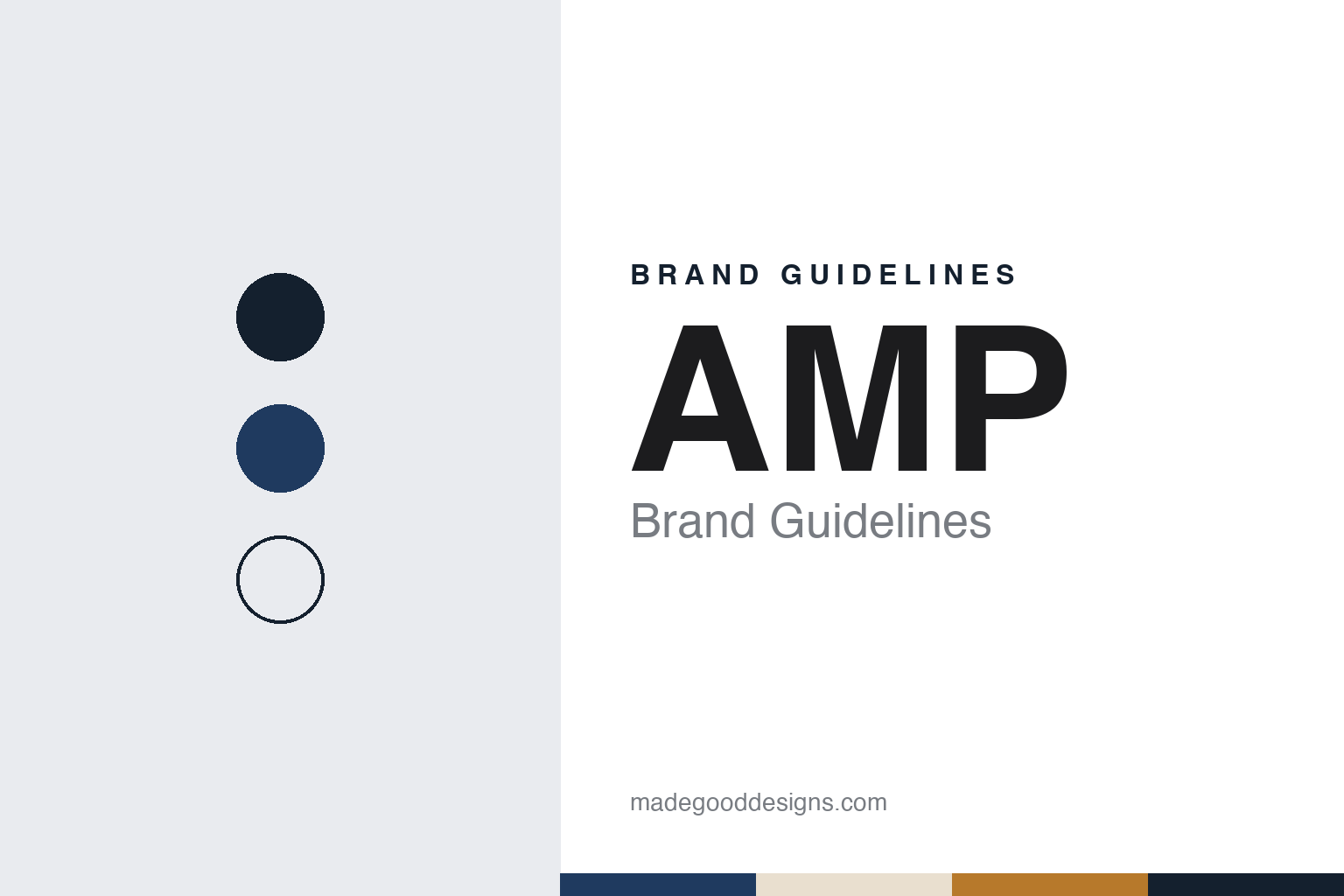
AMP Brand Guidelines
The 1849 mutual society that became a listed Sydney wealth group.
Aa
Two constants: a harbour blue, sandstone and ochre palette and a civic serif register. Abstract homage — not an AMP product or mark; no logo, statue or building is reproduced.
Australian Mutual Provident
A mutual society above a grocer’s shop.
AMP began as the Australian Mutual Provident Society in Sydney. On 31 August 1848, the Australian National University’s Noel Butlin Archives Centre says in its exhibition 175 Years of AMP, a group of men met to plan a society that would offer life assurance to Australians: the businessmen Thomas Holt Jnr and Thomas Sutcliffe Mort, the solicitors Charles Lowe and William Perry, the lawyer Archibald Michie and the Reverend W.H. Walsh, who drafted the prospectus. The archive calls Holt “the prime mover in the enterprise.” The society’s rules were registered on 28 December 1848 under the Friendly Societies’ Act of New South Wales, and Michie became its first chairman.
As a mutual, AMP raised no capital and had no shareholders: it belonged to its members, the policyholders. It opened for business on 1 January 1849 in an upstairs room above a grocer’s shop on George Street, and at first the office opened for only an hour or two a day. On 25 February 1849 it issued its first policy, to its secretary William Perry; the ANU Archives describes it as the first policy issued by any Australian insurance company. The society wrote 45 policies in its first year and reached 100 by April 1851, the archive says, working through part-time local agents across New South Wales, Queensland and Victoria, and from the mid-1850s in Auckland and Hobart.
AMP stayed in Sydney as it grew. It built a head office on Pitt Street, completed in 1878 and enlarged in the early 1900s, and in the 1950s bought the old Mort & Co wool store at Circular Quay, a business founded by Mort, one of its own founders, to clear the site for a new head office. The war years are part of the record too: the archive says AMP let staff enlist in the First World War and keep their jobs, insured enlisted men with a surcharge, and from 26 September 1939 added a war clause to new policies, while its London office ran on a skeleton staff during the Second World War.
Colour
A skyscraper, a statue and a slogan.
For much of its history AMP’s public face was its architecture. The Sydney Cove Building, its head office at Circular Quay, was designed under Graham Thorp of Peddle Thorp & Walker in the Post-War International style, the ANU Archives says, on an H-shaped plan with curved faces so that no side looked like a back door, and with column-free office floors. The archive calls it the tallest building in Australia at the time; it opened on 23 February 1962. The neighbouring AMP Centre on Bridge Street followed in 1976, and its site now holds Quay Quarter Tower, co-designed by the Danish architects 3XN and the Australian practice BVN as five shifting glass volumes stacked on one another.
English Wikipedia notes another long-running emblem: many older AMP buildings carry the “Amicus” statue group, a figure of Peace and Plenty holding a palm branch and a cornucopia, a male figure of Labour, and a mother and child, above the society’s Latin motto Amicus certus in re incerta, “a certain friend in uncertain times.” The same article says the society’s highest-achieving advisers were admitted to an “Amicus” membership. In the 1990s, the archive says, AMP chose the slogan “AMP Works For Me.” Today its website signs off with “Whatever wealthy you want,” and the company gives its purpose as “helping people create their tomorrow.”
The work behind the name changed as well. AMP had supported superannuation for its own staff as early as the 1880s, the archive says, and it gained from the Superannuation Guarantee of 1992, which made employer contributions compulsory. In 1991 it formed a partnership with Westpac that was later unwound. The company’s own timeline says AMP Bank opened for business in 1998; English Wikipedia dates the launch of the online bank to 1999.
Typography
Design and documentation.
Australian superannuation funds and wealth firms present themselves to members as much as to the public, and a fund’s identity has to work inside an account as well as in an advertisement: on a login screen, in an app, on a yearly statement and in an annual report. The funds in this guide tend to use friendly sans-serif wordmarks, and their palettes often reach for teal, purple, orange and navy.
Their language is member-first. Industry funds describe themselves as run for members, and many carry their origins in their names: a trade, a sector, a state or an employer. Mergers have blurred those names over time, and several funds now carry names that no longer point to a single industry or state. Their websites often say which workers a fund was set up for, even after it has opened to everyone.
The pictures follow the same idea. Fund websites and reports tend to show members at work and at home in everyday settings rather than buildings or products. The pages themselves are practical: what super is, how to join or combine accounts, retirement income, insurance in super, and member tools such as calculators and retirement planners, with annual reports and governance pages for those who look further.
This guide sets out what can be checked about each fund or firm: when it was founded, how it merged, who owns or runs it, and how regulators have dealt with it, with figures for members and assets given only as a dated source states them. The palettes and typefaces shown are unofficial interpretations, and no logo or mark is reproduced.
Aa
A civic serif for a 175-year-old name. (Specimen set in Source Serif 4, a serif STAND-IN; NOT the AMP logo.)
AMP Limited
From mutual society to listed company.
The largest change came in the late 1990s. The board began to study demutualisation in 1994, the ANU Archives says; after a special bill passed the New South Wales Parliament in 1997, policyholders voted in November 1997 to convert, and each was offered shares, with a minimum of 100 for smaller policyholders. AMP Limited listed on the Australian and New Zealand stock exchanges in 1998. English Wikipedia says AMP demerged its British operations as the Henderson Group in 2003 and merged with the Australian and New Zealand business of AXA Asia Pacific, the former National Mutual, with the combined group operating from 31 March 2011.
At the 2018 hearings of the Royal Commission into Misconduct in the Banking, Superannuation and Financial Services Industry, evidence emerged that AMP had charged clients for advice that was not provided, English Wikipedia says, and its chief executive and chair resigned in April 2018. In July 2021 ASIC began civil penalty proceedings in the Federal Court against six AMP companies over fees charged for no service on superannuation accounts, and in September 2022 the court ordered a penalty, ABC News reported on 20 September 2022. AMP said it had become aware of the issues in 2018, reported them to ASIC, apologised and completed the remediation of affected members.
The group has since narrowed its focus. English Wikipedia says it completed the sale of its life insurance business, AMP Life, to Resolution Life in July 2020, and that DigitalBridge completed its purchase of AMP Capital’s international infrastructure equity business in February 2023. On 2 December 2024 AMP completed a deal under which Entireti took over its advice licensees, with AMP keeping a 30% stake, the company said. Its businesses today include AMP Bank, with AMP Bank GO launched in 2025, the North platform, AMP Super and a New Zealand wealth arm, and it is headquartered in Sydney.
For a design guide, AMP shows how a brand can carry 175 years of civic architecture, statuary and slogans in a three-letter name. Compare Westpac, its partner of the early 1990s, and Colonial First State, another Sydney wealth business with a mutual past. For this guide we use a deep harbour blue, sandstone and an ochre accent with a serif, an unofficial interpretation; no product or logo is reproduced.
Explore & save
Keep AMP’s identity on hand — save it to a board in the Made Good inspiration library.
AMP identity set
Pin the AMP harbour blue, sandstone and ochre palette and the civic serif register to your own board.