Antoine Bourdelle is remembered for a particular kind of strength: figures and heads in which every mass seems to have been decided in advance, then roughened by the hand so that light can catch it. He trained in Toulouse and Paris, spent years in Rodin’s orbit, and went on to make war memorials, equestrian monuments, theatre reliefs and a long series of portraits of Beethoven. A designer looking at his work can learn about structure, silhouette and surface, and about how to scale an idea up without losing its tension.
The four images below are works that the Cleveland Museum of Art and the Art Institute of Chicago flag as CC0 or public domain; other works are described in text only. Browse the MGD museum inspiration collection for more material cleared for reuse.
Who was Antoine Bourdelle?
The Cleveland Museum of Art and the Art Institute of Chicago both give his years as 1861–1929. Accounts from the Musée Bourdelle in Paris and from Britannica place his birth in Montauban, in southwestern France, as the son of a cabinetmaker. He studied at the École des Beaux-Arts in Toulouse and then in Paris, where he entered the studio of Alexandre Falguière. Cleveland’s catalogue describes him as an assistant to Rodin, who greatly admired the younger sculptor’s work. The Musée Bourdelle account says he joined Rodin’s studio in September 1893 and worked there for about fifteen years; another summary gives 1908 as the year he left the workshop.
The Musée Bourdelle in Paris, which the City of Paris runs, is devoted to his work. He taught at the Académie de la Grande Chaumière from 1909 until his death, according to the museum. It names students including Alberto Giacometti, Germaine Richier, Maria Helena Vieira da Silva and Otto Gutfreund.
Key works and a short career outline
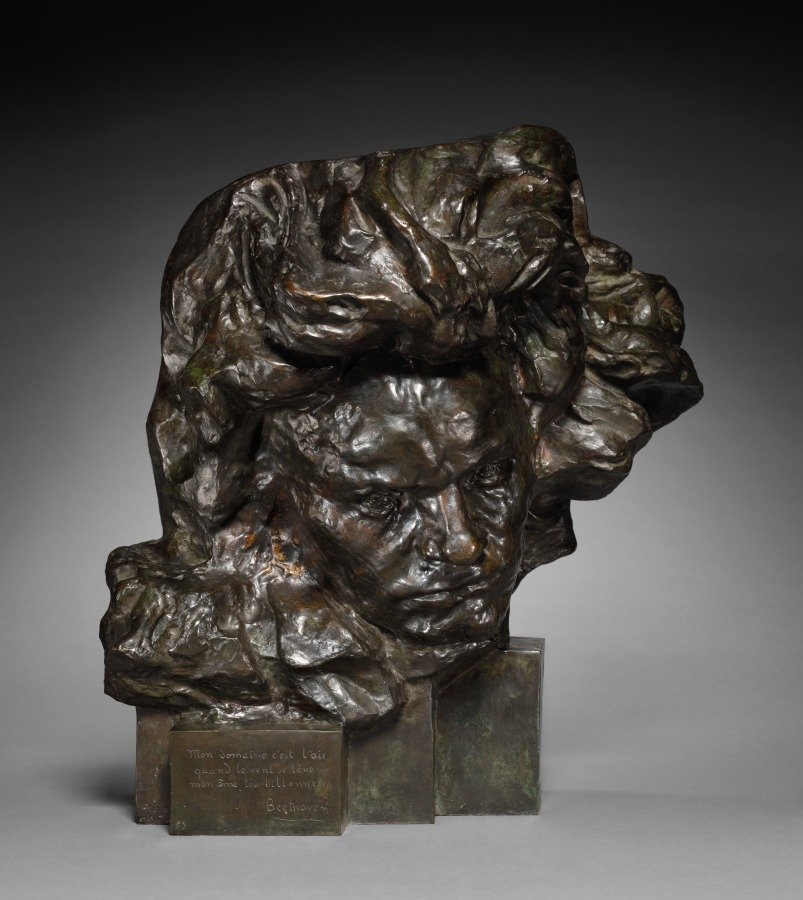
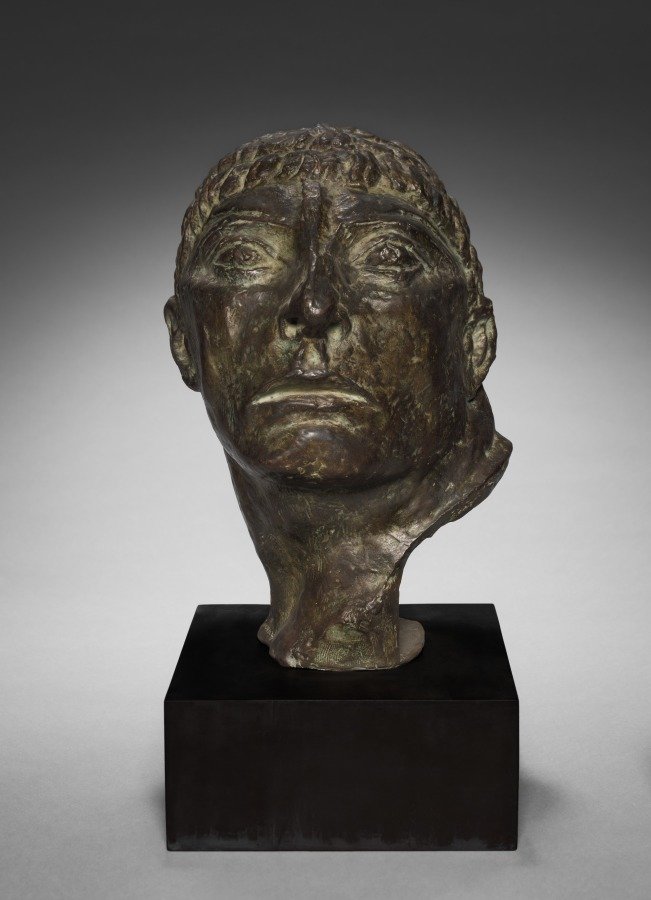
- 1888–1891, Beethoven. Cleveland’s catalogue says Bourdelle made the first of his Beethoven portraits in 1888. Its own Head of Beethoven is dated 1891, is signed on the left side and carries a lettered quotation from the composer on the front: “My domain is the air; when the wind rises my soul swirls.” The foundry mark on the right side names J. Petermann of Brussels.
- 1895–1902, Montauban war memorial. The Musée Bourdelle’s account says he won the competition for the monument to the combatants and defenders of Tarn-et-Garonne in 1895 and that it was inaugurated in Montauban on 14 September 1902.
- 1909, Herakles the Archer. The Met dates its gilt bronze to 1909 and records it as a founder’s cast by Alexis Rudier; Cleveland’s bronze is dated 1908–9. The Musée Bourdelle dates the work 1906–1909 and says it was shown at the Société Nationale des Beaux-Arts in 1910. Per the Met, the first cast of the monumental version was bought by Prince Eugen of Sweden for his palace in Stockholm, and Ian Wardropper, in the Met’s catalogue note, points to Bourdelle’s debt to Classical Greek art in both subject and style.
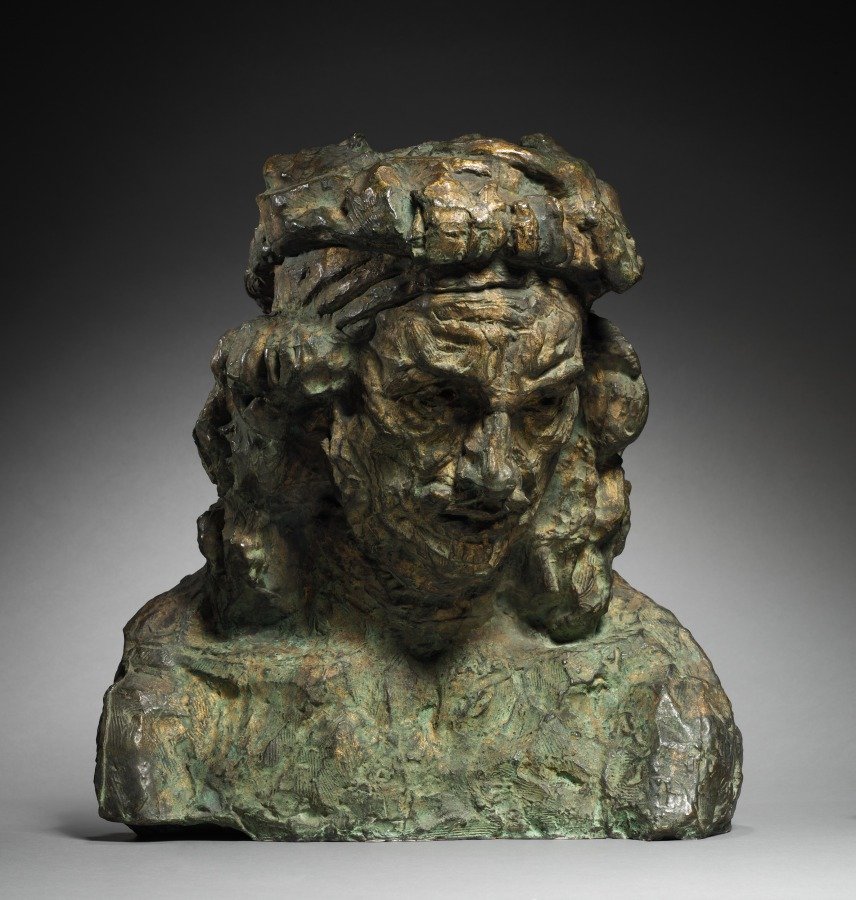
- 1909–1910. Cleveland holds Mask of Hercules (1909), The End of Rembrandt (1909) and Rodin Working on “The Gates of Hell” (1910).
- 1910–1913, Théâtre des Champs-Élysées. The Musée Bourdelle account credits him with the façade reliefs and interior decoration of the theatre, inaugurated in 1913.
- Alvear monument, Buenos Aires. Accounts differ on dates. One source says the Argentine government commissioned the equestrian monument in 1913; the standing position in Plaza Julio de Caro in Recoleta is dated to 12 October 1926, though another source gives 1925.
- 1917–1927, later works. The Met dates its tinted plaster Irene Millet to 1917 and its Alsace stone Virgin of the Offering to 1920–25; the Art Institute of Chicago dates its bronze La Pythie Philippise to 1927. None is flagged public domain, so they are described in text only.
What to look at in an Antoine Bourdelle sculpture
Planes before details. Look at the Head of Beethoven and notice how the hair is not drawn strand by strand but pushed into a few large, wind-swept masses that frame the face. Cleveland’s catalogue describes the portrait as built from powerful billowing shapes.
One axis. In Herakles the Archer, a kneeling archer stretches a bow along a single sweeping curve, and a rock mass on the right closes the composition into a shape almost like a frame. The figure is nude in the classical manner; what matters for a designer is the diagonal thrust of the arms and the leg that braces against the stone. The whole work is organised around that tension line rather than around anatomy.
The base as part of the design. In the Cleveland Beethoven the head sits on a stepped base, and the quotation is lettered on a plate at the front, so plinth and text work together.
A roughened, worked surface. The End of Rembrandt shows this clearly. The bust is covered with short, faceted cuts and pressed ridges that catch light at different angles, and its green and gold patina sits more heavily in the hollows. The head reads as old and tired, with no smooth finish to soften it.
Colour and patina, measured from the scans
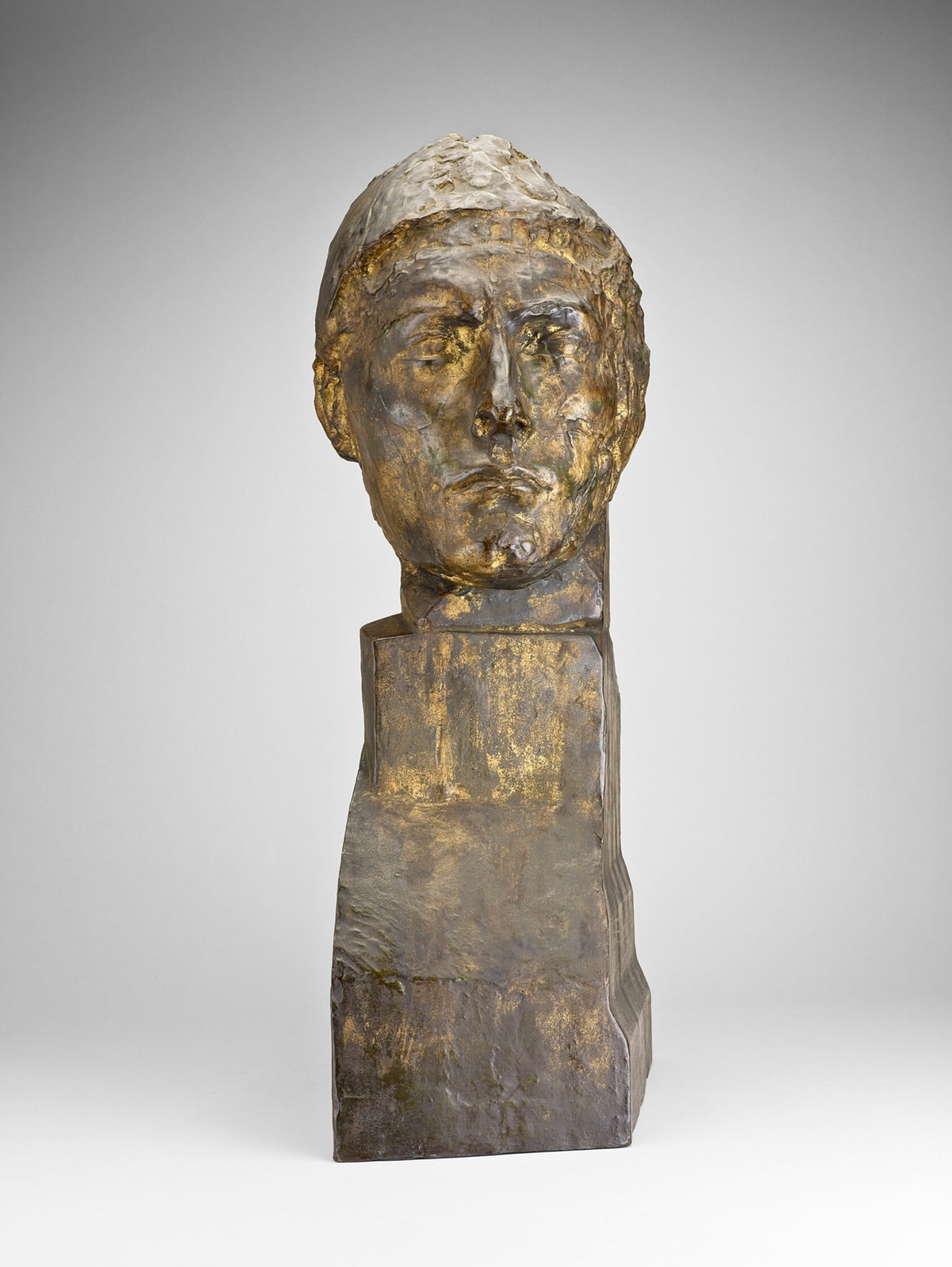
Bourdelle worked in form, not colour, but the finishes of his bronzes give designers a ready-made palette. The values below are measured from the museum scans of these particular casts and are not original pigments. In Cleveland’s image of the Head of Beethoven, the darkest areas of the bronze come out near #181614 and #35312b, with a warmer brown near #5e5a54 in the mid-tones. In the image of The End of Rembrandt, the patina measures around #646352 and #8e8e7e, an olive green-grey that lifts the dark bronze. The Art Institute of Chicago’s Head of Apollo measures around #7d7160 in its warmer brown tones, set against a pale grey studio background near #cfcfcf.
Near-black, olive and warm brown can carry a restrained poster on their own. You can sample these colours yourself with the image colour picker and build variations with the colour palette generator.
Technique: modelling, enlargement and casting
Museum records show how many stages sat between a model and a finished bronze. The Met’s Irene Millet is an original plaster, tinted and polychromed, not a bronze. The Met’s Beethoven was probably modelled in 1902 and executed in 1926, and its Antonin Bunand is dated as modelled in 1889 and executed in 1929. Cleveland’s Mask of Hercules is inscribed with the name of the founder E. Godard of Paris.
So a date on a Bourdelle bronze may refer to the design or to the casting. Record the museum’s date, the founder’s mark and the object number rather than assuming one date covers everything.
Antoine Bourdelle and Rodin
Any account of Bourdelle has to mention Auguste Rodin. Cleveland’s Rodin Working on “The Gates of Hell” (1910) shows the older sculptor standing at a relief panel, a bearded figure whose heavy clothing and set shoulders are modelled in the same broad, faceted way as the rest of Bourdelle’s work. Bourdelle’s mature work leans towards stricter architecture, with bases, axes and planes set before surface detail. A sibling guide, Medardo Rosso, covers a contemporary who pushed the surface towards blur and light.
How designers can borrow from Antoine Bourdelle
- Decide the axis first. Draw one line, a diagonal or a curve, that holds your layout, logo or illustration together. If the composition still works as a single line, it will survive added detail.
- Frame the focal point with mass. The Beethoven head sets a small face inside large, simple hair shapes. Put one fine detail inside heavy, simple shapes and the eye goes straight to it.
- Letter the base. Treat captions, plaques and credits as part of the object, as the inscription on the Cleveland Beethoven is. Align your text block to the structure of the image, not to the page margins alone.
- Let texture work at distance. Faceted surfaces read from far away because each facet catches light differently; a coarse grain over flat shapes does the same on screen.
- Respect the rights. Only works the museums flag CC0 or public domain are shown here; for the rest, check each museum’s rights notice. Our guide to public domain art explains the basics (this is not legal advice).
Frequently asked questions
Who was Antoine Bourdelle?
Antoine Bourdelle (1861–1929) was a French sculptor, born in Montauban, who studied in Toulouse and Paris, worked in Rodin’s studio and taught at the Académie de la Grande Chaumière in Paris. He made monuments, theatre reliefs and many portraits of Beethoven.
What is Antoine Bourdelle known for?
His work is catalogued by museums under titles such as Herakles the Archer (1909), the Beethoven heads that begin in 1888 according to Cleveland, the Montauban war memorial, the Théâtre des Champs-Élysées reliefs (1910–1913) and the Alvear monument in Buenos Aires.
Are Antoine Bourdelle’s sculptures public domain?
It depends on the object and the museum. The Cleveland Museum of Art flags several of its Bourdelle bronzes as CC0 and the Art Institute of Chicago flags its Head of Apollo as public domain, but other museums, including the Met and the Art Institute for its other works, do not flag theirs. Check each object’s record.
What can designers learn from Antoine Bourdelle?
How to build on a single axis, frame a small detail with large masses, and treat lettering as part of the object.