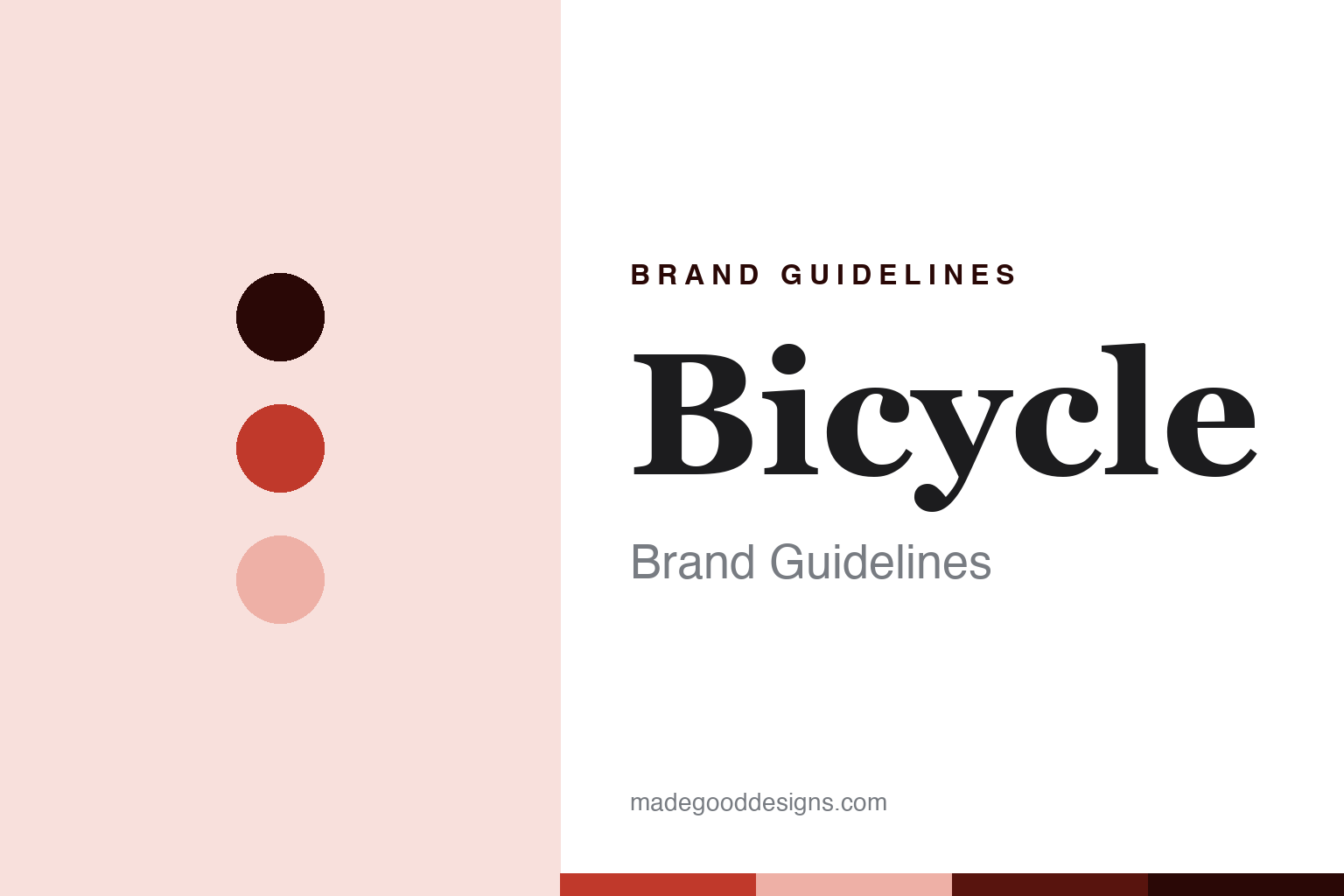
Bicycle Brand Guidelines
The American icon, now Belgian-owned.
Aa
Two constants: a Bicycle-red palette and an icon-serif register. Abstract homage — not a Bicycle product or mark; no card, pip or logo is reproduced.
The American icon, now Belgian-owned
Bicycle is the 1885 Cincinnati flagship (the Rider Back, the magician’s deck) that, through its maker USPCC, has belonged since 2019 to Belgium’s Cartamundi.
Bicycle opens the playing-card round as its American-icon node — the best-known deck in the United States, and the one whose ownership tells the whole round’s story. Its answer to a round about who owns the deck is the twist: an American institution with a Belgian owner.
Its identity is the American icon, now Belgian-owned. The 1885 origin, the Rider Back and the Cartamundi ownership are the story here. The flagship, and the surprise. The American icon, now Belgian-owned.
(Honest notes, so the origin, the ownership, the products and hedges are framed accurately. Bicycle sells consumer playing cards as its heroes — the Rider Back; we report its language as the brand’s own. On origin: Bicycle was first made in 1885 by the United States Printing Company in Cincinnati, the name drawn from the 1880s bicycle craze, with no single named founder of the line, and the Rider Back No. 63 dating to 1887. On ownership: Bicycle is a brand of The United States Playing Card Company, USPCC, founded in 1867 in Cincinnati as Russell, Morgan and Company and now headquartered in Erlanger, Kentucky, and USPCC was sold to Jarden in 2004, to Newell Brands in 2016, and then to the Belgian card maker Cartamundi, of Turnhout, in June 2019, so Bicycle is Cartamundi-owned, with the purchase price not disclosed. On the making: printed by USPCC, primarily at Erlanger, Kentucky, and also at its Fournier factory in Álava, Spain, which we attribute. Its designs and the Bicycle name are IP we describe but do not reproduce; there is no official brand hex; these tones are an unofficial interpretation.)
Colour
Bicycle lives in a Bicycle red. Click a swatch to copy the hex.
Bicycle’s identity is iconic, flagship and heritage — a Bicycle red, an ink, a pale red, a deep crimson, and a paper. The palette leans Bicycle red and deep crimson: a classic, heritage register that nods to the familiar red deck rather than a loud logo colour. It signals the American icon, now Belgian-owned — iconic, flagship and heritage. The honest caveat: with no official brand hex, these values are a heritage, unofficial interpretation, not first-party colours.
The lesson is a Bicycle red signals an iconic, heritage identity. Bicycle’s world is the card table and the magician’s hand. For designers, it is a reminder that a classic red and a pale red can carry an iconic, heritage brand — a heritage tone held as an accent, not a product shot. Because a strong hue can fail as small text, keep type dark and let the colour live in the accents, palette and band. The takeaways: date the origin to 1885 and the Rider Back to 1887; name USPCC and the 2004–2019 chain into Cartamundi; keep the price undisclosed; and attribute the making.
Typography
The register is an icon serif — iconic, flagship, heritage.
Bicycle’s identity carries an iconic, flagship spirit — the deck everyone knows. An icon serif captures the mood: established, confident and classic, the register of a heritage name. Set in a Bicycle-red palette, the icon serif feels dependable and earned — exactly the personality Bicycle carries. It behaves like a made, worn thing rather than a loud logo, mirroring a pip-ring and a suit-band. (Bicycle’s real products and the name are things we describe but do not reproduce, and the exact typeface is not ours to use.) Because it is not ours to use, the honest description is “an icon-serif brand,” shown here in a stand-in. The type behaves like the brand: iconic, flagship and heritage.
Aa
An icon-serif brand — dependable and earned. (Specimen set in Fraunces, an icon-serif STAND-IN; NOT the Bicycle logo or products.)
The playing-card node
Bicycle stands for the American icon, now Belgian-owned.
Bicycle opens the round as its American-icon node. A Bicycle-red palette, an icon serif and an 1885 origin make one thing — the American icon, now Belgian-owned — the whole identity: iconic, flagship and heritage. The 1885 origin is the pitch, the Rider Back is the substance, and the Cartamundi ownership is the frame. The point is an American institution with a Belgian owner, anchoring the round about who owns the deck.
Put to work, the identity is the brand told straight, the chain named and the price left undisclosed. A brand in this spirit would date the origin to 1885 and the Rider Back to 1887, name USPCC and the 2004–2019 chain into Cartamundi, keep the price undisclosed, and attribute the making. A reader in this spirit would keep the facts right: Bicycle makes consumer decks; it dates to 1885; it is a USPCC brand; and USPCC has belonged to Belgium’s Cartamundi since 2019. Bicycle opens the round, before Bee. The honest editorial moves are to date the origin, to name the chain, to leave the price out, and to attribute the making.
For designers and brand-builders, Bicycle opens the playing-card node: anchor a round with the icon — that turns out to be foreign-owned. The lessons: a national icon can have an overseas parent, here Bicycle under Cartamundi; an origin is dated to 1885, first made by the United States Printing Company in Cincinnati, with the Rider Back No. 63 from 1887 and no single named founder of the line; an ownership is named, that Bicycle is a brand of The United States Playing Card Company, USPCC, founded 1867 in Cincinnati and now in Erlanger, Kentucky, sold to Jarden in 2004, to Newell Brands in 2016, and to the Belgian maker Cartamundi of Turnhout in June 2019; a price is left out, since the purchase figure is not disclosed; and a making is attributed as printed by USPCC, primarily at Erlanger, Kentucky, and also at its Fournier factory in Álava, Spain. It is also a reminder to stay precise: Bicycle is the American icon of the card aisle with a Belgian owner — with the palette here an unofficial interpretation. The hook is that ownership: Bicycle is the American icon, now Belgian-owned, the 1885 Cincinnati flagship behind the Rider Back and the magician’s deck that, through its maker USPCC, has belonged since 2019 to Belgium’s Cartamundi. Read that way, Bicycle is less a single deck than the American icon, now Belgian-owned: iconic, flagship, heritage. The lesson for a brand is that anchoring a round with the icon that turns out to be foreign-owned reinforces the honesty, and dating the origin keeps it earned. Bicycle made the-American-icon-now-Belgian-owned the identity — proof that a national icon can open a round.
Explore & save
Keep Bicycle’s identity on hand — save it to a board in the Made Good inspiration library.
Bicycle identity set
Pin the Bicycle-red palette and the icon-serif register to your own board.