Biltmore Brand Guidelines
The Canadian hat name.
Aa
Two constants: a Canadian-red palette and a heritage-serif register. Abstract homage — not a Biltmore hat, label or owner’s logo.
The Canadian hat name
Biltmore is the Canadian heritage hat name founded in Guelph, Ontario, in 1917, now owned by the US firm Dorfman Pacific and made in the USA.
Biltmore is a lesson in how a national hat name outlives its country. Founded in Guelph, Ontario, in 1917, Biltmore grew into a leader of the Canadian felt-hat industry — fedoras and western styles in rabbit felt. Its answer to how a hat became a name was Canadian manufacture: make fine felt hats in Ontario and lead a country’s hat trade. A Canadian hat name — now owned and made elsewhere.
Its identity is the Canadian hat name. Biltmore’s felt hats, and its long Canadian heritage, are the work the name is known for. A hat, once made in Guelph. A Canadian name under new ownership.
(Honest notes, so the story stays precise, because the name has changed hands and countries. Biltmore was founded in 1917 in Guelph, Ontario — with a Niagara Falls prehistory as the Fried Hat Company — and became a leader of the Canadian hat industry by the 1950s, in genuine Canadian manufacture. But the Canadian operation did not survive as a going concern: after roughly ninety-five years, it ceased, and the Biltmore name was acquired by the US firm Dorfman Pacific (Dorfman Milano) in 2011, with production under Dorfman’s Milano Hat Company subsidiary from 2012; the old Biltmore site now redirects to Dorfman’s. So we describe Biltmore as a Canadian heritage name now owned by an American company, and made in the United States — not, as it once was, in Guelph. We do not assert a specific bankruptcy, whose mechanism we could not confirm; we say the Canadian company ceased and the name was acquired around 2011. On where it is made today: it is US-made under Dorfman, whose general sourcing spans several countries, so the Canadian-made claim belongs only to the historical brand. Its name is Dorfman’s trademark, described but never reproduced, and there is no official brand hex; these tones are an unofficial interpretation. This is design commentary and does not promote any product.)
Colour
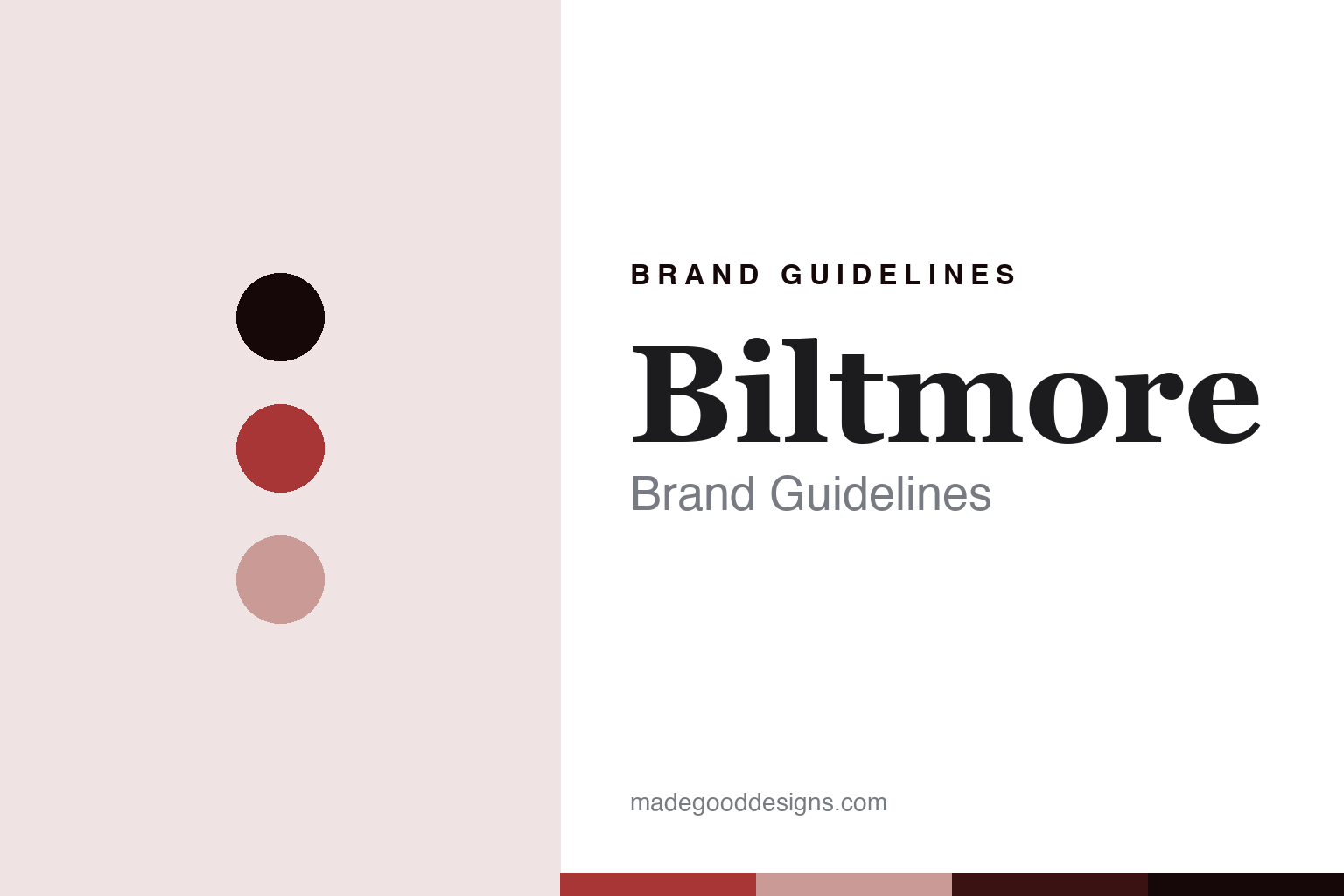
Biltmore lives in a Canadian-red palette. Click a swatch to copy the hex.
Biltmore’s identity is heritage, Canadian and felt — a Canadian red, an ink, a rose, a maroon, and a paper. The palette leans Canadian red and rose: the register of a heritage felt hat and a Canadian hat industry. It signals lineage over fashion. The honest caveat: with no published brand hex, these values are an original, unofficial interpretation, not first-party colours.
The lesson is a Canadian-red palette signals a heritage, Canadian-name identity. Biltmore’s world is a heritage, felt, Canadian object — in origin. For designers, it is a reminder that a Canadian red and a soft rose can carry a name built on a country’s hat trade — the red of Canada and the neutral of felt. Because these tones can fail as small text, keep type dark and let the colour live in the accents, palette and band. The takeaways: honour the heritage; be honest about the ownership and country; separate origin from today; and treat any single hex as unofficial.
Typography
The register is a heritage serif — historic, refined, Canadian.
Biltmore’s identity carries a historic, refined, Canadian spirit — a heritage name, not a new label. A heritage serif captures the mood: traditional, established and storied, the register of an old felt-hat maker. Set in a Canadian-red palette, the heritage serif feels historic and refined — exactly the personality Biltmore’s heritage carries. It is Canadian in origin rather than generic, mirroring a fine felt hat. (Biltmore’s real labels and its owner’s marks are things we describe but do not reproduce, and the exact typeface is not ours to use.) Because it is not ours to use, the honest description is “a heritage-serif spirit,” shown here in a stand-in. The type behaves like the name: historic, refined and Canadian.
Aa
A heritage-serif spirit — historic and refined. (Specimen set in Playfair Display, a heritage-serif STAND-IN; NOT the Biltmore wordmark or owner’s logo.)
The western hat
Biltmore stands for the Canadian name now made elsewhere.
Biltmore is a lesson in how a national hat name can outlive its country of making. A Canadian-red palette, a heritage serif and a felt hat make one thing — a Canadian heritage name — the whole identity: heritage, Canadian and felt in origin. The country of origin is the differentiator, and the change of ownership is the meaning. The point is a 1917 Guelph name that led the Canadian hat industry, whose Canadian operation ended, and whose name is now owned and made in the United States.
Put to work, the identity is a heritage name, honestly relocated, as design. A brand studying it would carry a real heritage while being candid about the present — a founding in Guelph in 1917, a Canadian operation that ceased, a name acquired by a US firm and now US-made. A brand learning from it would see that a heritage name can persist even when its country of making changes — that a Canadian hat name has a story worth telling — and that being precise, founded 1917 in Guelph, the Canadian company ceased and the name acquired around 2011, now US-made under Dorfman, keeps the story honest. A brand learning from it would also avoid overstating the past: describing the Canadian-made history as history, and not implying a hat bought today is made in Guelph, is exactly what keeps the account trustworthy. The lesson Biltmore teaches is that a name can hold a heritage across borders: the origin gives it depth, and the honesty about today keeps it credible. The heritage is the personality, and the felt hat is the proof.
For designers and brand-builders, Biltmore holds the relocated-name pole in this round of the western hat, from Canada: honour the heritage, and locate the present honestly. The lessons: carry the Canadian origin; date the founding; disclose that the name is now US-owned and US-made; separate history from today; and never reproduce an owner’s logo. It is also a reminder to stay precise: Biltmore is the Canadian heritage hat name founded in Guelph, Ontario, in 1917, now owned by the US firm Dorfman Pacific and made in the USA — with the palette here an unofficial interpretation. Biltmore shows how a name outlives its country — proof that a heritage, honestly relocated, can still be the difference.
Explore & save
Keep Biltmore’s identity on hand — save it to a board in the Made Good inspiration library.
Biltmore identity set
Pin the Canadian-red palette and the heritage-serif register to your own board.