Catawiki Brand Guidelines
A 2008 Assen collectors’ wiki turned weekly online auctions.
Aa
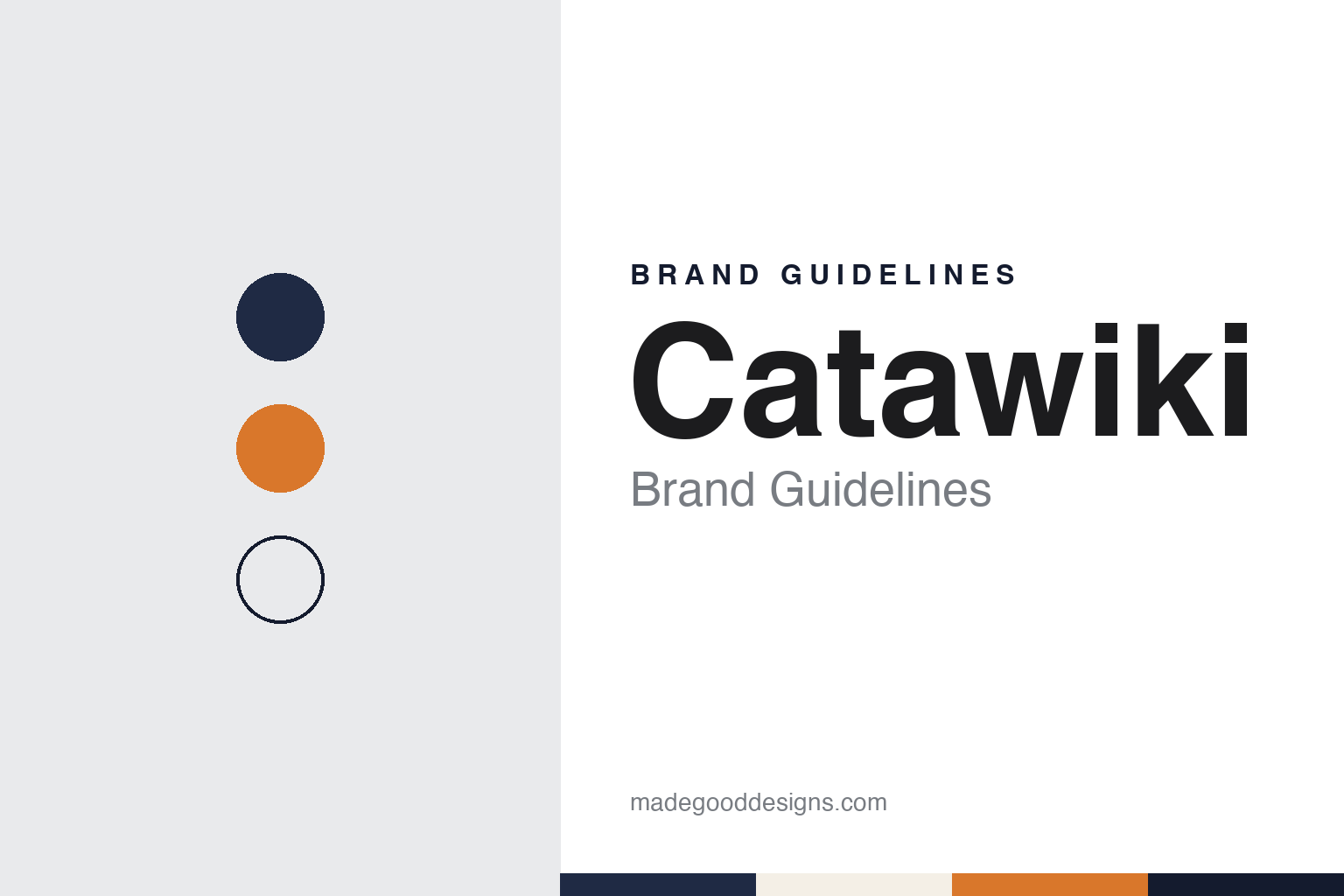
Two constants: an ink blue, cream and orange palette and a rounded geometric sans register. Abstract homage — not a Catawiki interface or mark; no logo, lot photograph or screen is reproduced.
Catalogue plus wiki
A comic collector and a developer in Assen.
Catawiki began in 2008 in Assen, in the Netherlands. English Wikipedia says it was founded by René Schoenmakers, a Dutch comic collector, and Marco Jansen, a Dutch developer, and that it went online on 10 September 2008 as a wiki-based compendium of collectors’ catalogues. The name joins two words, “catalogue” and “wiki.”
Dutch Wikipedia adds that the founders bought the rights to an existing Flemish comic database of 110,000 entries to give the site a running start, and that in 2009 Erik Boeré, a publisher of CD-ROM and DVD-ROM catalogues of stamps, coins and phone cards, joined the company and added his databases. Comics remained the largest section; by December 2011 the catalogue had seventy sections and more than 1.2 million entries, according to the same article.
The original aim, Dutch Wikipedia says, was to replace paper collectors’ catalogues, which Catawiki described as hard to get hold of, often out of date and written by a small group of collectors. Registered users could edit entries and keep track of their own collections, while a specialist employed for each field checked the changes. The company hoped the catalogues could become a standard that museums and libraries might also use.
The auctions came later. Since 2011 the company has run weekly online auctions, English Wikipedia says, in categories ranging from comics and model trains to coins, watches, art, jewellery and classic cars. The site was originally in Dutch; it opened in English in 2011, in French and German in 2012, and in Spanish, Italian and Chinese in 2015.
Colour
Weekly sales, checked by specialists.
Catawiki’s auctions are online only, and the bids are visible to everyone, English Wikipedia says; the winning bidder pays through the site’s payment service and the seller then sends the object. Lots are reviewed before they go on sale. Dutch Wikipedia describes an auctioneer estimating the value of each lot and deciding whether it is admitted to an auction, and English Wikipedia says Catawiki works with a network of more than 240 experts who value, authenticate and curate objects. Both professional sellers and private individuals can submit lots.
The volume grew quickly. Dutch Wikipedia says the number of objects auctioned each week rose from about 7,000 in 2013 to 15,000 in 2014, while monthly unique visitors grew from three million to eight million over 2014, and the catalogue passed 2.5 million entries in September 2014. The same article counts an average of about 40 auctions a week in 2014 and around 300 a week by 2019, a mix of recurring sections such as comics, postcards and stamps and separate theme sales built around a subject or a person, including the Dutch writers Heleen van Royen, Gerard Reve and Boudewijn Büch. In March 2016 the regional broadcaster RTV Drenthe reported that Catawiki was selling 30,000 lots a week, had just passed 400 staff and had grown from Assen to offices in Amsterdam, Berlin, Paris, London, Madrid and Rome, with customer service in six languages. Assen was still its largest office, the broadcaster reported.
English Wikipedia lists notable sales by object and date, among them a DeLorean DMC-12 in September 2014, a signed copy of the Tintin album Tintin au pays des Soviets in May 2015, a 1960 Porsche 356 in October 2015 and, in September 2025, a copy of the Tintin album Explorers on the Moon carrying dedications by Hergé and by members of Apollo crews.
Outside the auctions, the name appears on a football ground. Since July 2017 Catawiki has been shirt sponsor of the Assen club ACV, whose ground has since been called the Catawiki Sportpark, Dutch Wikipedia says.
Typography
Auction houses and online platforms.
Auction houses and online auction platforms sell other people’s objects, so most of what they publish is about the lots rather than about themselves. The catalogue is the core document: a printed or online book for each sale, with a cover image chosen from the lots, a number and a description for each piece, and notes on where it came from. Many houses now publish the same catalogue as a web page and as a download, and some give a single important lot a catalogue of its own.
Lot photography sets much of the tone. Paintings are usually shown flat and square to the camera, furniture and objects against a plain ground, and jewellery and small pieces close up, so that a bidder in another city can judge them from a screen. The saleroom itself is the other stage: a rostrum, rows of chairs, a wall or screen for the lot on sale and a bank of telephones for absent bidders, as the houses show it in their own photographs and broadcasts.
Online bidding has added a third face. Houses and platforms publish apps and web pages for live and timed sales, with a lot image, the current bid, a countdown or a live video feed, and buttons for bidding and watching lots. Their sites also carry the practical pages, such as viewing hours, addresses of offices and salerooms, and how to consign or collect.
Corporate pages are usually short. They give a founding date, the offices and salerooms, and sometimes the names of owners or of the group a house now belongs to. This guide sets out what can be checked about each house — who founded it, who owns it and where it sells — and marks clearly what rests only on the company’s own word.
Aa
A rounded geometric sans for a platform named after a catalogue and a wiki. (Specimen set in Outfit, a sans STAND-IN; NOT the Catawiki logo.)
Catawiki
From Assen to seventeen languages.
Growth brought outside investors and public rankings. Dutch Wikipedia says the venture firm Accel invested in September 2014 and that a larger round in July 2015 was led by the American investor Lead Edge Capital, with earlier backers taking part. In October 2015 NU.nl reported that Catawiki had topped Deloitte’s Technology Fast 50 ranking as the fastest-growing technology company in the Netherlands; René Schoenmakers told the site that the company was still very focused on Europe and wanted to make its online auction house known worldwide.
In April 2017 RTV Drenthe reported that Catawiki was thirteenth in the FT1000, the Financial Times list of Europe’s fastest-growing companies, and the highest-placed Dutch company on it. By then the site was available in 17 languages after launches that year in Greece, Romania and Hungary, and had offices including Assen, Amsterdam, Paris, Madrid and Rome, the broadcaster reported.
The founders handed day-to-day management to a chief executive in 2016, and Ravi Vora took over the role in 2018, according to Dutch Wikipedia. The same article records a structural change in July 2020: the collectors’ catalogue and the auction site separated. The auction business kept the Catawiki name, and the catalogue continued as LastDodo. Since then the Catawiki name has belonged to the auction site alone, although the “wiki” in it still points back to the 2008 catalogue.
For a design guide, Catawiki shows how a collectors’ database grew into a curated weekly marketplace while keeping a name built from “catalogue” and “wiki.” Compare LiveAuctioneers, an online bidding platform for auction houses, and Christie’s, a London saleroom house. For this guide we use an ink blue, a cream and a warm orange with a rounded sans, an unofficial interpretation; no product or logo is reproduced.
Explore & save
Keep Catawiki’s identity on hand — save it to a board in the Made Good inspiration library.
Catawiki identity set
Pin the Catawiki ink blue, cream and orange palette and the rounded geometric sans register to your own board.