Cockos Brand Guidelines
The tiny company behind REAPER, from Winamp’s creator.
Aa
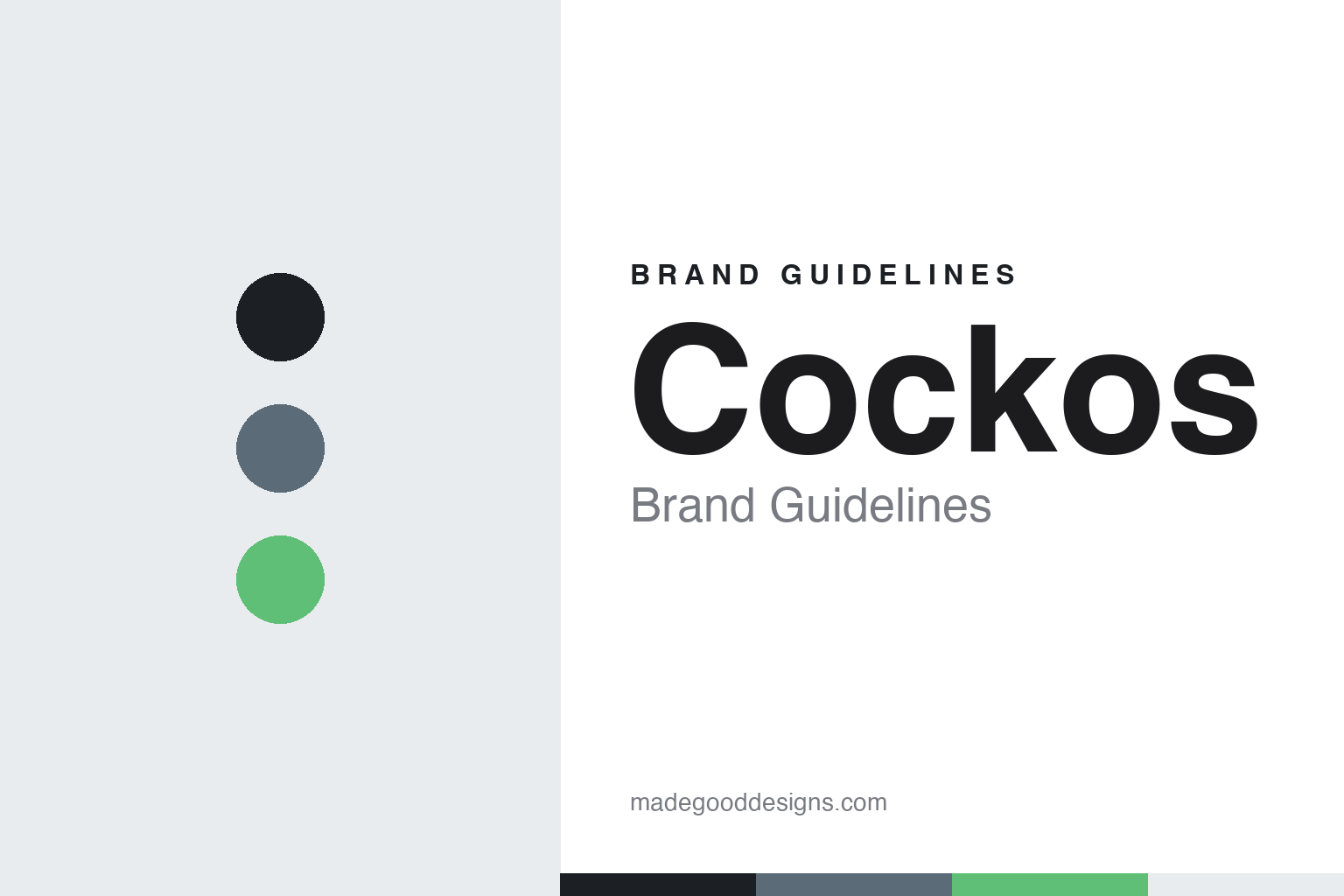
Two constants: a graphite, slate and signal green palette and a technical sans register. Abstract homage — not a Cockos product or mark; no software screen, logo or icon is reproduced.
After Winamp
A programmer leaves AOL and starts again.
Cockos is the small American company behind REAPER, the digital audio workstation known for its low price and small download. It was founded in 2004 by Justin Frankel, the programmer best known for Winamp. The company’s website gives the year — “Cockos Incorporated was founded in 2004” — and English Wikipedia says it followed Frankel’s departure from Nullsoft.
Frankel’s earlier career is well documented. Tape Op reported in 2010 that he dropped out of college in 1997 to release Winamp and found Nullsoft, which was later sold to AOL; English Wikipedia, citing CNET, says AOL bought Nullsoft together with Spinner.com in June 1999 in a combined deal worth about $400 million. In March 2000, with his Nullsoft colleague Tom Pepper, he released the peer-to-peer network Gnutella, which AOL ordered off its servers, English Wikipedia says. He announced his resignation from AOL on his blog in January 2004.
The name is a private joke. Asked by Wired in October 2006, Frankel said it “sort of evolved out of mis-hearing a quote from the movie Office Space” and declined to say more. In its early years the company described itself as “a software development company with philanthropic goals,” founded by engineers “tired by the frustration and oppression of working within large companies,” according to its 2006 website. Its current site says the goal is “to develop software sustainably while preventing profit rationale from forcing engineering compromises.”
Its first music product was Jesusonic, a programmable effects processor, released in December 2004 according to English Wikipedia; its scripting language lives on as JSFX inside REAPER. In 2005 came NINJAM, released under the GPL licence, which lets musicians play together over the internet by delaying everyone else’s part by a fixed interval; Frankel told Wired he made it with his brother.
Colour
One version, one price list.
REAPER followed. Sound On Sound, reviewing it in June 2007, expanded the name as “Rapid Environment for Audio Prototyping and Efficient Recording”; English Wikipedia gives a different expansion, “Rapid Environment for Audio Production, Engineering, and Recording,” so we note both. A preview appeared in 2005 and the first official release in August 2006, English Wikipedia says. Asked by Tape Op why anyone would start writing a DAW in 2005, Frankel said his career was as a programmer but that a few years earlier he had started playing music for fun.
Martin Walker’s Sound On Sound review set out what made it different: a download of just 2MB, updates arriving “on an almost daily basis,” and a model Cockos called “uncrippled, unexpiring shareware,” so the full program could be evaluated without time-limited features. Licences then cost $40 for non-commercial use and $200 for commercial use, and Walker summed it up as a “huge feature set, incredibly low price and surface simplicity.”
The model has barely changed. Today’s REAPER website says “there is only one version of REAPER,” offers a 60-day evaluation with full functionality, and sells a $60 discounted licence — for personal use, for individuals or businesses with yearly gross revenue under US$20,000, and for schools and non-profits — or a $225 commercial licence. A new licence includes free upgrades through version 8.99, the site says, and in late September 2026 it listed version 7.81. The program runs on Windows, macOS and Linux and hosts VST, VST3, AU, CLAP and LV2 plug-ins as well as its own JSFX effects.
REAPER is also known for how far users can reshape it. English Wikipedia notes that its interface can be changed with themes, and that users can write scripts in EEL2, Lua and Python; free tools such as LICEcap, an animated screen-capture program, and the WDL C++ library also come from Cockos, which says its applications are built with WDL.
Typography
Design and documentation.
The seven makers in this guide build the tools of the home and project studio: digital audio workstations, the software in which music is now recorded, edited and mixed, and — in TASCAM’s case — the hardware that came before them. TEAC introduced the first Portastudio, a four-track cassette recorder with a built-in mixer, at a New York audio convention in 1979.
The oldest software house here is Steinberg of Hamburg, founded in 1984 by Karl Steinberg and Manfred Rürup and the maker of Cubase; Yamaha says it acquired the company in 2005. Cakewalk began in Boston in 1987 as Greg Hendershott’s Twelve Tone Systems, came under Roland’s majority control in 2008 and Gibson’s in 2013, and has been a brand of BandLab Technologies of Singapore since 2018.
Three are European and younger. Reason Studios, founded in Stockholm in 1994 as Propellerhead Software, was bought in January 2026 by LANDR of Montreal, Music Business Worldwide reported. Image-Line, the maker of FL Studio, was founded by Jean-Marie Cannie and Frank Van Biesen and gives its headquarters as Ghent, Belgium. Bitwig was founded in Berlin in 2009, and its company is registered there.
Cockos, the maker of REAPER, says it was founded in 2004; archived copies of its website show its postal address moving from San Francisco to Manhattan and, by late 2024, to Rosendale, New York. TASCAM is a brand of TEAC Corporation, which is listed in Tokyo, based in Tama, Tokyo, and was majority-owned by Gibson from 2013 to 2020.
This guide sets out what can be checked about each brand — who founded it, who owns it, and what it says about where its products are made — and marks clearly what rests only on the company’s own word.
Aa
A technical sans — plain, precise, built for long sessions. (Specimen set in IBM Plex Sans, a sans STAND-IN; NOT the Cockos or REAPER logo.)
Cockos
Three people, two coasts and a post-office box.
Cockos has always been tiny. Its team page names Frankel as “Founder, President” and John Schwartz, who joined in 2008, as its other staff member, alongside outside contributors including the theme designer known as White Tie, who has worked on REAPER’s look since 2007, and Geoffrey Francis, who writes the REAPER User Guide. Tape Op described Christophe Thibault, a colleague from Nullsoft days, as a Cockos “co-owner” in 2010, and said the number of people involved was “up to three.” English Wikipedia says Thibault worked there from 2005 to 2014, while Tape Op quoted Frankel saying he joined in 2006; the team page now lists him among its alumni.
Where the company is based has changed, and many references are out of date. English Wikipedia still gives San Francisco. That was true early on: a 2007 job listing on its website said “Cockos is based in San Francisco, CA, but appreciates the benefits of telecommuting,” and Tape Op interviewed Frankel and Thibault at their San Francisco office in 2010. Archived copies of the website show its postal address moving to Manhattan by 2013 and, from late 2024, to a post-office box in Rosendale, New York, in the Hudson Valley, which is the address it gives today. The team page jokes that Frankel “spends his days wandering the world.”
We found no record of Cockos being sold or bringing in an outside owner in the sources checked, and it appears to remain privately held under its founder. Its products are software, written by a handful of people and sold by download, so there is no factory to name.
For a design guide, Cockos shows how a brand can be built almost entirely on product behaviour — a small download, one version, fair pricing — rather than on marketing. Compare PreSonus, a DAW maker now owned by a larger group, and Image-Line, the independent Belgian maker of FL Studio. For this guide we use graphite, slate and a signal green with a sans, an unofficial interpretation; no product or logo is reproduced.
Explore & save
Keep Cockos’s identity on hand — save it to a board in the Made Good inspiration library.
Cockos identity set
Pin the Cockos graphite, slate and signal green palette and the technical sans register to your own board.