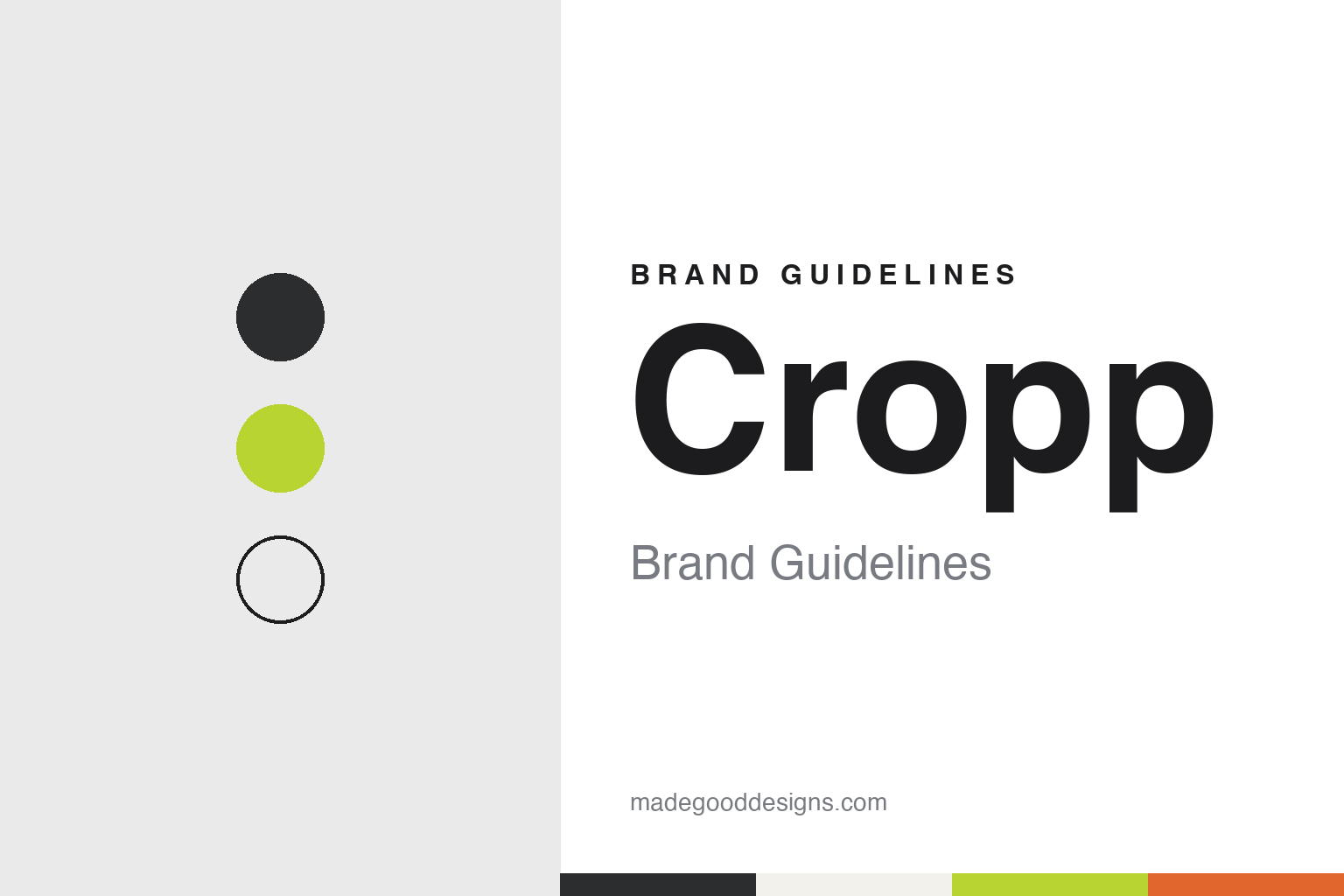
Cropp Brand Guidelines
LPP’s 2004 Cropp Town streetwear chain from Gdańsk.
Aa
Two constants: an asphalt, chalk and acid green palette and a heavy street sans register. Abstract homage — not a Cropp product or mark; no garment, logo or store sign is reproduced.
Cropp Town
LPP’s second chain, opened in 2004.
Cropp is the streetwear chain of LPP, the Gdańsk clothing group that Marek Piechocki and Jerzy Lubianiec started in 1991. English and Polish Wikipedia say the business traded at first as PH Mistral and, after four years, took the name LPP, built from the founders’ surnames. LPP opened its opening Reserved stores in 1998 and listed on the Warsaw Stock Exchange in 2001. Cropp was the group’s second brand. English Wikipedia lists five fashion brands in LPP’s portfolio today: Reserved, House, Cropp, Mohito and Sinsay. Each is aimed at a different customer, and Cropp is the one LPP pitches at streetwear, with clothes, shoes and accessories for both young women and young men.
The chain began in March 2004, when its opening store, then called Cropp Town, opened in Poland, Polish Wikipedia says. LPP’s own history describes the new label as one made for young customers who care about individualism and a style of their own, launched on the back of what Reserved had achieved. It did not stay at home for long: LPP says Cropp’s opening foreign stores came in Estonia, Latvia and Slovakia in 2005, followed by Lithuania, Russia and the Czech Republic in 2006. LPP later left Russia; its history page says it decided in 2022 to sell its Russian company.
The longer name stayed in use for several years. In August 2006 Wirtualnemedia reported that Cropp Town had 65 stores across Poland, and in April 2008 both that site and Rzeczpospolita still described LPP as the owner of Reserved and Cropp Town. Today English Wikipedia gives the brand simply as Cropp, formerly Cropp Town, with its head office in Gdańsk, the city where LPP is based.
Colour
Campaigns, a web shop and three store designs.
Cropp’s look has been shaped through campaigns and shop interiors more than through any published logo story. Its autumn campaign of August 2006, run under a slogan that translates as “Cropp Town – no limits,” cast dozens of people of different backgrounds, interests and ages, Wirtualnemedia reported: skaters, clubbers and b-boys appeared alongside a 90-year-old. Shop windows and interiors were given a special visual treatment for the campaign, short films were made for viewing and downloading online and in the stores’ own video channel, and a reworked website presented the new autumn collection. The campaign was also carried by youth magazines, product placement, a series of postcards showing the people from the adverts, and an email sent to almost 400,000 addresses on LPP’s customer list, the site said.
Online sales followed in February 2010. In March that year Wirtualnemedia reported that the Cropp web shop, built for LPP by the agency Media Ambasador, offered the whole range on a site kept in the brand’s characteristic style, with a simple interface and conventional navigation. In July 2018 the agency Valkea began working with the brand, which the same publication described as sporty, streetwear-led and aimed at young people, and on the Polish market for more than a decade.
The shops themselves have gone through several versions. In June 2021 Cropp reopened its store in the Avenida centre in Poznań in what Wirtualnemedia called the third interior design in the brand’s history, and dlahandlu.pl reported that the shop had grown by more than 100 square metres. The company described a wide entrance, an eye-catching window, light walls, textured surfaces and colour accents. Heavy-looking materials were worked into lighter forms to stress contrast, recycled and recyclable materials were used, and the lighting was LED. A distinctive ceiling, very large screens and original graphic signage were meant to be the strongest accents in the room.
Typography
Design and documentation.
Polish and Romanian retailers mostly present themselves through the places where people shop: the fascia above a corner-shop door, the sign on a discount supermarket at the edge of town, the campaign images in a fashion store window, the screens of a marketplace app and the long front of a DIY megastore. Each of these is a design surface the company controls, and the guides in this group read them as the companies publish them, on their own sites, stores and apps.
Store naming in the region is often plain and local. Several chains carry an ordinary Polish word, an animal or a short invented name, and the guides explain what each name means and where it came from, without reading more into it than the sources do. Where a chain changed its sign or colours, the guides give the date of the change and the source that records it.
The corporate pages matter as much as the shopfronts. Many of these businesses were started by founders in the 1990s, later sold to private-equity funds or foreign groups, and in several cases listed on the Warsaw Stock Exchange. The guides set out founders, owners and listings as dated facts, and they state pending takeovers as pending, with the date they were agreed.
What the guides do not do is rank retailers or judge them as better or worse. Store counts, country counts and formats are given only with the date and source that supplied them, and every palette and typeface shown is our own unofficial interpretation, chosen to describe a look rather than to copy one. No logo, fascia, product or campaign image is reproduced.
Aa
A heavy street sans for a streetwear chain. (Specimen set in Archivo, a sans STAND-IN; NOT the Cropp logo.)
Cropp
Music, art and sport, in LPP’s words.
LPP says Cropp draws on music, art and sport, and makes clothes, shoes and accessories for women and men. LPP invites customers to share their outfits under the hashtag #wearecropp. In 2024 LPP launched mobile shopping apps for Cropp and House, which it says completed app coverage across all five of the group’s brands.
Store counts have moved over time, so each comes with its date. dlahandlu.pl reported 387 Cropp stores in June 2021, 182 of them in Poland; English Wikipedia gives 374 stores in 18 countries in 2024. Like the rest of the group, Cropp does not make its own clothes: Polish Wikipedia says LPP has no factories and that its brands’ clothing is made mainly in Asia, and also in Poland and other European countries including Italy, Portugal, Romania, Bulgaria and Turkey. LPP has kept an office in Shanghai since 1997 and one in Dhaka since 2015, the same source says. In September 2026 Wirtualnemedia reported that LPP, owner of Reserved, Cropp, House, Mohito and Sinsay, had opened its 4,000th store and was present in 47 countries.
For a design guide, Cropp shows how a youth chain can carry its identity through campaigns, store windows and in-store graphics rather than a single fixed emblem. Compare Mohito, the women’s brand LPP took on with Artman in 2008, and Reserved, the group’s original chain. For this guide we use asphalt grey, chalk white and an acid green with a sans, an unofficial interpretation; no product or logo is reproduced.
Explore & save
Keep Cropp’s identity on hand — save it to a board in the Made Good inspiration library.
Cropp identity set
Pin the Cropp asphalt, chalk and acid green palette and the heavy street sans register to your own board.